
Commercial Roofing in Boonville, MO
Commercial roof calls in Boonville often involve a decision about access before the repair itself: which building area can be reached, who can approve entry, and what operation must remain open. The city’s economic-development office works with the Boonslick Community Development Corporation and keeps available building and site information in circulation. That makes a clear property contact and roof-zone reference useful from the first visit. We document the actual membrane, metal, seams, drains, and perimeter details rather than infer an assembly from a building’s use. In the Columbia market, spring storms, summer heat and heavy rain, and winter freeze-thaw cycles set the seasonal context. The roof evidence sets the repair boundary.
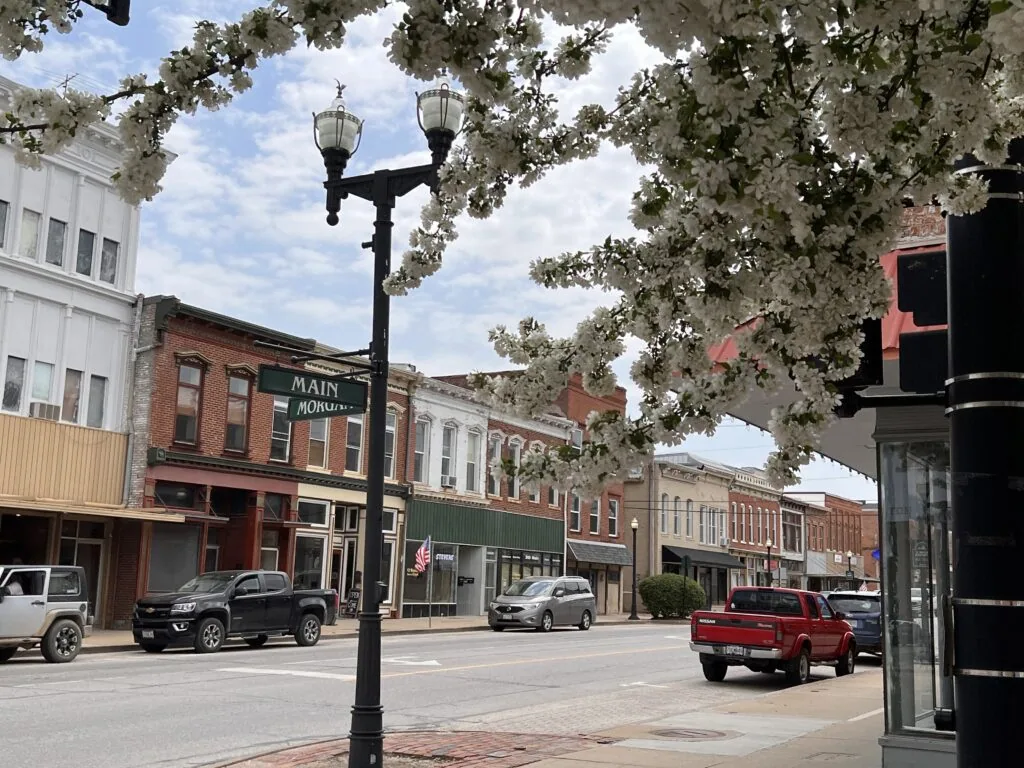
Which details should be settled before the first roof walk?
Start with the address, building contact, roof entry, interior report, and any area where deliveries or public access must continue. Boonville’s planning department maintains an Access Management Manual for commercial and residential street design, and current city-limit and zoning maps help distinguish the municipal context of a property. For a roof visit, the owner confirms the property entrance, authorized contact, and approved staging area before the crew arrives. We confirm the actual ladder or hatch route, rooftop fall protection, equipment hazards, and staging area with the owner before moving materials or opening a roof section.
For an occupied site near the Route B and Americana Drive commercial access area, traffic and service activity can affect where a truck or lift can stand. We agree on a work window, keep customer or employee paths clear, and identify the daily close-in point. A commercial roof inspection then records the accessible roof zones, photographed details, and any area that could not be reached. A note that only says “north roof” is not enough for a later comparison. Mark the actual section on a plan or roof sketch and tie each observation to it.
Related Roofing Work
More commercial roofing work connected to Boonville in Columbia, MO.
How do we trace water without guessing at the opening?
A ceiling mark gives us a starting location, not a confirmed entry point. We follow the roof’s drainage path from the reported area through seams, curbs, penetrations, wall transitions, and nearby outlets. Water can travel before it reaches the interior, so each connected detail needs a look before we assign the cause. We photograph the suspected opening close enough to show its condition and wide enough to locate it again. If a membrane repair sits beside older work, we record both edges and whether the surrounding surface appears sound.
Where moisture below the membrane could change the work area, infrared moisture mapping can identify patterns for confirmation, while a dated condition report separates visible evidence from questions that remain. A thermal pattern is not a diagnosis by itself. We identify where testing is warranted and whether a controlled opening would clarify the boundary. The written record should show the tested area, observed result, and the next decision it supports, so an owner can compare a repair proposal with the condition actually found.
What Columbia weather patterns matter to a Boonville roof schedule?
Columbia’s spring is the wettest period and can bring severe storms with hail or tornadoes. Summer adds heat and localized heavy rain, while damaging winds become a more prominent severe-weather concern later in the season. Winter brings snow and repeated movement around freezing. Use the Columbia storm calendar to time checks in nearby service areas. After a reported event, compare dated photos of the inspected zone and include work only where the roof shows a supported change.
A return visit can focus on details most exposed to movement or drainage trouble: laps, edge metal, penetrations, drain bowls, scuppers, and prior patches. A hail-damage review looks for impact that changes material function, while a drainage review maps low areas and outlets. When weather prevents a safe walk, note the deferred zone and set the next inspection point. This gives the owner a dated comparison without treating the forecast as proof of a roof defect.
How do we choose between a repair and broader renewal?
A repair is appropriate when the failure is bounded and adjacent material can accept a compatible tie-in. The scope identifies preparation, materials, seam or flashing work, and the areas left outside the boundary. Several separated leaks, recurring moisture, or a weak substrate can change that choice. We compare localized repair with coating, recover, or replacement after checking drainage, attachment, insulation, penetrations, perimeter metal, and the remaining service potential of the assembly. Cost and schedule turn on access, staging, materials, weather windows, and what becomes visible after an authorized opening.
Boonville’s commercial access corridor includes services used by residents and Interstate 70 travelers, so work near an active entrance or delivery route needs a clear daily limit. We stage away from the path, protect occupied space below, and leave no exposed roof edge at shift end. Phased reroof planning can divide a larger scope into controlled work areas. Temporary stabilization remains a separate line from permanent correction, with its limits and follow-up date stated plainly. If opening the roof reveals a condition outside the approved scope, we stop at that boundary, photograph it, and present a revised choice before continuing.
For a business that manages more than one property, a useful estimate makes the choice legible before work starts. We separate labor needed to reach the roof from the repair materials and any testing that could change the scope. A lift, restricted roof hatch, occupied work area, or uncertain substrate can affect the sequence, so those conditions belong in the visit record. In Boonville, street access and staging should be confirmed with the site contact rather than inferred from a corridor map. If a repair is time-sensitive, we identify what can be stabilized now, what remains exposed, and which follow-up will determine whether permanent renewal is still required.
What should stay in the roof file after the crew leaves?
Keep the visit date, roof-zone map, photographs, documented condition, work boundary, materials installed, exclusions, and next check in one decision file. That makes a later leak report comparable with the repair rather than forcing a manager to reconstruct what happened. Roof history tracking can organize inspection records across properties, but each roof still needs its own evidence and authorization. For a portfolio spanning Jefferson City and Mexico, keep the building contacts and roof observations separate. A similar symptom in another town does not establish the same failure here.
At closeout, identify which zones were completed, which were deferred, and what observation should prompt a return. If a tenant, public user, or delivery route was affected, record when normal access resumed and who received the photographs. A useful Diligence Notes is specific enough for another manager to find the repair without assuming the roof remained unchanged. The next inspection can then compare the same seam, drain, or curb transition and show whether the condition has moved, stayed stable, or needs a larger response.
Commercial Roofing Questions
Who should approve access to the roof?
The building owner or authorized facilities contact approves the route, work window, and protected area below. We record that approval before inspection so the crew stays within the permitted zone.
Does a ceiling mark identify the roof opening?
No. Water may travel along a seam, curb, wall, or insulation before appearing indoors. We trace connected details and note when testing is needed to establish the path.
Can a repair stay open while an I-70 corridor business operates?
We coordinate the actual property schedule with its contact. The plan identifies staging, pedestrian or delivery routes, protection below, and the point where the roof is closed each day.
What belongs in the closeout record?
Include dated photos, the roof-zone reference, completed materials, work boundary, exclusions, and the next check. That gives another manager a reliable basis for comparing future conditions.