
Ponding Water Roof Repair in Columbia, MO
A shallow water line that remains after nearby drains have cleared deserves a roof-level check before a slope correction is proposed. We map where water stands, how long it remains, which outlets serve the area, and whether the membrane or surrounding details show stress. Columbia's summer storms can drop heavy rain in localized areas, and spring is the wettest season. Rain patterns explain when to look; the roof surface, drainage path, and supporting assembly determine what repair is justified. The Tower Industrial Park site plan describes a warehouse and office building at Prathersville Road and Tower Drive, while the 763 Industrial Park plat places another employment area near Highway 763. These local details give context to commercial roof service, not proof that either property has ponding. We inspect the building itself and record its low points, drains, scuppers, and interior reports.
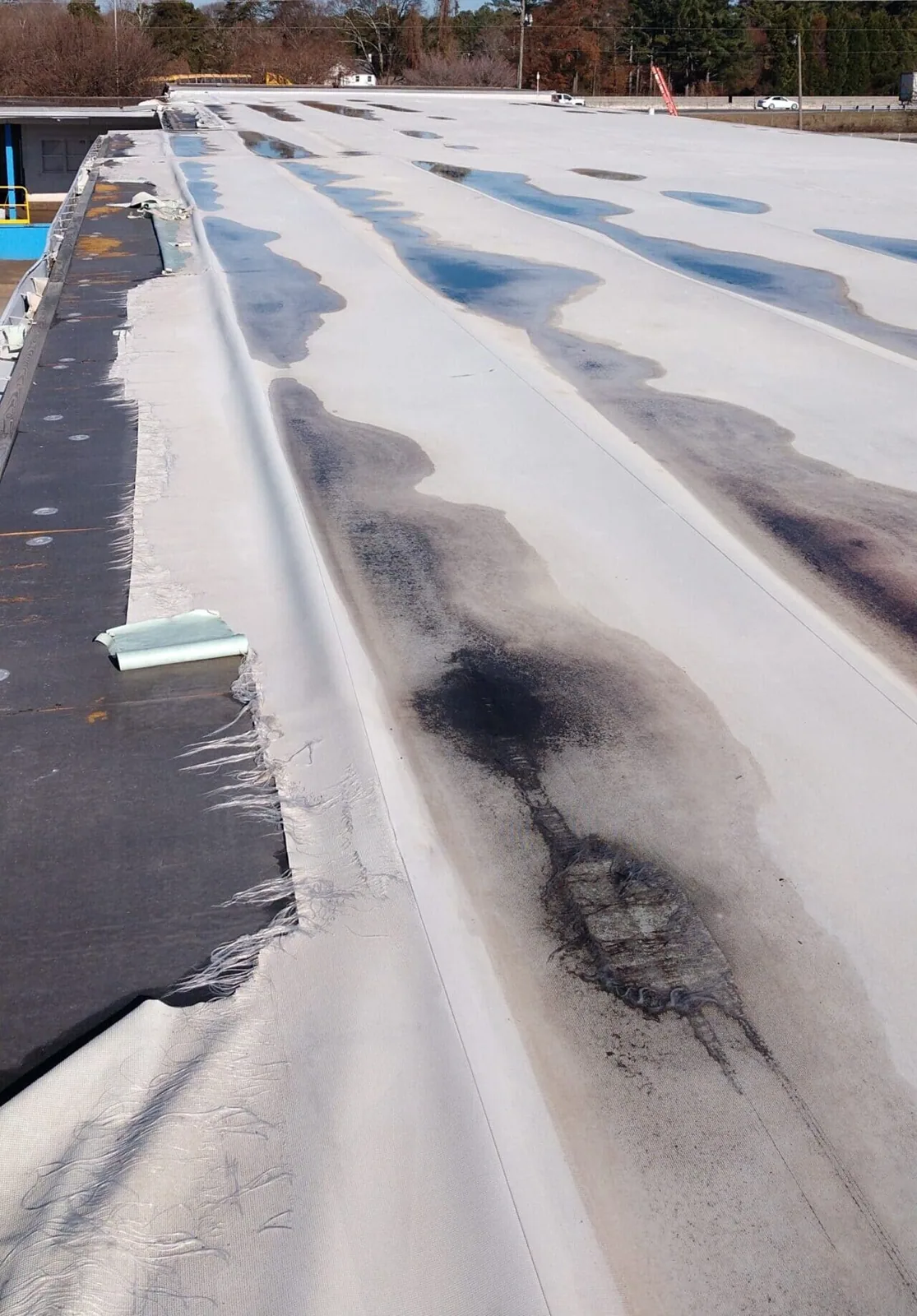
Where does the water stop moving?
We trace flow from the high points toward drains and scuppers, checking for blocked strainers, settled debris, compressed insulation, deck deflection, and curb or wall transitions that interrupt the path. A puddle measured in one visit may change with recent rain, drain condition, or temperature, so we record the inspection timing and conditions. The report distinguishes shallow residual water from a drainage failure supported by recurring standing water or an obstructed outlet. A drain and scupper review can identify outlet and attachment conditions; a roof inspection can map the surrounding field. If the low area lies near equipment, we check whether a curb or previous patch changes the flow path rather than assuming the drain itself caused the ponding. A marked roof plan helps the next visit compare the same locations.
Related Roofing Work
More commercial roofing work connected to Ponding Water Roof Repair in Columbia, MO.
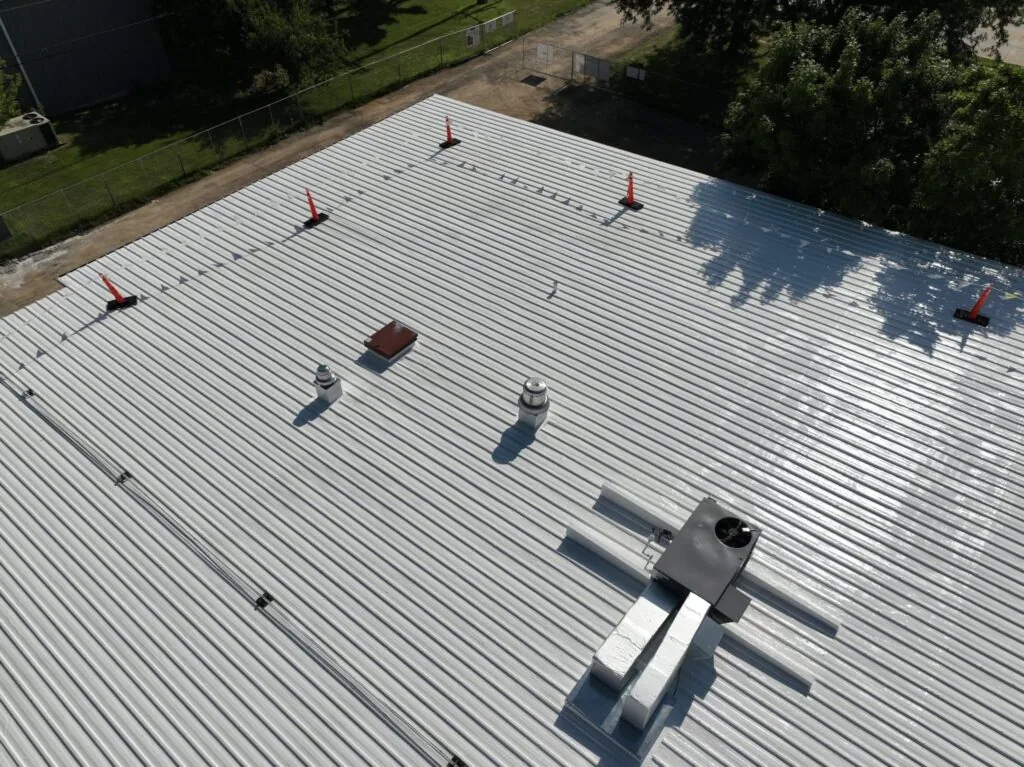
Can tapering solve a persistent low area?
Tapered insulation can redirect flow only when the deck, elevations, drain positions, and roof edges allow a workable design. Before proposing it, we confirm drain inverts where available, note the existing roof layers, and identify the high and low points. If the deck moves or the substrate is wet, added slope alone may leave the underlying condition unresolved. A Tower Industrial Park site plan describes a proposed warehouse and office building, but does not specify the installed roof's drainage design. The actual roof survey governs the work. Insulation and cover-board planning can coordinate substrate and taper details. The scope should show how water will reach the outlet and which existing low areas remain, if any. If taper is proposed, compare its design elevation with the existing parapets, curbs, and door thresholds. The plan should make the drainage path understandable to the owner and identify any field measurement that remains outstanding. A cover board or membrane may follow that slope design, but neither should be treated as a substitute for confirming the discharge point. We measure the roof under review and document the outlet relationship before specifying work.
When is a membrane repair enough?
Water can expose open seams, loose flashing, punctures, and deteriorated surfaces, but the standing area does not identify which detail has failed. We inspect the membrane and transitions around the pond, then check whether moisture extends beyond the visible surface. If a small opening or failed seam is confirmed, a focused repair may restore continuity. If several details are compromised or wet insulation spreads beyond the low spot, a wider assembly review may be needed. Seam repair and puncture repair address distinct defects. A proposal should state preparation, compatible materials, boundary, and any test that could change the scope. Columbia's commercial alterations are reviewed under adopted building and energy provisions; project documents identify the requirements for a larger roof change.
A low area should be mapped after drainage has had time to work, with depth, extent, nearby seams, and outlet conditions recorded. Debris or a blocked drain may explain standing water in one instance, while a settled deck or slope design can create a recurring pattern. The inspection should separate a temporary obstruction from a persistent elevation issue.
What should be checked after repair?
After a repair, we photograph the corrected area and note which outlet or transition was part of the scope. The next inspection can compare the low point after a rain period and confirm whether water clears as expected. If water remains, we document the observation rather than treating a prior patch as proof that drainage is fixed. Columbia's Business Loop corridor includes commercial and industrial properties, while the 763 Industrial Park is a separate north-side employment area. Their names help identify the market's varied property settings but say nothing about an individual drain or roof slope. The Highway 763 industrial area is one such location. Preventive maintenance can keep outlets and flow paths on a dated inspection schedule, and restoration review may be considered only when the assembly condition supports it. LeMone Industrial Park is another Columbia business and light-industrial area. LeMone Industrial Park and the 763 Industrial Park identify separate local employment places; neither is evidence about a roof beyond the site plan or field observations. At either location, a roof follow-up should record the drain, elevation, and date rather than assume that an earlier repair changed the whole flow pattern. The owner can then compare rain-period photographs and decide whether another inspection or a design adjustment is warranted. Keep the prior repair map with the new images so change over time can be assessed at the same locations. For recurring low areas, retain photos after comparable rain events and note how long water remains. If the roof was not observed after rainfall, record that limit; a dry inspection cannot establish how the area drained during the storm.
Before adding taper or changing an outlet, verify the assembly layers, drain height, available edge elevations, and structural constraints. A proposed correction should show how water reaches the outlet and what happens at curbs and transitions. Keep any membrane repair separate from slope correction so the owner can see which work addresses leakage and which changes drainage.
Return to the marked low point after the next representative rain and record how much water remains and how long it takes to clear, if that observation is possible. Photograph the outlet and the wider roof area so the finding can be compared with the prior survey. Check that a drain or scupper is open and that the repair did not obstruct flow. If the water still collects, identify whether the remaining issue is a blocked outlet, deflection, or a broader slope condition that needs design review. Columbia's summer storms can bring intense rain to localized areas, so one dry-weather walk cannot show how the roof handles runoff.
Commercial Roofing Questions
What determines whether chronic ponding calls for repair or renewal?
No. We inspect the duration and location of ponding, drainage path, membrane condition, and moisture evidence. The report may support outlet maintenance, a localized repair, added investigation, or a broader design comparison.
Can a coating fix a low spot?
A coating does not correct deck movement or create a drainage path by itself. We first determine why water remains and whether the existing assembly is suitable for a restoration system.
How long should ponding remain before it is considered a concern?
That depends on the roof system and project requirements. We record conditions at the time of inspection and compare repeat observations, rather than drawing a conclusion from one photograph without the drainage context.
What information helps find the source of recurring ponding?
A roof plan, drain locations, prior repairs, dated photos after rain, and any interior moisture report help. We use those records to map low areas and identify where testing could change the repair boundary.