
Commercial Roofing at The District, Columbia, MO
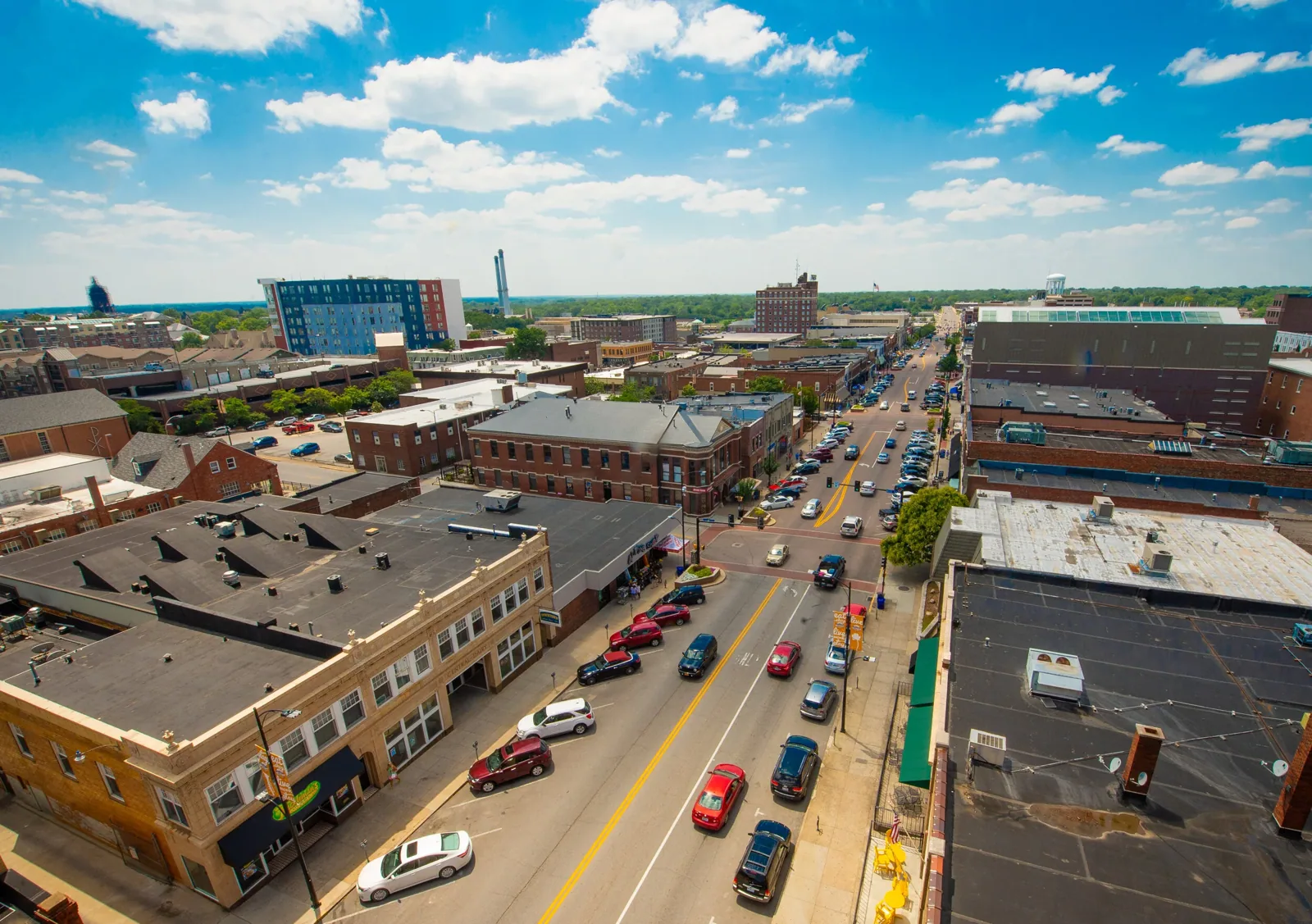
A commercial roof at The District needs a site-specific condition record before a leak or repair becomes a building-wide assumption. The downtown area spans 50 square blocks, contains more than 300 individual properties, and includes residences, shops, restaurants, galleries, nonprofits, and public entities. With more than 300 separate properties, keep each finding tied to its own building and roof zone. A district name cannot locate a failed seam, blocked outlet, or prior patch. We inspect accessible areas, note limits, and photograph the detail connected to the reported condition. Columbia's spring is its wettest season and can bring large hail or tornado-producing storms; winter freeze-thaw and summer heat create other inspection points. Weather sets a reason to check, not a finding of damage. The right starting file names the property, inspection date, observed condition, likely repair boundary, and next step.
What should be identified before a roof visit?
Use the owner's street address, building name, and roof access contact rather than relying on the district name alone. The District’s campus edges meet a mix of downtown uses, so the property contact should identify the roof entry, permitted staging area, and any interior route that needs protection. We confirm which roof areas are included, who can authorize entry, what equipment or ladders are available, and whether the visit should be coordinated around activity inside the building. A commercial roof inspection can map accessible details, report conditions, and mark areas that could not be viewed. If plans are missing, a field sketch can preserve the roof-area references without presenting it as an as-built drawing. Education, healthcare, technology, research, and manufacturing all shape Columbia’s commercial market. For a downtown roof visit, the building contact identifies the current use, access needs, and records that should accompany the inspection. That keeps the inspection report useful if ownership or staff changes.
Related Roofing Work
More commercial roofing work connected to The District in Columbia, MO.
Which conditions can a first walk establish?
A first visit can document visible seams, flashing, drains, scuppers, penetrations, edges, patches, and surface conditions. It can also note roof areas that were unsafe or inaccessible. A photo should show both the detail and enough surrounding context to find it later. We avoid calling a concealed condition confirmed unless a test or opening supports that conclusion. If water is reported inside, compare the interior location with roof details above and around it; water may travel before it appears. A written condition report can connect photographs to a dated observation and state which question remains open. The District’s property count makes a consistent building and roof-zone label useful for every photograph and repair note. At an individual building, the roof plan, prior repair notes, and current field evidence guide the inspection. If a surface mark appears after a storm, photograph it and compare with earlier images rather than labeling it weather damage from appearance alone. The report should identify the observed feature, its location, and the next check that could change the recommendation.
How does Columbia weather affect the follow-up?
A weather date can determine when to revisit a roof, but the decision file still needs building-level observations. In Columbia, summer commonly includes about 34 days at or above 90 degrees and two that reach 100 under the 1991 to 2020 normals. Spring rainfall is more pronounced and strong storms may bring hail or tornadoes; warm-season downpours can fall unevenly across the city. Winter adds cycles around freezing and seasonal snow. For an owner in The District, those conditions point to different checks at drains, seams, flashings, and edges. Compare the reported location with the adjacent details, note anything inaccessible, and use earlier images to distinguish a new condition from a familiar one. If evidence remains uncertain, state the specific test or follow-up needed rather than stretching the conclusion. A dated record lets the owner compare the same roof zone after a repair or later rainfall without treating the city's climate history as proof about one property.
When is a local repair enough?
A local repair may fit a defined opening or failed flashing when sound material remains around it and moisture has not spread beyond the work boundary. We identify preparation, compatible materials, tie-in, and any adjacent detail included. If water entry recurs, wet insulation is suspected, or several roof details have deteriorated, testing or a larger assembly review may be needed before a patch is priced. A repair scope should separate confirmed work from an allowance for concealed conditions. The District includes a wide range of property types and uses; the building's actual roof assembly determines whether a repair material is suitable. Columbia's 2024 commercial plan-review package includes existing-building and energy provisions, but a surface visit cannot decide which requirements apply to a planned alteration. The project design and review path govern that question. We can document a repair boundary, propose an inspection or test where it could change the scope, and state what remains unaddressed. If replacement is being considered, compare removal, insulation, drainage, edge details, and temporary protection rather than treating it as a larger version of a patch. The owner receives a recommendation tied to the evidence and assumptions.
How should roof work be coordinated with a downtown property?
The District combines residences, restaurants, galleries, nonprofit offices, and public uses. Before roof work, the building contact confirms access, staging, protected paths, and interior spaces below the work zone. We confirm the work area, material staging, protected paths, and any interior space below the roof before opening the assembly. For a repair, define when the roof area can be released and how it will be left watertight if work stops. For a reroof, identify daily tear-off limits, temporary cover, tie-in points, and who receives the close-in update. Occupied-building sequencing can help set those boundaries, but the details must match the property. The District is one downtown area among other nearby settings such as North Village and the Arcade District; each has its own address and building record. North Village and the Arcade District are separate service locations, not interchangeable descriptions of The District. We preserve the property label, field photos, and approved scope in the closeout file. That lets a future inspection trace a detail to the work completed without inferring the same condition across neighboring addresses.
When several organizations share a block, the property manager can confirm who may authorize roof access and receive the scope. Keep that contact and the agreed work boundary with the building’s photos so a future manager can follow the same roof history. For a multi-building owner, use a separate property identifier and photo set for each address, even when the same crew visits nearby roofs on one day.
Commercial Roofing Questions
Does The District's property count tell me how many roofs need work?
No. The count describes individual properties and uses, not roof systems or conditions. We inspect the named building and report only the areas we could access.
Can a roof inspection happen while the business is open?
The property contact confirms current access and operating requirements. We use those instructions to define the roof areas, staging, and any protected interior zones before work begins.
Which details help target a leak inspection at a downtown property?
Provide the street address, roof access contact, interior location, date first noticed, and prior repair records or photos if available. We use those details to orient the visit, then verify the condition on the roof.
Will a repair estimate include concealed wet insulation?
Only if the affected material is confirmed and included in the scope. If it remains concealed, we identify a test or opening that could establish the extent before finalizing that part of the work.