
Emergency Commercial Roof Repair in Columbia, MO
A torn membrane or displaced edge after a Columbia storm can expose equipment, inventory, and occupied space before a permanent repair is ready. A roofing emergency can reach our response team at any hour, any day, including holidays. The first visit is about safe access, stopping active water where conditions allow, and recording which roof area is open or vulnerable. We note the building contact's report, the weather timing, and the visible condition, then photograph the affected detail before temporary protection changes it. Columbia's spring storms can bring heavy rain, large hail, and tornadoes; later summer storms may concentrate rainfall over one part of the city. A weather event guides the response, but each roof section still needs inspection. Ashland, MO supports commercial airline service, while the I-70 Business Loop corridor serves mixed commercial and industrial properties. For an emergency at any building, we confirm roof access, staging, and operating limits with the site contact. The response record separates immediate dry-in from the permanent repair scope.
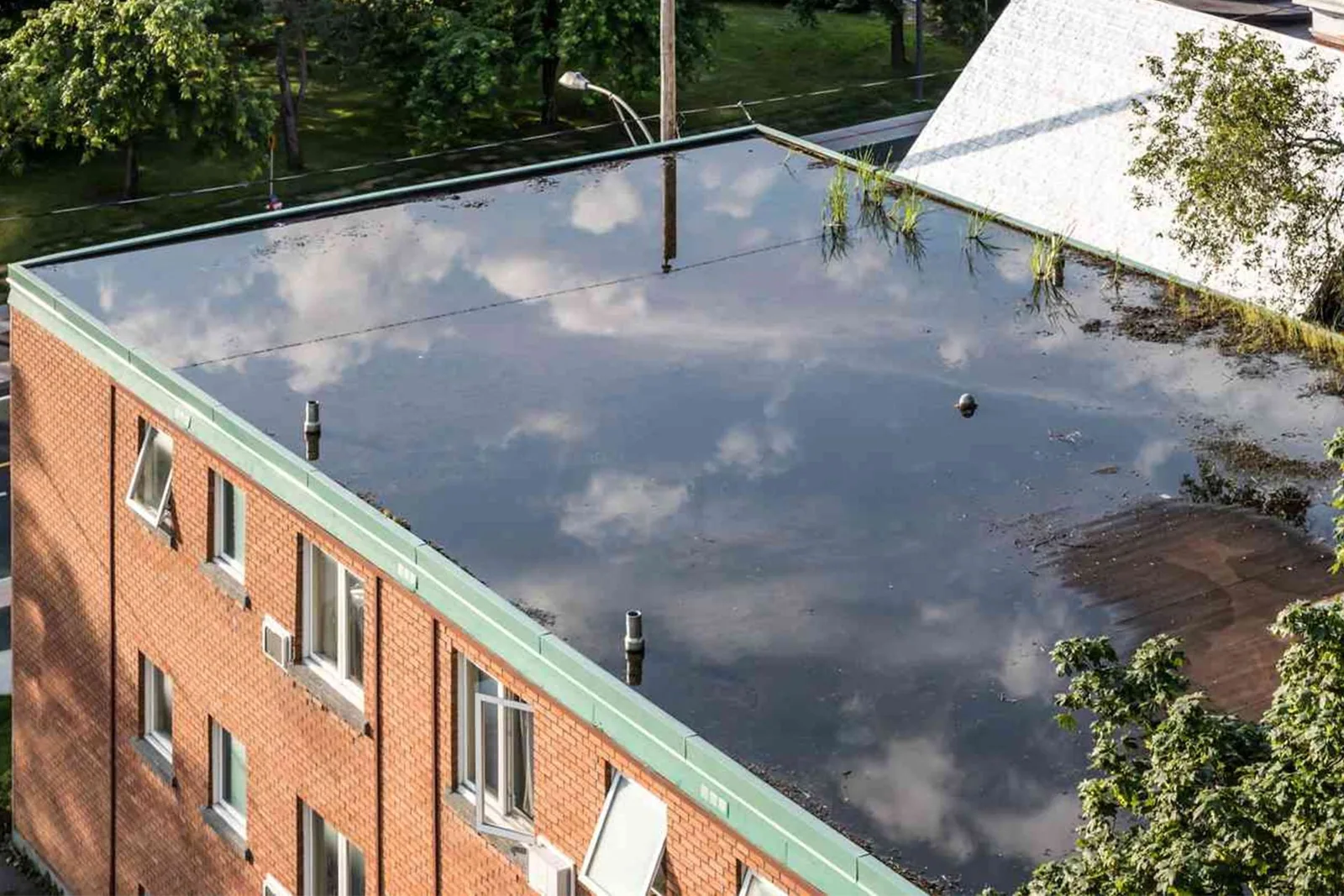
What should happen in the first response?
We confirm the reported location, building access, roof system if known, and any safety concern inside the affected area. On the roof, we identify open seams, punctures, missing or lifted edge components, damaged flashing, or another visible opening. If safe access and the weather allow, we install a temporary cover, patch, or dry-in measure suited to that condition. The crew documents the protection boundary and the areas that remain exposed or uninspected. If lightning, wind, standing water, or roof instability makes access unsafe, work pauses until conditions permit a safe approach. Temporary protection is not represented as a completed restoration; it controls the immediate exposure while the permanent work is planned. Our leak tracing service can follow once the active water is contained, and a planned repair visit can address the detail after preparation and materials are ready.
Related Roofing Work
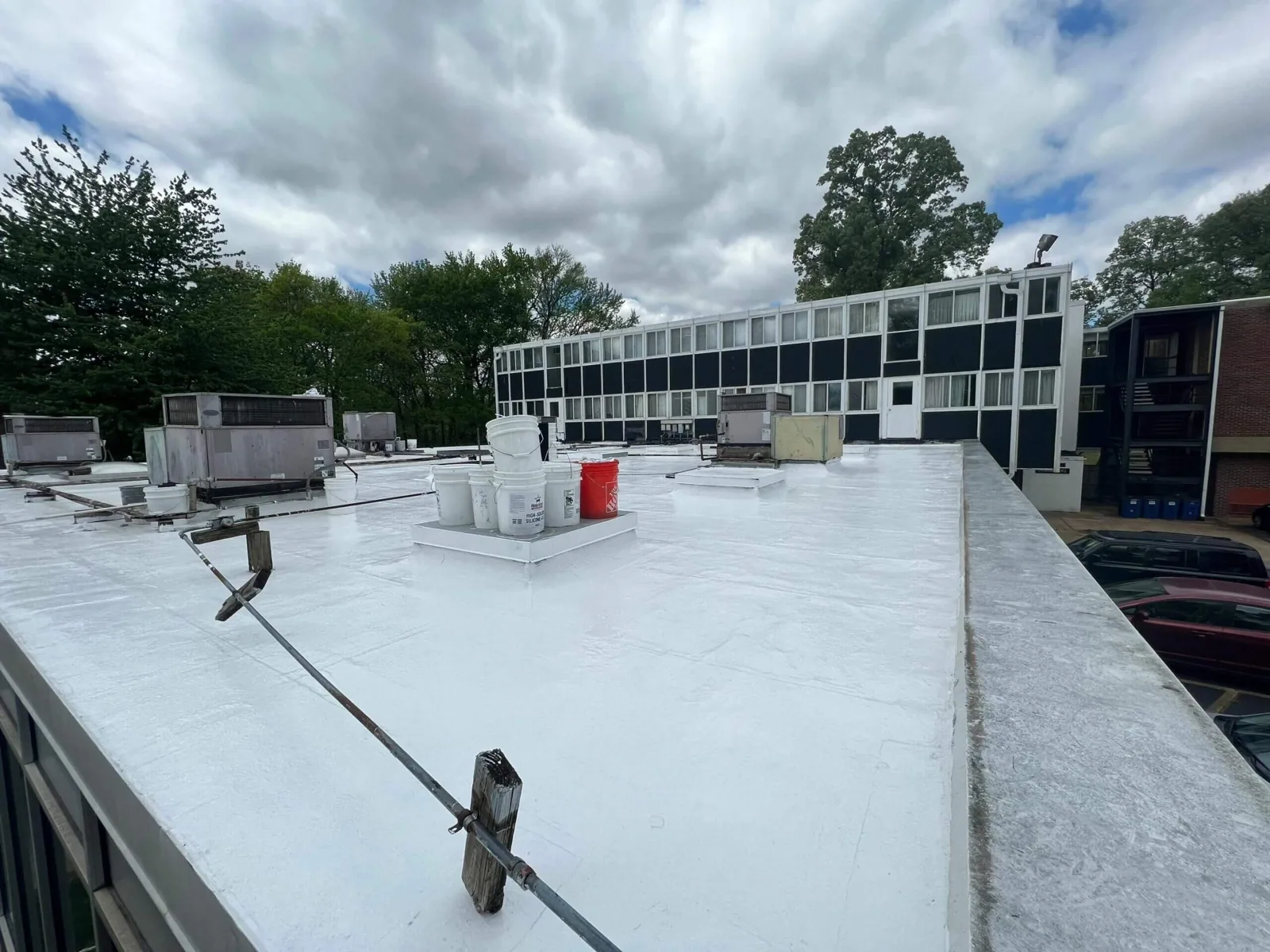
More commercial roofing work connected to Emergency Commercial Roof Repair in Columbia, MO.
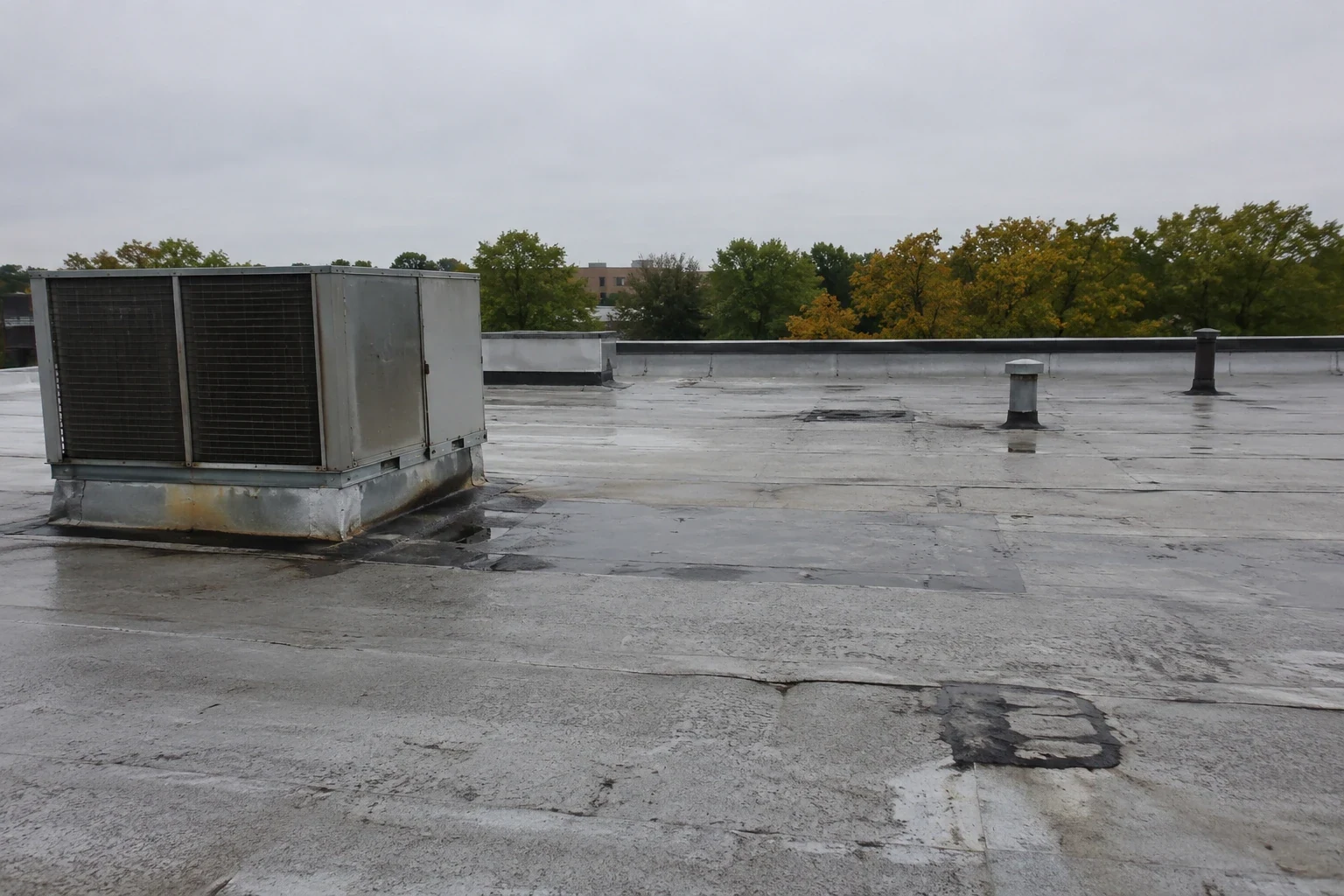
How is water and interior exposure controlled?
Inside the building, the contact identifies affected rooms, equipment, stored goods, and any active electrical or operational concern. We coordinate access with the person responsible for that space and document what can be protected without creating a new hazard. On the roof, we limit the opened area and secure any temporary material against expected conditions. A temporary tarp needs a clear boundary and attachment approach; loose covers can create another problem when wind rises. Columbia sees damaging winds as a late-season severe-weather concern, so the protection plan should account for secure edges and a prompt follow-up. We also inspect nearby drains and scuppers if water is accumulating, since a blocked outlet may increase exposure even when it is not the original opening. If water has reached concealed layers, testing may be needed after the emergency phase. The first record should state what was controlled, what remains wet, and which part requires permanent attention.
What turns temporary protection into permanent work?
The permanent scope begins after the active opening and surrounding material can be assessed. We identify the roof system, prepare sound material, repair the failed seam or flashing, replace damaged membrane where needed, and check that the tie-in sheds water. If insulation or deck damage is visible, the repair boundary may widen; we record the exposed condition and obtain direction before covering it. Hail marks, debris impact, wind displacement, and older wear are described separately when the evidence allows. A storm date alone does not establish the cause or extent of damage. The City of Columbia's 2024 building-code package applies to plan review for commercial work, including existing-building provisions, and the project scope should be checked against applicable requirements. For a larger area, a roof inspection can assess surrounding conditions, while a claim documentation review can organize dated photographs and repair notes for an insurer's questions.
How do you keep the building operating?
Emergency work still happens on a real property with people, vehicles, deliveries, and scheduled activity. We confirm a roof-access route, identify where a lift or materials can be placed, and keep entry paths clear to the extent the site allows. For a facility near I-70, delivery timing and access to the roof may differ from a downtown business or a campus building. The Columbia Regional Airport has commercial service, two runways, and on-site public-safety and aviation support, so any roof work in that operating environment requires site-specific coordination with the responsible contact. We do not assume that a reported leak grants access to every area. The work note names the zone reached, the zone protected, and the places that still need inspection. The site contact receives an update if the planned access route or operating window changes during the response. Where the building remains open, we coordinate temporary interior protection and movement of occupants with the contact who manages the affected area.
What evidence comes back after the emergency visit?
The closeout note should make the next decision possible. It records the arrival condition, the location and extent of temporary protection, photographs of the damaged detail, and any area that could not be reached. After the permanent repair, we add the finished condition and state whether the original water path was confirmed. If the opening exposed wet insulation or damaged decking, the file records the approved repair and any remaining area for later review. A follow-up after the next substantial rain can help verify a difficult leak path. The same roof-area labels should carry into the permanent repair record, so the owner does not have to reconcile two separate location descriptions. A dated condition report can keep emergency and permanent work in one decision file, and routine maintenance can revisit the area after the immediate event has passed.
The first report should distinguish the active opening, temporary protection, and permanent work still required. It should identify the affected roof zone, the interior area reported, the date and weather context, photographs, materials used for stabilization, and any access limit. When permanent repairs follow, add a second record that shows removal, substrate condition, final tie-in, and closeout. Columbia's spring storms can bring intense rain, hail, or tornadoes; the event itself does not establish the damage mechanism at one building. A dated before-and-after record helps the owner compare visible conditions and decide which area needs the next inspection.
Commercial Roofing Questions
Can you respond overnight or during a holiday?
Yes. Emergency response is available around the clock, all week and through holidays. Safe access and current weather still determine what work can be performed on the first visit. We will document any protection placed and identify the permanent inspection or repair that remains.
Will a tarp solve the roof problem?
A temporary cover can limit immediate exposure when it is installed safely and secured for the conditions. It does not repair the underlying membrane, flashing, or wet assembly. We record the covered area and return for a permanent scope when the roof can be assessed and worked safely.
Which site details help you prepare for an emergency visit?
Keep people away from wet ceilings, active drips near electrical equipment, and any area where materials may fall. Tell the building contact where water appeared and when, and preserve photographs if that can be done safely. We coordinate the roof route and interior access with the person responsible for the site.
Does a severe-weather call automatically become an insurance claim?
The response starts with protecting the property and recording observed conditions. A claim decision belongs to the owner and insurer. We can provide dated photographs, locations, and repair notes, while keeping confirmed roof damage separate from older wear or areas that were not inspected.