
Commercial Roof Inspection in Columbia, MO
Freeze-thaw marks at an exposed edge can look minor until the same location is compared with a dated photo from the prior season. A useful commercial roof inspection gives each observation a place, a condition, and a next step. In Columbia, winter freeze and thaw, spring storms with hail potential, summer heat, and localized heavy rain create different inspection questions. We do not treat a weather pattern as proof of roof damage. We walk accessible areas, examine membrane or metal, seams, flashing, penetrations, drains, edges, and equipment transitions, and note what could not be reached. The final record separates an immediate repair from a condition to monitor and an area needing testing. The Route Z Commercial Corridor includes academic halls and a maintenance building, while the Ashland Broadway and US 63 Corridor serves nonresidential development along those routes. Each inspection still follows the actual roof and access conditions confirmed for that property.
What parts of the roof are included?
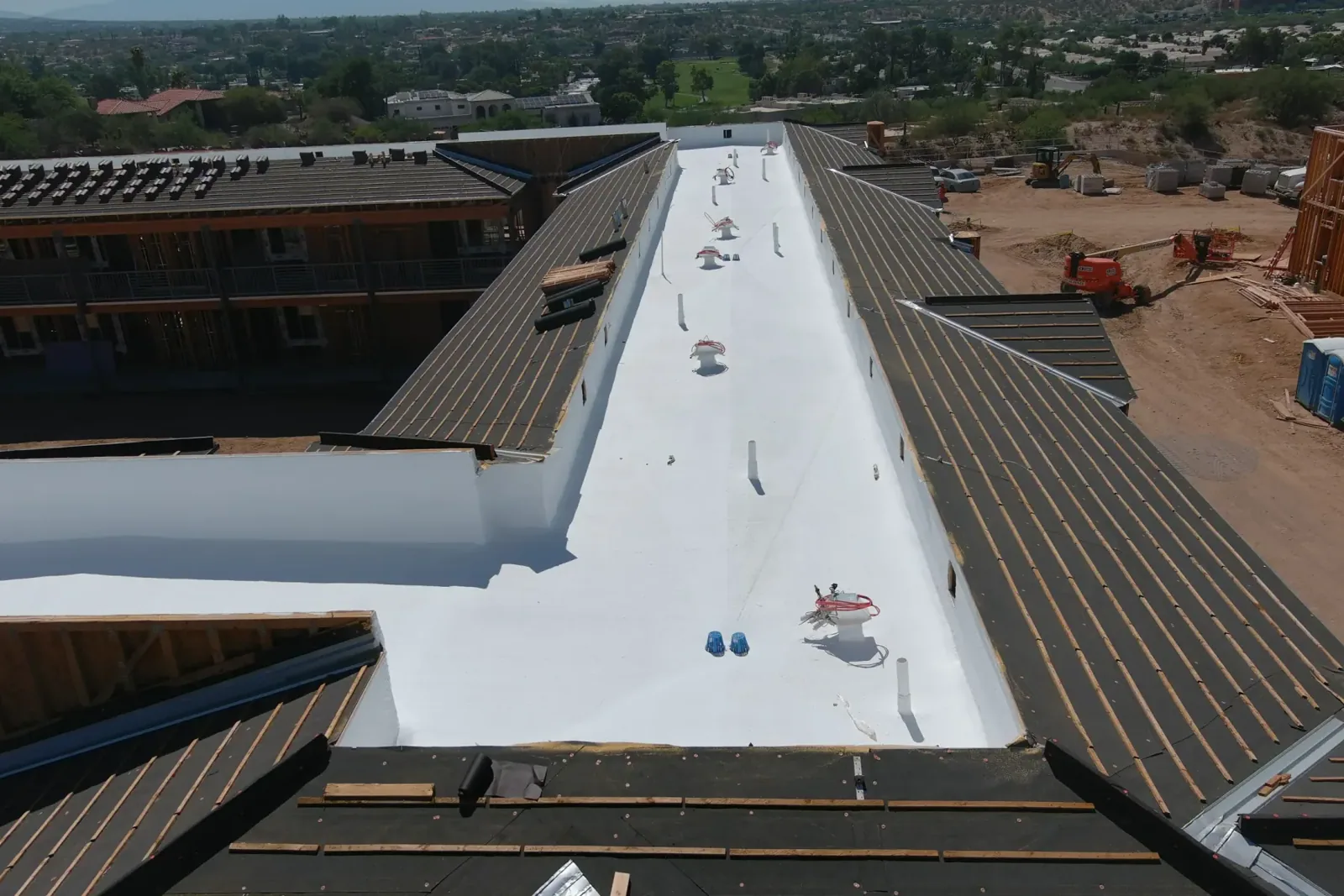
The inspection follows the roof as a connected assembly. We review the field membrane or metal panels, seams, perimeter terminations, wall flashing, curbs, pipes, skylights, drains, scuppers, and gutters. We look for punctures, open laps, pulled fasteners, displaced metal, deteriorated sealant, ponding, debris, and evidence of prior repair. Where safely accessible, the interior can be checked for staining or other signs that help trace a reported water path. Equipment platforms and service routes receive attention because traffic and later maintenance can affect nearby details. Each observation is tagged to an area on a roof sketch or plan where available. A photograph without a location is hard to compare later; the record should show both the condition and its context. For a broader perimeter check, we can include coping, gutters, and edge metal; for outlets, we inspect drains and scuppers as part of the water path.
Related Roofing Work
More commercial roofing work connected to Commercial Roof Inspection in Columbia, MO.
How does Columbia weather shape the observation?
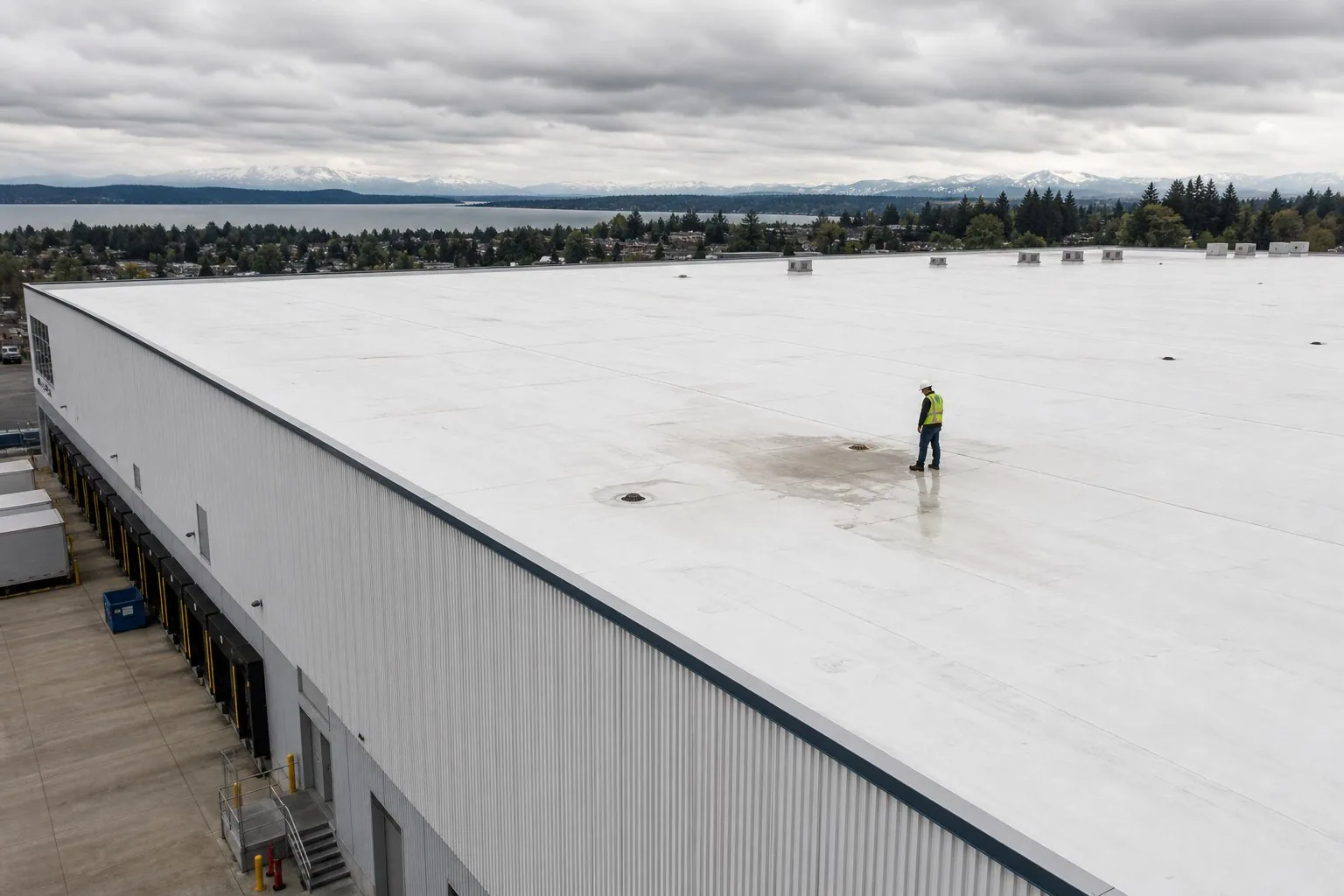
Seasonal exposure helps determine what to look for and when to return. Columbia's climate record includes recurring freezing nights and seasonal snow, a wet spring that is more likely to bring supercell storms, and summer temperatures that often reach 90 degrees or above. Freeze-thaw cycles can stress seams and transitions; snow and meltwater make drainage and edge details relevant; hail or damaging wind can leave localized impacts that need a roof-area record. Hot surfaces can also reveal aged sealant or membrane movement, but the inspection still depends on what is visible and testable on that building. We record the inspection date and recent event reported by the owner, then describe the material condition without assigning a cause that the evidence cannot support. Where a prior photo exists, we compare the same roof area and note whether the condition changed or remained stable. A follow-up after a substantial rain may be useful when water paths remain uncertain. If a storm has just passed, storm-condition documentation can focus the review on the affected areas while keeping older wear in a separate note.
How are findings ranked for action?
The report distinguishes conditions that need prompt attention from items that can be tracked. An open seam with active water entry differs from a surface mark with no visible opening; a blocked drain is different from a roof slope that drains slowly but remains clear. We identify the evidence, likely consequence if left unresolved, and the repair or test that would answer the next question. Where concealed moisture is suspected, a survey or test cut may be appropriate. Where the defect is isolated, a defined repair scope can preserve sound surrounding material. If deterioration appears across multiple sections, a replacement comparison should identify the observed spread and any areas not inspected. Columbia's 2024 building-code package includes existing-building and energy requirements for plan review; when inspection findings lead to a larger alteration, project-specific requirements should be checked as the scope develops.
What can change the scope of an inspection?
Roof height, access points, fall protection, weather, equipment obstructions, and occupied areas affect how much of the roof can be observed. We agree on a safe route and note any area that could not be reached rather than implying complete coverage. A drone can assist with certain large or difficult surfaces, while hands-on access remains important for close evaluation of seams and details. A roof inspection is visual unless testing is specifically included; infrared readings and core cuts are separate methods with their own limits. At a site near the University of Missouri, the campus inventory includes research buildings, garages, residence halls, and utility facilities, so inspection logistics may vary across buildings. The City describes mixed commercial and industrial activity along the I-70 Business Loop. Access windows and delivery schedules still need to be confirmed for the individual building. We record the building area inspected, limitations, and any follow-up needed to complete the review.
What should the owner receive after the visit?
The deliverable should be usable by someone managing the property after the inspection team leaves. We provide dated photographs, roof-area references, descriptions of observed conditions, and a prioritized list of recommended repairs or checks. Each note states whether the issue was confirmed, suspected, or outside the inspection boundary. If the owner has an earlier report, we compare like areas and identify what changed instead of restating the whole roof as new. A roof history file can track repairs, weather exposure, and follow-up results over time. The report may also help an owner decide whether to obtain a focused repair price, expand moisture testing, or begin capital planning. Written roof findings can preserve the inspection record, and a maintenance program can set recurring attention for drains, penetrations, and exposed edges.
The deliverable should give each finding a location, condition, photograph, and next action. Separate active water entry from deterioration that can be scheduled, and identify any area that was not safely accessible. A roof sketch can label drains, curbs, seams, edges, and transitions so a future crew can return to the same detail. Columbia's wet spring and winter freeze-thaw cycles create different times to compare the roof, but a seasonal exposure is a reason to inspect, not proof of a defect. The owner should leave with the observation date, the repair boundary if one is recommended, and a follow-up point tied to the roof evidence.
Commercial Roofing Questions
Does a roof inspection include infrared testing?
A standard hands-on inspection is a visual review of accessible surfaces and details. Infrared work or core cuts should be listed separately when they are part of the scope. We identify the areas examined, the method used, and any condition that needs confirmation by another test.
Can an inspection tell us whether a leak is coming from the roof?
It can connect a reported interior symptom to roof conditions when the evidence supports that path. We inspect above and around the reported area and look at seams, penetrations, walls, and drainage. If another source remains possible, the report preserves that uncertainty instead of assigning a cause prematurely.
What if part of the roof is unsafe to access?
We document the boundary and the reason that area could not be reached. A drone or other method may help observe some surfaces, but it cannot replace every close inspection. The owner receives a clear description of the remaining gap and a safe next step.
Can we use the report to plan next year's work?
Yes. Dated conditions, repair history, and follow-up checks help compare changes over time. We can group immediate repairs separately from monitoring items and identify where more testing is needed, giving facilities staff a practical record for maintenance and capital discussions.