
Commercial Roofing for Healthcare Systems in Columbia, MO
A ceiling report beside a treatment area needs a roof record that identifies what was inspected and what remains uncertain. Columbia's healthcare sector spans hospital campuses, specialty and behavioral-health properties, and community care. The Hospital Drive Medical Corridor brings several separate facilities into one useful geographic reference, while Boone Health also serves the city. The corridor does not imply a shared roof condition or access plan. We inspect the specific building and roof zone tied to a reported condition, photograph the relevant details, and keep any testing limit visible. Freeze-thaw winters, wet spring storms, and summer downpours make dated comparisons useful, but weather history is not a diagnosis. For a health system, the repair record also needs to show who confirmed access, what operating area could be affected, and how the roof was closed at the end of each shift. That combination supports a safer work decision without confusing a campus directory with a construction plan.
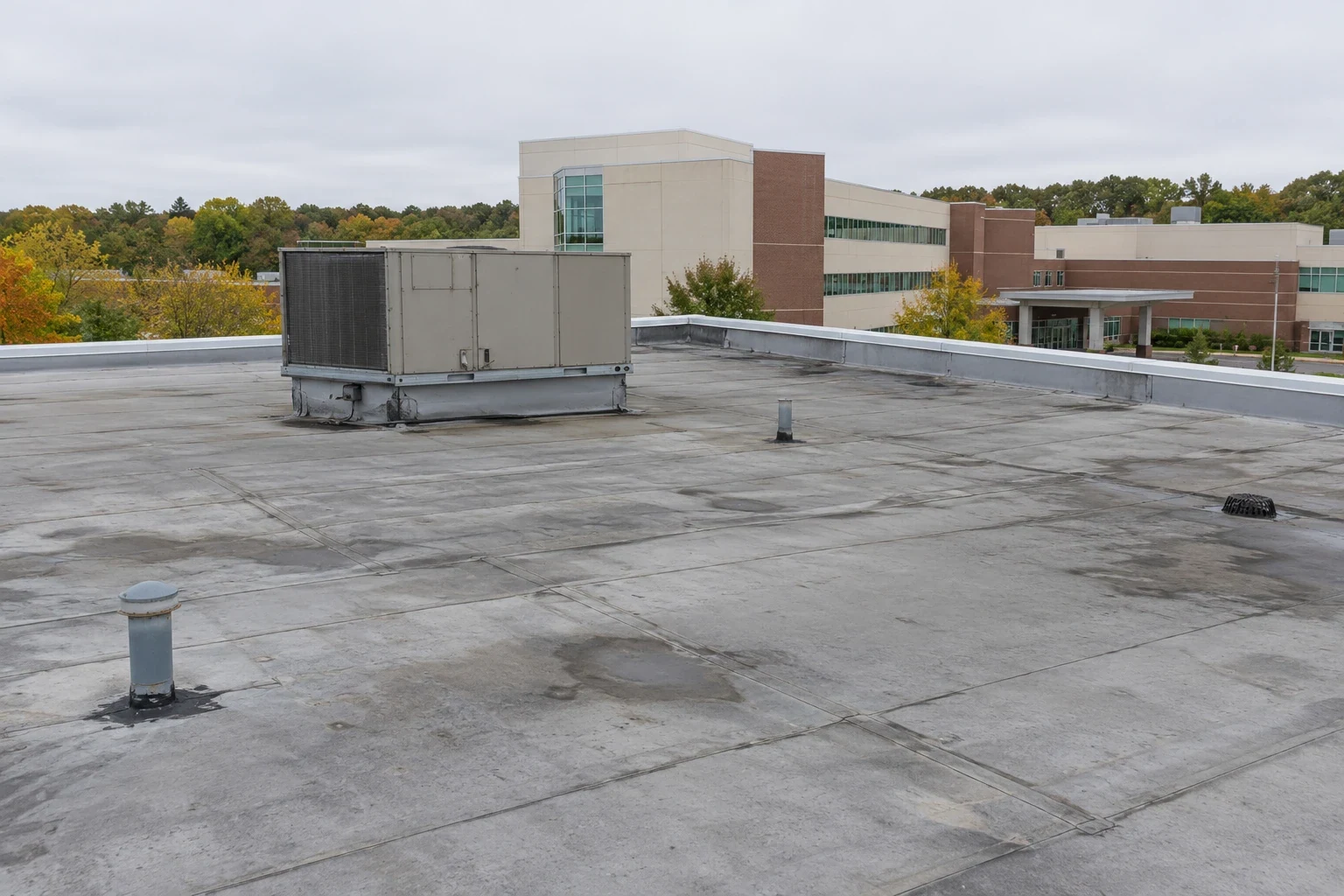
How should roof access be coordinated at a care facility?
The facility contact identifies controlled entries, loading paths, clinical areas below the roof, noise restrictions, and any equipment that cannot be interrupted. We confirm where ladders or lifts may be placed, which spaces require advance notice, and whether a roof hatch needs an escort. The inspection record states the areas reached and those deferred. At the MU Health Care campus, the facilities inventory lists University Hospital, a patient-care tower, Children’s Hospital, clinics, and parking structures; those listed building types illustrate why an access plan must be tied to one structure and work zone. West Broadway Corridor provides a local reference point, not permission or evidence of prior work. Occupied-building phasing can divide the work into roof zones with a daily tie-in and protection boundary. If a condition requires immediate cover, we record the temporary measure separately from the permanent repair recommendation.
Related Roofing Work
More commercial roofing work connected to Healthcare Systems in Columbia, MO.
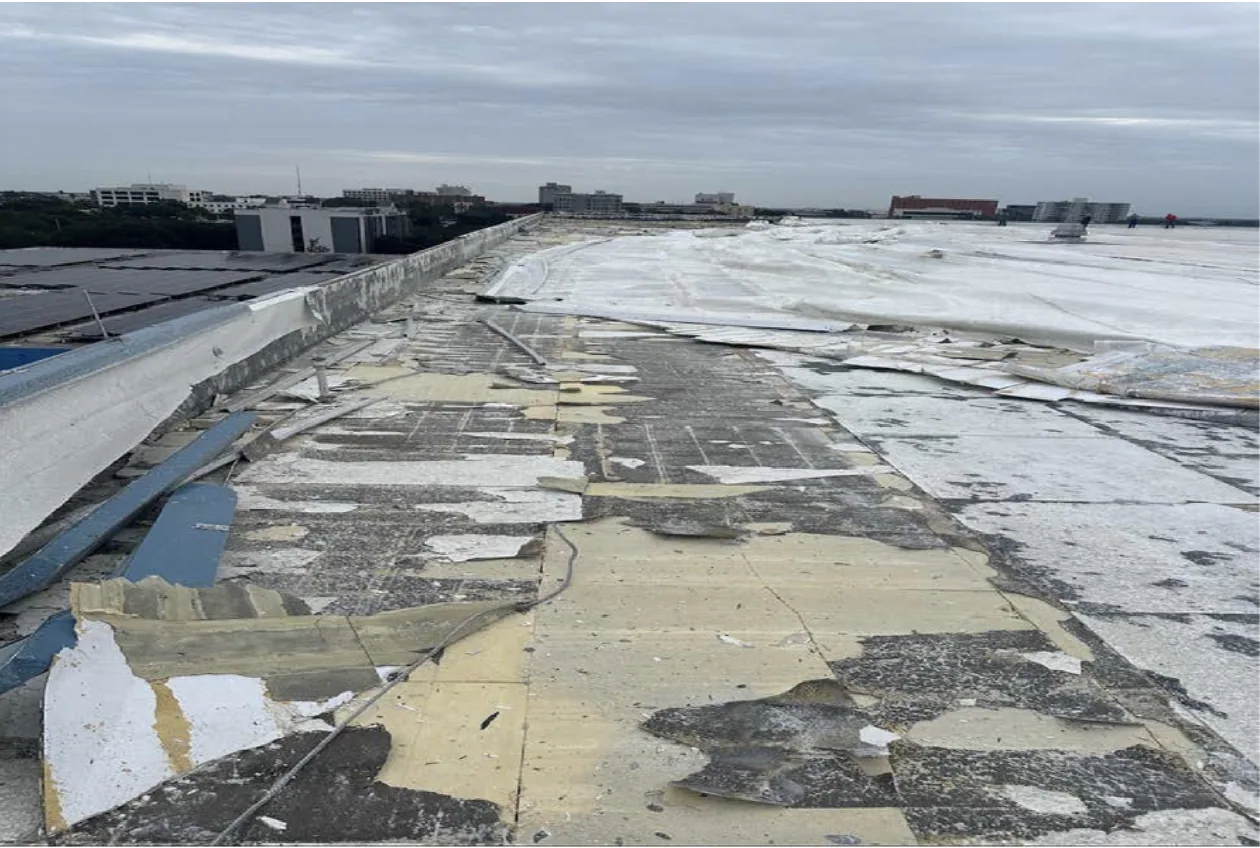

What should the roof inspection document?
Record the roof section, date, weather exposure under review, seams, edges, drains, curbs, wall transitions, and any prior repair visible. Interior moisture reports should be matched to the corresponding level and area when that information is available, while recognizing that water can travel before appearing inside. We distinguish visible staining from active moisture and from a suspected path that needs testing. The report should name the method used, photographs, access constraints, and next action. A documented roof inspection can organize that evidence; infrared moisture assessment may help direct further investigation where conditions support it. Boone Health lists emergency, cancer, heart and vascular, childbirth, surgical, and convenient-care services. Those services make operational coordination important, but do not tell us where a roof opening is or what the building contains. The Diligence Notes stays with the inspected structure and the conditions actually found. If an inspection is limited to a safe, reachable section, state that boundary and arrange a separate visit where access can be provided. A later inspection should return to the same locations where possible, because comparable photographs make it easier to see a change in an open seam, drain, or prior repair. Property manager reporting can preserve the handoff of service tickets, while institutional portfolio review connects the roof record to a capital decision. Each report still needs to identify its own building and date.
When is a local repair enough?
An isolated opening at a curb or seam may support a focused repair if surrounding material is dry, adhered, and compatible with the repair system. Moisture found across separate areas, repeated failure at the same transition, or widespread deterioration may call for a broader comparison. We mark the boundary, list the materials and tie-ins, and identify any concealed condition that could change the scope. A targeted repair should keep the work limit clear. A replacement alternative should state removal depth, insulation handling, drainage details, occupied-area protection, and how temporary dry-in will be maintained. The 2024 building-code package used by Columbia includes commercial existing-building and energy provisions; the project documents determine which requirements apply to an alteration. A TPO assembly or another membrane system must be evaluated against the existing deck and transitions rather than selected by name alone. The owner receives separate repair and replacement scopes when both remain reasonable options.
A roof condition above a patient-care area can require coordination across facilities, infection prevention, and the department responsible for the space. The inspection plan should identify occupied rooms below the work zone, approved access, and any ceiling or equipment protection needed. We document the roof observation separately from operational precautions so each team can review its responsibility.
What should the facility retain after roof work?
Columbia winters include recurring freeze-thaw conditions, spring is the wettest season, and summer thunderstorms may produce localized heavy rain. Those patterns justify follow-up checks at repaired details, not a claim that every facility has weather damage. We provide dated photographs, a marked work area, installed-system information, and a note describing any area left outside the scope. Before the crew leaves each day, the field record should show the completed zone and temporary protection at the open edge. Emergency roof response can limit active water entry while the permanent work is arranged. If a facility is part of a larger network, multi-site roof records can use common fields while preserving the observations for each building. Each facility has its own access plan and service requirements; the closeout file should use the property name and roof identifier supplied by the owner. That helps maintenance staff compare the next report with the right repair, not just the broader health system.
When a repair exposes wet insulation or damaged deck, pause at a stable boundary and notify the designated facility contact. The revised scope should describe the new finding, affected area, protection needed below, and decision required before work continues. Closeout then records both the completed roof detail and any area deferred for testing or a later phase.
Columbia winter normals include recurring freeze-thaw conditions, with 102 days at or below freezing and 16.5 inches of seasonal snowfall. For a care facility, the record should make it possible to see whether a later leak follows an earlier seam, curb, or drain repair after those cycles. Save the pre-work photographs, marked plan, material and preparation record, weather hold, and closeout image under the same roof-zone label. Note any area screened by equipment or unavailable under access rules so the next visit does not imply that the entire roof was reviewed. The facilities contact can then connect the roof history to a patient-area report without assuming the interior stain sits directly under the entry point. If the repair boundary changes during work, capture the condition and approval before extending it.
Commercial Roofing Questions
Can a hospital remain open during roof repairs?
The facility contact defines clinical areas, access limits, and operating periods that must be protected. We divide the roof into work zones, record the daily close-in boundary, and note any change to access or noise conditions.
What if the leak appears away from the roof opening?
We inspect the related roof details and consider how water may move through the assembly before assigning a cause. The report distinguishes the interior symptom, observed roof condition, and any testing needed to confirm a path.
Does a campus map identify which roof needs work?
A map helps identify buildings and access, but it does not establish a roof assembly or defect. The inspection record should name the structure, zone, date, and visible condition that supports the recommendation.
How are urgent protection and permanent repair recorded?
We keep the temporary measure, affected area, and return check separate from the permanent scope. That makes clear whether the roof has been stabilized, repaired, or still needs a further investigation.