
TPO Roofing in Columbia, MO
Curb interruptions put TPO seam continuity under more stress than an open field seam. We inspect the weld, field membrane, flashing, fasteners, and nearby drainage together, then mark the roof area where the condition was found. Columbia moves through freeze-thaw winters, wet spring weather, and hot summers with localized downpours. Those changes can test seams and terminations, but they do not prove that a specific TPO roof has failed. The I-70 Business Loop includes commercial and industrial properties, and the Forum Boulevard Corridor inventory includes laboratories and a chilled-water plant. These local settings do not establish the membrane type on any particular building. Our review starts with the installed roof, its repair history, and the water path visible on site. A useful scope records whether the issue is a localized weld, a damaged sheet, a failed penetration detail, or a broader assembly condition.
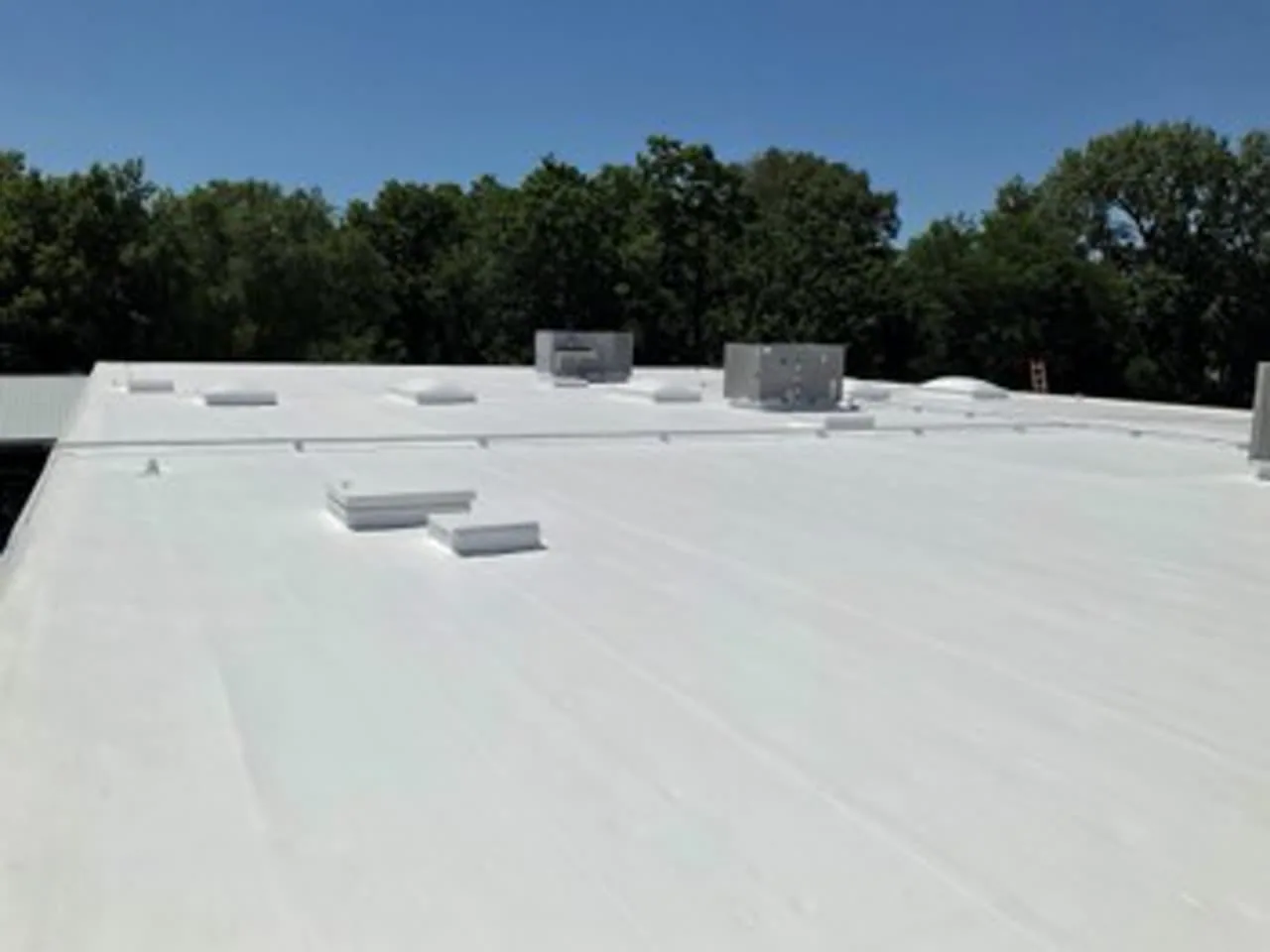
How do you evaluate a TPO seam?
TPO sheets are joined with hot-air welding, so seam condition depends on preparation, temperature, speed, pressure, and the material at the overlap. A probe can identify an open edge, while a test weld or other approved check may help evaluate a suspect area. We look for wrinkles, fishmouths, contamination, patch edges, and movement around curbs or drains. The inspection separates a seam that is locally open from a pattern of weak or aged welds across a larger area. A surface that appears intact may still need closer review if moisture or repeated repairs are present. We mark each test location and state whether it represents the broader roof or a single suspect seam. A photograph should include enough surrounding detail to relocate the weld after a patch or follow-up visit. A roof inspection can map the field, penetrations, and edges; repair work can then address a defined defect. If water may be below the membrane, moisture testing can help determine whether the repair boundary needs to expand.
Related Roofing Work
More commercial roofing work connected to TPO Roofing in Columbia, MO.
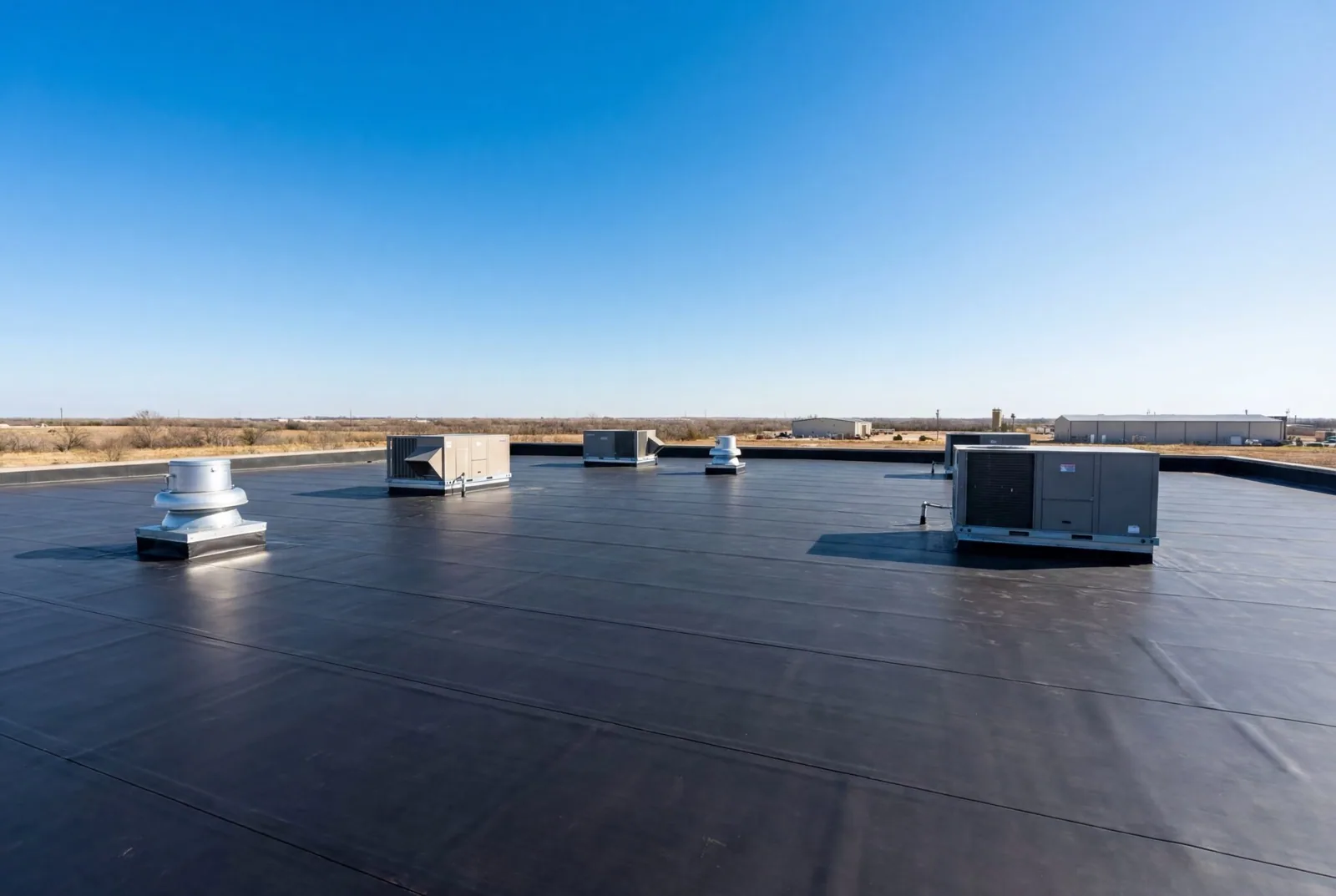
Which TPO details fail outside the field seam?
Leaks can develop where TPO turns up a curb, meets a wall, surrounds a pipe, or terminates at the roof edge. We inspect the flashing height, corner patches, sealant, termination bar, and attachment at each transition. At a drain, the membrane connection and clamping detail matter as much as the visible bowl. Rooftop service can leave cuts, loose conduit, or a disturbed patch, so the work history should be checked before attributing the failure to the membrane itself. Spring brings Columbia-area potential for hail-producing supercells and tornadoes; localized heavy rainfall can also occur during summer storms. After a weather event, we record the roof area and observed condition rather than infer damage from the forecast alone. Drainage review can check low areas and outlets beside the membrane, and curb and support repairs can address transitions around equipment.
When is a TPO repair enough?
A repair can be appropriate when the membrane remains serviceable outside a defined seam, puncture, or flashing defect. The scope should state what is removed, how the substrate is prepared, which compatible membrane or detail materials are used, and how the new weld ties into sound sheet. Wet insulation, weak attachment, brittle areas, or repeated failures can change the decision. If those conditions extend beyond one spot, a patch may leave the cause in place. We compare the repair boundary with the roof history and identify testing or removal needed to confirm what lies below. Replacement planning can be considered when deterioration is broad or recurring. A PVC assembly or KEE membrane has different material characteristics, so system changes should be evaluated against the existing roof, not treated as interchangeable patch material. The proposal should also identify any adjacent area not inspected. It should describe what drives timing, such as drying after rain, safe access to the full seam, or coordination around rooftop equipment. When a repair cannot be completed in one visit, the scope records the temporary condition and the next inspection point rather than treating an unfinished transition as complete.
What controls a new TPO installation?
A new installation begins with a substrate that is ready to receive the specified assembly. We review deck condition, insulation layout, cover board, attachment method, sheet direction, seam placement, and the transitions at edges and penetrations. Fastener patterns or adhesive coverage must match the approved design and the substrate. Sheets need to be positioned so field seams do not land in an unsuitable transition, and each weld needs a clean, dry overlap. The daily sequence should leave a complete watertight tie-in at a shift boundary. In Columbia, spring rain and localized summer storms can shorten an exposed work window, while cold conditions affect material handling and welding. We stage sheets and insulation to limit moisture exposure, record the zones completed, and protect the next tie-in before the crew leaves. A change in substrate or attachment can alter the assembly, so field deviations should be reviewed before they disappear beneath the membrane.
What should a TPO closeout record show?
Photographs should show the repair or installed section before and after the membrane detail is complete. The record identifies product and sheet information where available, seam locations, curb and drain transitions, roof-area labels, and any approved field change. It should also note substrate condition and whether wet or damaged material was removed. Columbia uses the City's 2024 code package for commercial plan review, including existing-building and energy provisions; a replacement assembly or substantial alteration may need project-specific review. A TPO closeout should state which roof sections were included and where older membrane remains. Maintenance visits can follow seam edges, drains, and repaired penetrations over time. The Mizzou research campus inventory describes shared university facilities and research buildings, while each roof inspection still needs its own records. A dated photo set makes the next comparison practical after weather or rooftop service work.
Keep the membrane identification, attachment method, seam test results, flashing details, penetrations, and repair locations with the roof plan. Photograph representative field seams and transitions before they are covered by equipment or future work. If repairs use a different material, document compatibility and the specific boundary. A maintenance contact can then return to the same seam and compare it with the prior observation. Columbia's wet spring and severe-storm exposure make clear drainage and perimeter records useful, but the system should be evaluated from its actual condition rather than a weather summary. This file also helps distinguish a TPO seam issue from a curb or edge failure.
Commercial Roofing Questions
Can an open TPO seam be rewelded?
Sometimes. The sheet must be clean and suitable for welding, and the seam needs enough sound material for a compatible repair. We inspect the overlap and identify where a patch or larger section is required.
Does water beneath a TPO sheet mean the entire roof is wet?
No. Water can move laterally from its entry point, so the affected boundary needs inspection or testing. We distinguish confirmed wet areas from places that need further evaluation before deciding how much material to remove.
What affects a TPO repair schedule?
Access, weather, surface moisture, cure requirements for adjacent materials, and the size of the repair all affect timing. We document the area that can be made watertight before leaving the roof.
Can a TPO roof be coated instead of repaired?
A coating is a separate restoration option and requires compatibility, adhesion, and substrate review. Open seams, wet insulation, or weak attachment must be resolved before a surface treatment is considered.