
PVC Roofing in Columbia, MO
A grease mark near an exhaust curb deserves a closer look before anyone selects a patch or coating. PVC membranes are often considered where chemical exposure is part of the roof environment, but compatibility still depends on the product, exposure, and detail. We inspect the sheet, welds, curb flashing, drain connections, and any areas reached by exhaust or service work. In Columbia, spring storms bring a wet season with hail and tornado potential, while summer heat and localized downpours add separate stresses. The District in Downtown Columbia includes restaurants, shops, galleries, and public uses, and East Broadway / Route WW Corridor is a major arterial serving eastern Columbia. Those uses identify local commercial activity, not a particular roof system or exhaust condition. The assessment is based on the membrane and surrounding details found at the inspected property. It records whether the surface has staining, swelling, embrittlement, open seams, or another sign that changes the repair boundary.
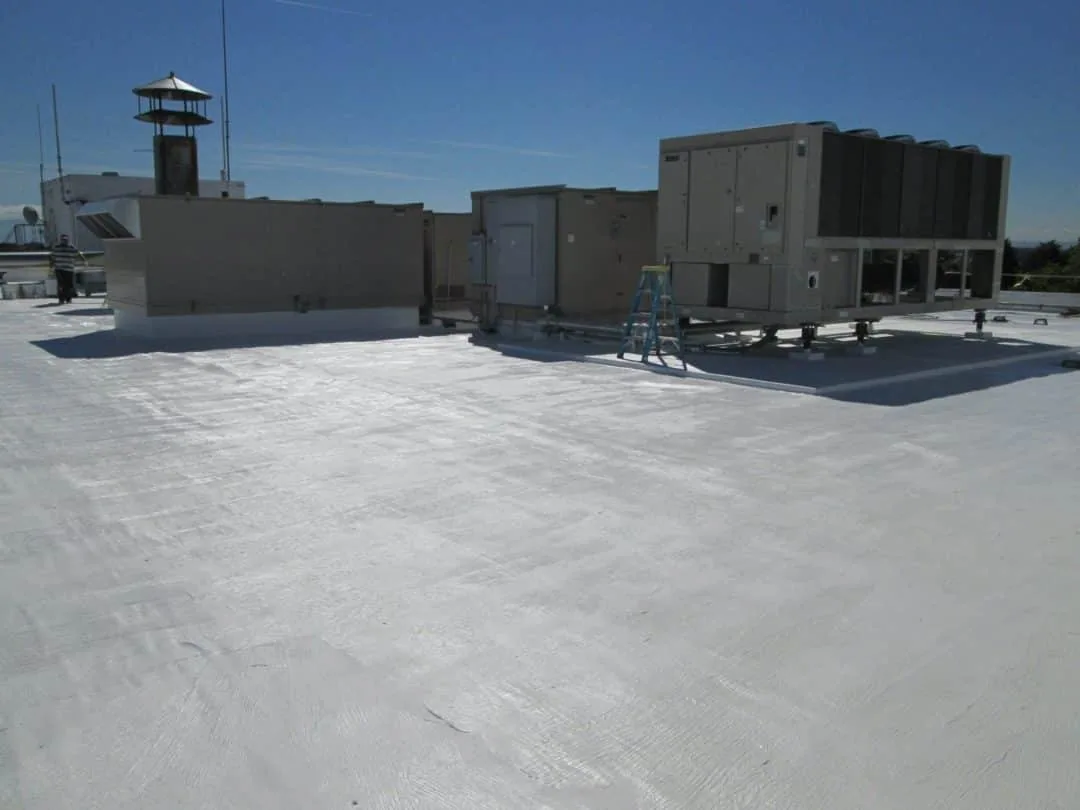
How does chemical exposure affect a PVC roof?
PVC membrane formulations can offer resistance to certain oils, fats, and chemicals, but the exposure and product specification matter. A plume from kitchen exhaust, an accidental spill, or maintenance fluid should be identified before a repair material is selected. We document where the substance contacts the roof and whether the sheet has changed in color, texture, flexibility, or thickness. Surface discoloration alone does not prove the membrane has lost function, and a general compatibility statement cannot replace the manufacturer's data for the actual exposure. When an exhaust or maintenance product is involved, record its point of release, direction, and contact area, then compare those observations with the membrane specification. If a roof has more than one exposure source, map each area separately so a repair does not mask an ongoing cause. A roof inspection can map the affected zone and adjacent seams. If the exposure is ongoing, the owner may need to correct the discharge source before restoring the membrane. Curb and exhaust transitions should be checked with the surrounding flashing, and repair work should use compatible materials and a defined preparation method.
Related Roofing Work
More commercial roofing work connected to PVC Roofing in Columbia, MO.
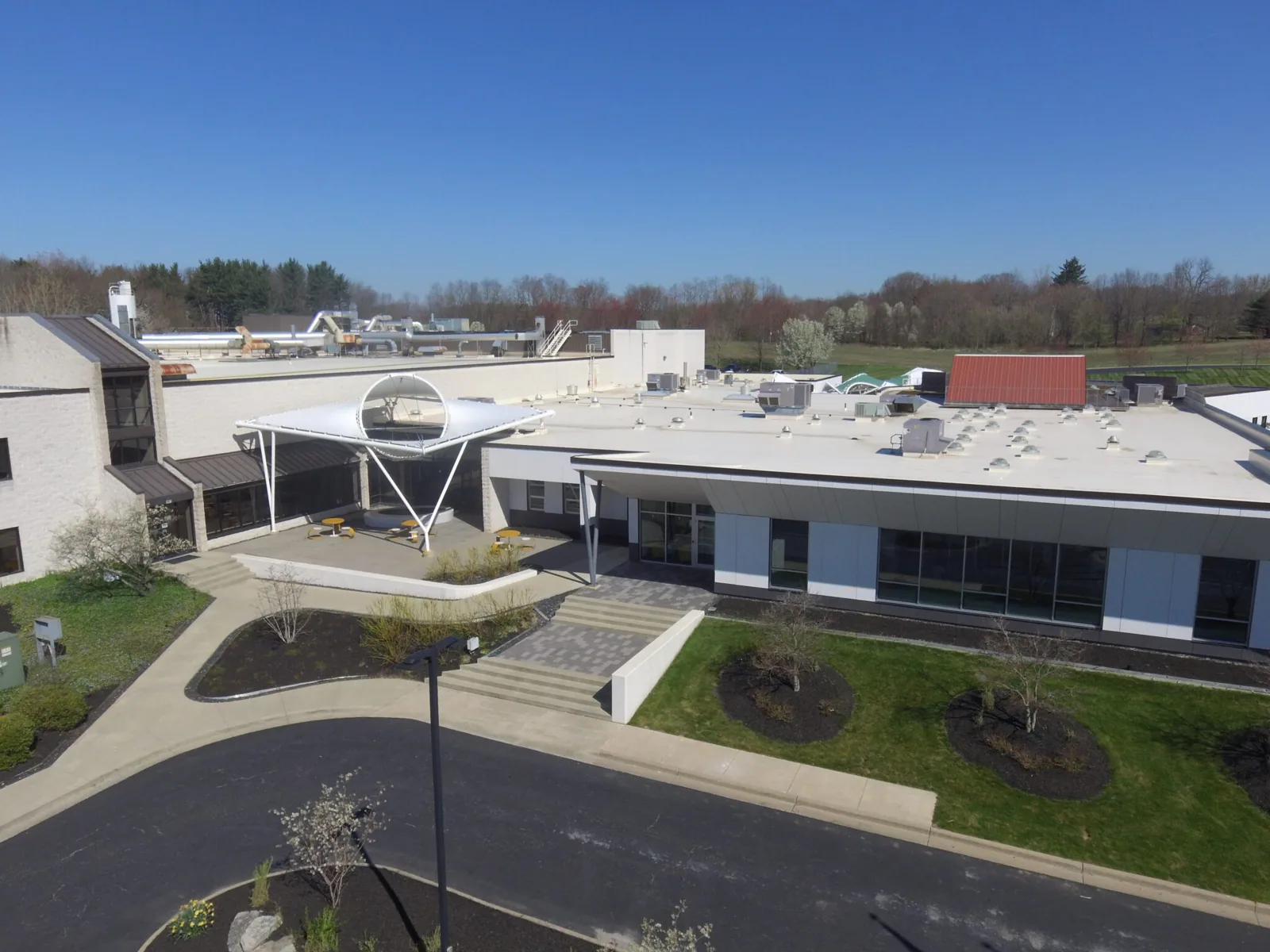
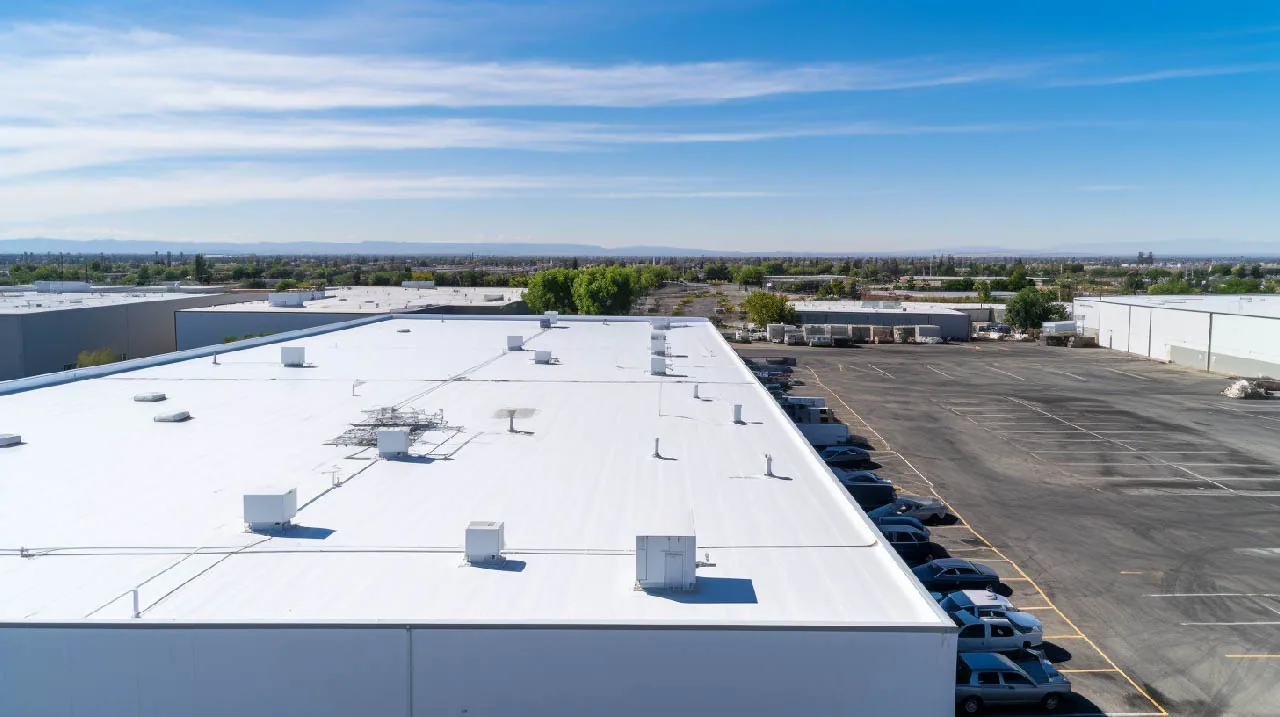
What do PVC welds and flashings need?
A hot-air welder fuses overlapping PVC edges into a continuous seam. We inspect seam edges for openings, contamination, wrinkles, damage from foot traffic, and weak transitions at patches. A probe can locate a loose edge, while a test weld or approved check can help assess a suspect overlap. At a curb or pipe, we look for compatible flashing, formed corners, secure terminations, and movement that could stress the weld. Drains need attention where membrane, clamping ring, and bowl connect; an open connection can let water into the assembly even if the field seams appear sound. Columbia's freeze-thaw winters can move water through vulnerable transitions, and storms may bring hail or wind-driven rain. The observation still needs a location and photograph on that roof. Drainage work can be evaluated alongside membrane condition, while storm assessment can document damage after an event without assuming all discoloration is new.
When is a PVC repair more useful than a new system?
A localized repair is reasonable when the surrounding membrane remains sound and the defect can be prepared back to material suitable for welding or flashing. The proposal should identify the size and location of the repair, how the surface will be cleaned, what material will be used, and where the new work ends. A broader pattern of brittle sheet, recurring seam separation, damaged insulation, or attachment failure can make a small patch an incomplete response. In that case, the roof history and test results help compare repair with replacement. Replacement planning should identify tear-off limits and the new assembly, while a KEE membrane may be compared when its formulation and project requirements fit. TPO is another single-ply system with different material characteristics. A system change should not be chosen from the surface appearance alone; substrate, exposure, drainage, and transition details all belong in the decision file.
How is a PVC roof installed and checked?
Installation begins with a prepared substrate and a layout that accounts for sheet direction, attachment, seams, edges, and penetrations. We confirm that insulation and cover board are dry and secure, stage membrane to limit exposure, and weld overlaps under conditions suited to the product. Test welds can help confirm machine settings before the crew continues across a section. The work plan identifies where the sheet ties into existing material and how the open zone will be made watertight if weather interrupts. Columbia's spring rainfall and localized summer storms make daily close-in boundaries useful, while cold or wet conditions can change the sequence. The project record notes the areas installed, seam checks, and any field adjustment before it is covered. A changed curb or drain detail should be shown in the approved scope and installation photographs rather than left as an undocumented variation. The installer should also record which seams were probed after welding and identify any area that needs a return visit once the surface is dry. Those records help distinguish a workmanship question from a later puncture or a service-trade cut.
What should be tracked after installation?
Record the PVC product, membrane thickness when specified, attachment approach, seam locations, and any repair materials used. Photographs should show drains, curbs, wall terminations, equipment clearances, and areas with known exposure. Follow-up inspection can compare those same locations after service work or severe weather. Columbia's 2024 commercial plan review uses adopted building-code editions that include existing-building and energy provisions; a replacement or major alteration should be reviewed for its actual scope. The roof record should identify any old membrane or adjacent section left in place so later maintenance does not treat it as part of the new work. Preventive maintenance can track seams and drainage, and a condition report can preserve the dated observations. If future work introduces a chemical exposure, document its source and location before making a compatibility decision. A later repair should record any changed products and seam locations.
Record the installed membrane type, attachment, seam-weld settings or quality checks required by the project, flashing details, and rooftop equipment locations. Keep closeout images of welds, penetrations, and transitions, then use the same roof-zone labels during maintenance. If a service trade modifies a curb or line set, note who completed the work and inspect the tie-in before assuming the original detail remains intact. Columbia's industrial and food-production employers make chemical and exhaust exposures worth asking about during planning, but the project team should confirm what is present at this building before selecting details or maintenance methods.
Commercial Roofing Questions
Is PVC appropriate around restaurant exhaust?
It may be considered where the actual exposure and membrane specification are compatible. We inspect the surface and curb detail, identify ongoing discharge, and check product guidance before selecting a repair material.
Can a PVC seam be rewelded after it opens?
A weld can be repaired when the surrounding sheet is clean, sound, and suitable for the repair method. The inspection should establish whether the opening is isolated or part of repeated seam deterioration.
Does a stain on PVC mean a chemical has damaged the roof?
Not by itself. We document color and surface changes, identify the likely exposure when known, and determine whether the membrane's physical condition has changed. The finding should not go beyond what the inspection supports.
How is PVC different from TPO?
Both are thermoplastic single-ply membranes with heat-welded seams, but their formulations and chemical resistance differ. The roof conditions and the exposure at the property help determine which system is suitable.