
Commercial Roof Repair in Columbia, MO
A repair order is useful only when it says where the defect is and what surrounding material was checked. Columbia roofs move through freezing and thawing winters, a storm-active spring, and summer heat with localized downpours. The weather sets the inspection context; the roof supplies the evidence. We locate open membrane laps, punctures, loose flashing, failed sealant, damaged edge metal, and drainage restrictions, then photograph each finding with a roof-area reference. That record lets the owner separate a bounded repair from a condition that extends farther than the visible defect. Columbia sits at the crossroads of I-70 and U.S. 63. A Tower Industrial Park site plan places a proposed warehouse and office lot at Prathersville Road and Tower Drive; the repair still begins with observing the actual roof. Regardless of a building's location in the market, the repair file should identify the observed condition, likely water path, proposed work, and next check. When the leak is active, commercial leak tracing narrows the entry path; for planned work, a hands-on roof inspection establishes the broader condition.
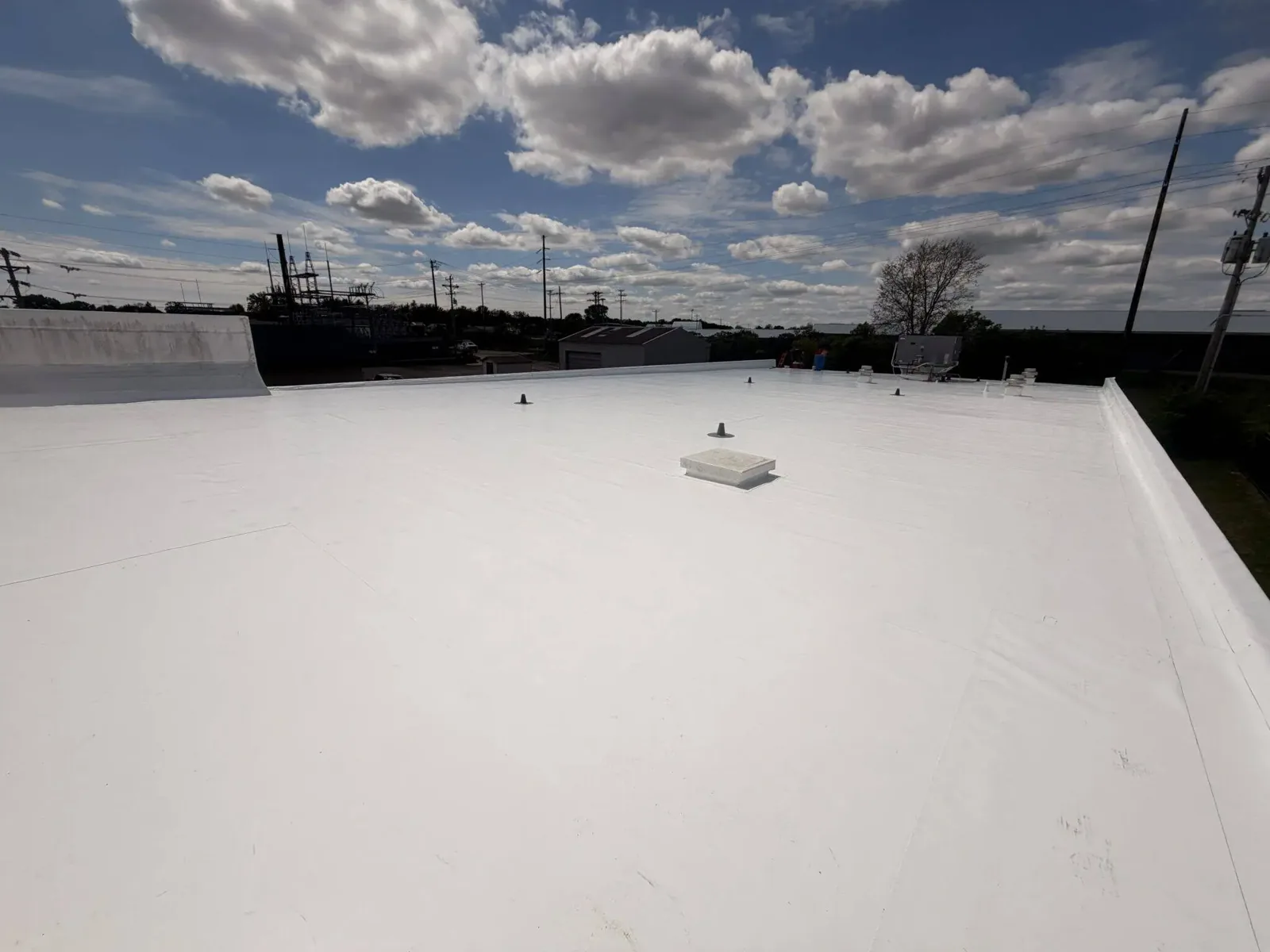
Which roof details tend to need repair?
Waterproofing depends on transitions as much as on the open field. We inspect seams for separation, fishmouths, incomplete welds, and movement; check flashing where the roof turns up at a wall or curb; and look at drains, scuppers, and gutters for secure attachment and clear flow. Metal edges can loosen or deform, while sealant can pull away where two materials move differently. A repair should address the failure mechanism and nearby material, not just coat the visible line. On buildings with rooftop HVAC or other equipment, the curb and service path can create several separate transitions to inspect. We note whether the membrane is wet, brittle, stretched, or otherwise compromised and whether the detail meets an existing repair. If the surface finding could extend below the membrane, the scope identifies that uncertainty rather than hiding it. A perimeter metal review and drainage inspection can be included when the evidence points to those edges or outlets.
Related Roofing Work
More commercial roofing work connected to Commercial Roof Repair in Columbia, MO.
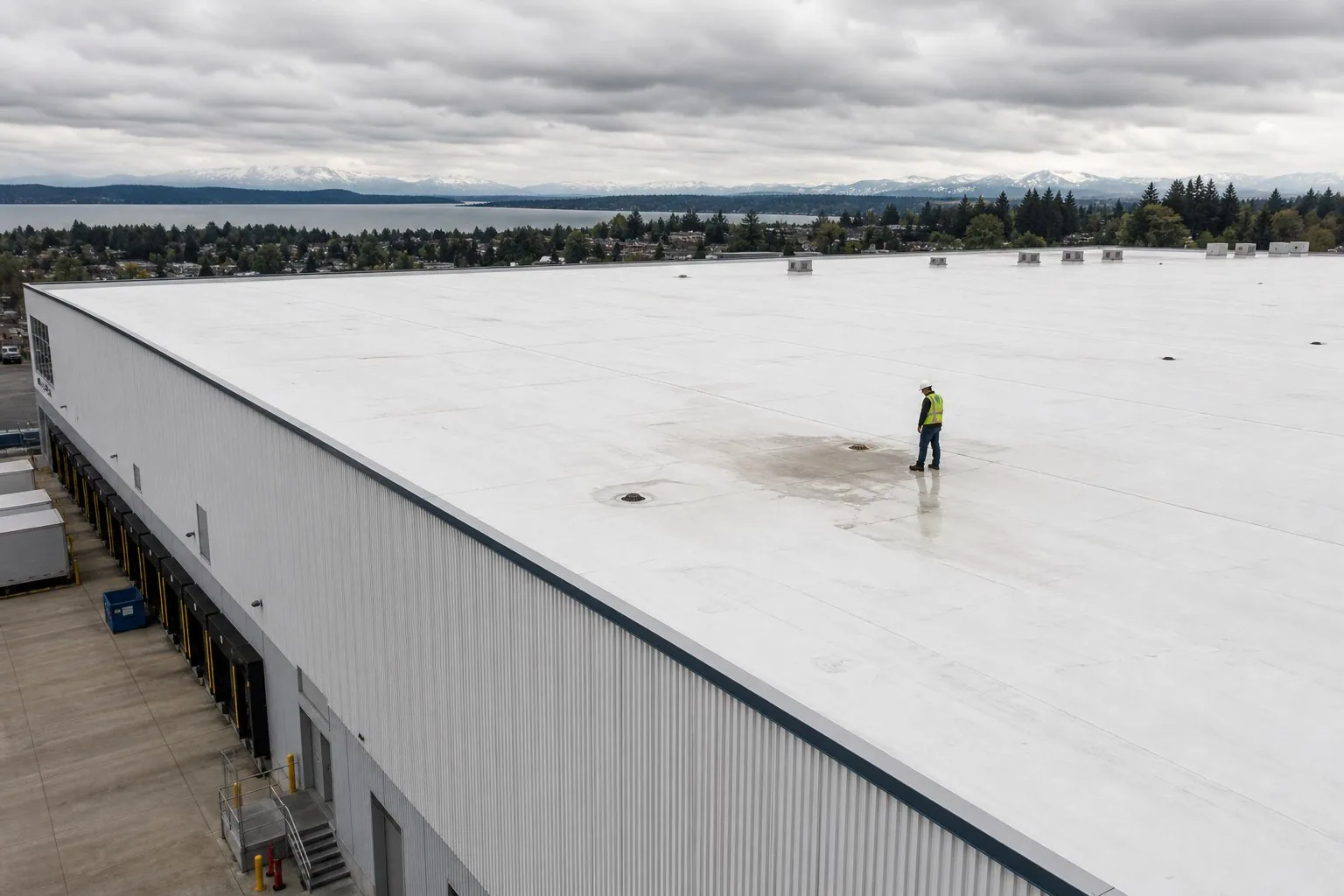
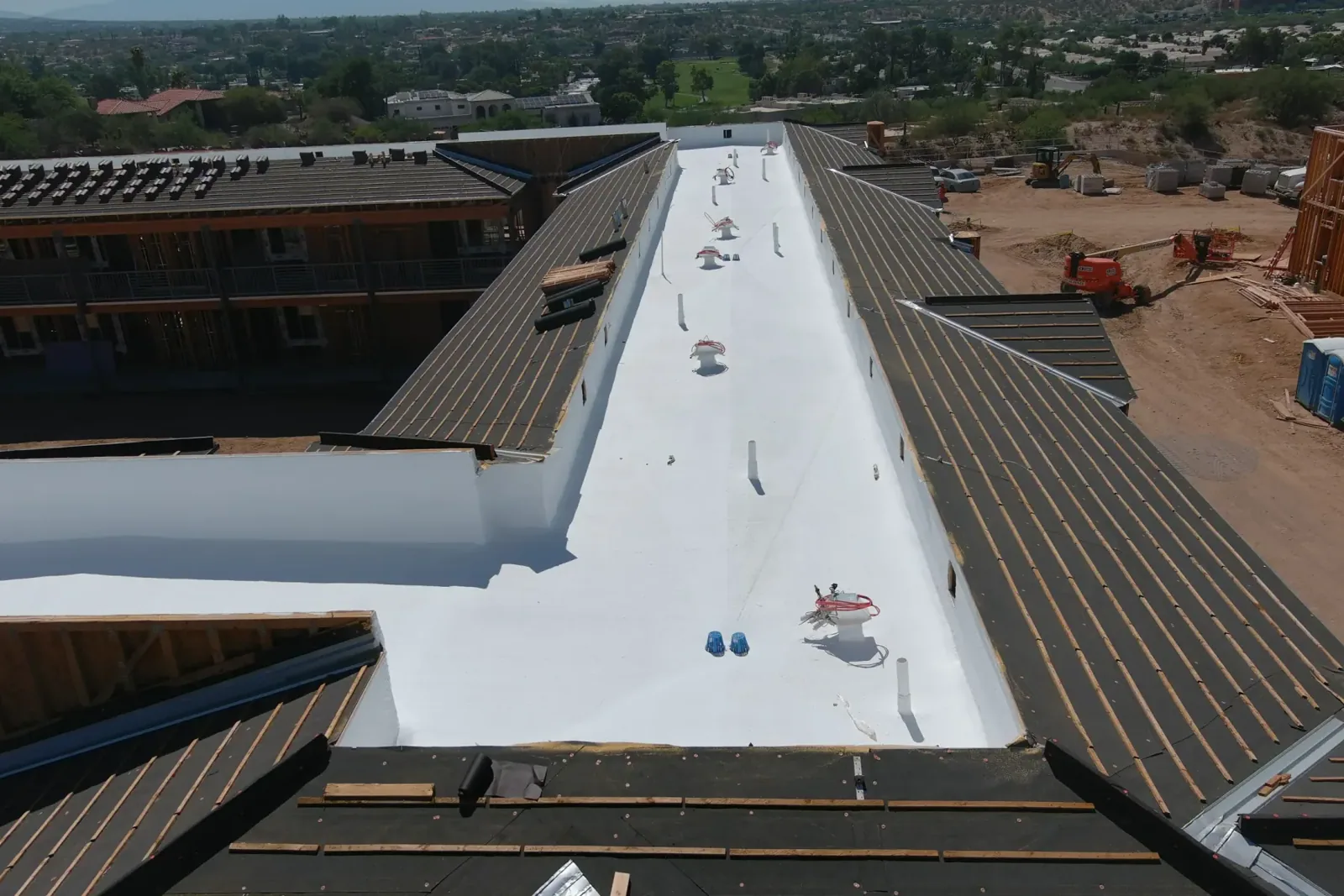
How is the repair boundary established?
The visible opening may be a point of entry, a place where water travels, or a separate symptom. We compare the reported interior location with roof slopes, seams, penetrations, drains, walls, and prior patch lines. If several possible paths remain, we test or observe the most relevant locations and report what the inspection can establish. That approach is especially useful after Columbia's spring storms, when wind-driven rain or hail can expose several vulnerabilities at once. We do not label every mark as storm damage; photographs, date, location, and material condition support the classification. At the Hubbell Power Systems manufacturing campus in Centralia, production activity and equipment access are part of the site's setting, so repair access and staging need to be coordinated with the operating contact. The work limit should be drawn around sound material and confirmed details. A flashing repair or seam correction can then be scoped to its observed boundary, while broader moisture evidence may warrant a moisture investigation.
When is a patch enough, and when is it not?
A localized repair can make sense when the defect is isolated, the material around it remains suitable for attachment, and the water path does not continue beyond the work area. A broader scope may be needed when similar failures appear at multiple seams, wet insulation extends past the opening, the deck moves, or the same patch location has failed repeatedly. We explain what was observed and what would change that conclusion. Repair pricing and timing depend on access, roof height, system type, preparation, weather, and whether testing reveals concealed damage; a useful proposal separates those items rather than combining them into one vague line. A temporary seal can control immediate exposure, but it is not the same as a completed repair to the assembly. Owners comparing a focused repair with larger work can review replacement scope and recover eligibility against the same roof record. The City of Columbia's current code package includes existing-building provisions, so project requirements should be checked when repair becomes a larger alteration.
What does a scheduled repair visit include?
Before mobilization, we confirm the building contact, roof access, system type where known, reported symptoms, and any limits around production or tenant areas. On site, we protect access routes, mark the repair location, remove failed material as needed, prepare the substrate, and complete the specified patch, flashing, seam, or edge work. If conditions differ from the scope, we document them and return for direction before expanding the work. At a loading or service area, delivery patterns can affect where equipment and materials are staged. At a school, hospital, or active business, roof access must also fit building operations. The surrounding region's summer thunderstorms can produce concentrated rain, so the repair sequence accounts for the day's weather and protection requirements. Once the repair is complete, photographs show the finished detail and the adjacent field. A rapid response visit may be needed first when water is actively entering, followed by a permanent repair after safe access and a dry work window are available.
What should the repair record preserve?
We keep the original observation and completed work connected by a consistent roof-area label. The record can include the reported symptom, weather date if known, pre-work photographs, the suspected path, material removed, repair materials used, and post-work photographs. It should also note what was outside the access boundary or could not be confirmed. That is valuable when a building later experiences another storm or an interior stain returns: the owner can see whether the same detail changed, a nearby area became involved, or the new report concerns another part of the roof. For a facility team responsible for several properties, repeatable Diligence Notes make it easier to compare priorities without treating all buildings as identical. A written condition report can carry the repair history into a broader roof file, and scheduled maintenance can revisit drains, seams, and exposed edges before small defects become harder to isolate.
Commercial Roofing Questions
Can a roof repair be completed in one visit?
Some isolated repairs can be completed in one mobilization when the substrate is ready, weather permits, and the needed materials are available. A visit may instead identify concealed wet insulation, an unstable edge, or a larger failure boundary. We record the finding and separate any added scope from the originally approved repair.
What information helps locate a recurring leak?
A marked ceiling location, dates when water appeared, photographs, and notes about rain or wind give us a starting point. We compare those observations with roof penetrations, seams, walls, drains, and past patches. Interior location alone does not establish the roof entry point, so the field inspection follows the possible water path.
Will a repair affect tenants or production?
Access, noise, staging, and the repair location determine the impact. We coordinate the active roof zone and movement of tools with the building contact, particularly where loading, patient, classroom, or manufacturing activity is nearby. The visit record identifies any area that could not be reached during the scheduled work.
How can I tell whether an old patch is failing again?
We compare its edges and attachment with dated photographs, check for a renewed opening or movement, and inspect adjacent material for a second path. If a prior patch has no location record, we document the current condition first. That gives the owner a clean reference point for the next inspection.