
Commercial Roof Leak Repair in Columbia, MO
A ceiling drip during a Columbia downpour leaves a time, a room, and a roof problem to trace. We record when water appeared, where it became visible, what was happening outside, and whether the condition has repeated. On the roof, we check likely paths: seams, penetrations, wall transitions, curbs, drains, and earlier repair lines. Water can move along a deck or insulation layer before it reaches an interior opening, so the ceiling location is a clue rather than a roof map. Columbia's spring is its wettest season, with storms that can bring heavy rain, hail, or tornadoes; summer cells can also drop rain over a concentrated area. That weather context helps set inspection timing but does not identify the failed detail. We create a located photo record and mark what needs immediate control. Conley Road Commercial Corridor is on Hospital Drive, while the North Village Arts District sits among law offices, colleges, hospitals, and government buildings. In each case, the report identifies the affected building and room before the roof inspection is scoped.
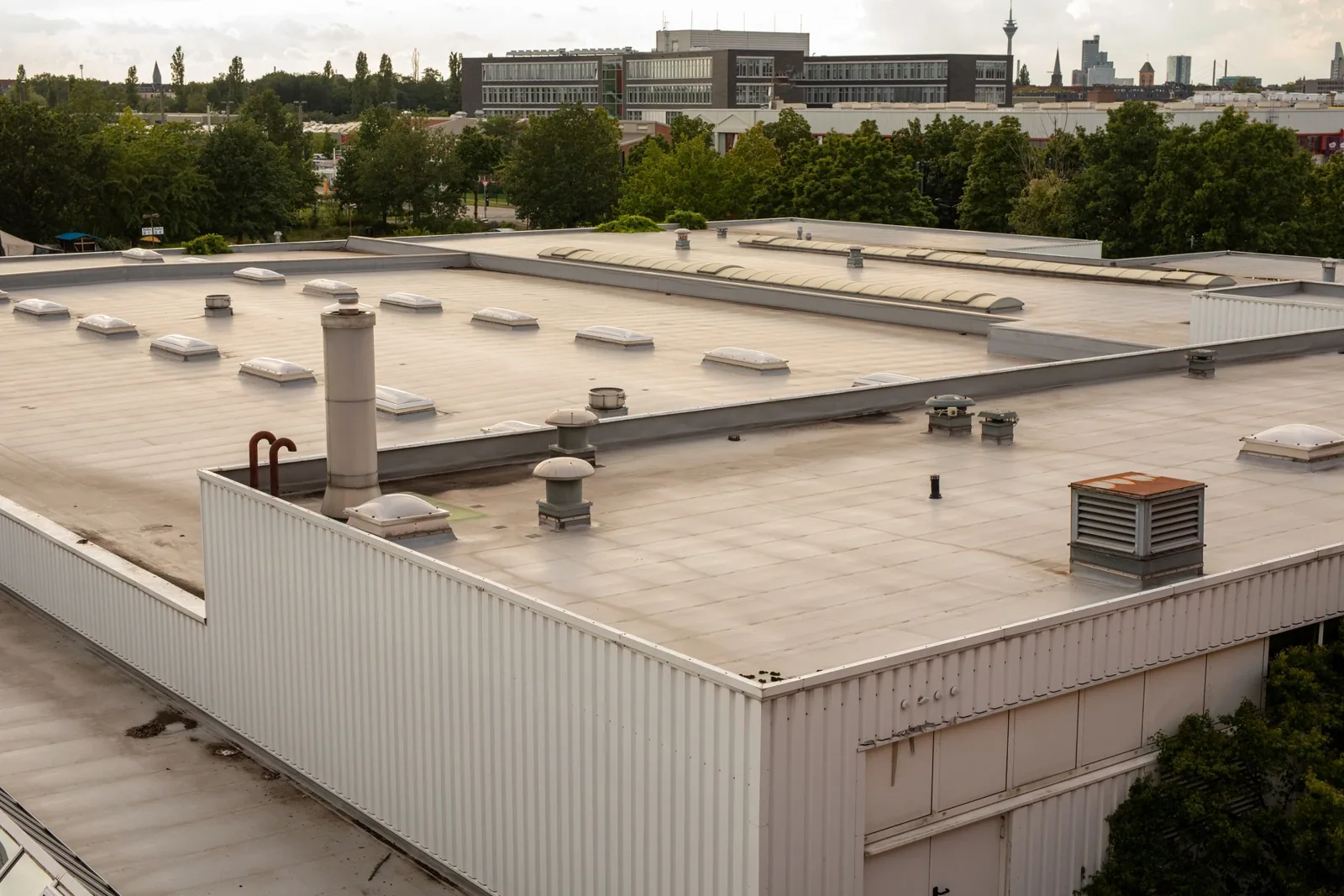
What should be recorded before the roof visit?
Useful leak history is specific. We ask which room or equipment area is affected, when the water first appeared, whether it follows rain or wind, what changed since the prior event, and whether a ceiling tile or finish has been moved. Photographs help, especially when they show the full room and a closer view of the wet area. The building contact should also note any active electrical or equipment concern so the response can be sequenced safely. A simple plan of the floor or roof can connect an interior location to an exterior area without assuming they line up directly. At a healthcare building, we coordinate the affected interior area with the facility contact and preserve the access limits needed for its operations. The Stockyards District includes food, market, and retail or service businesses. At a mixed-use property, we confirm tenant access and service schedules with its contact. We keep those logistics separate from the technical finding. Emergency dry-in work is appropriate when active water needs immediate control, while a full roof inspection can check whether other details show related deterioration.
Related Roofing Work
More commercial roofing work connected to Commercial Roof Leak Repair in Columbia, MO.
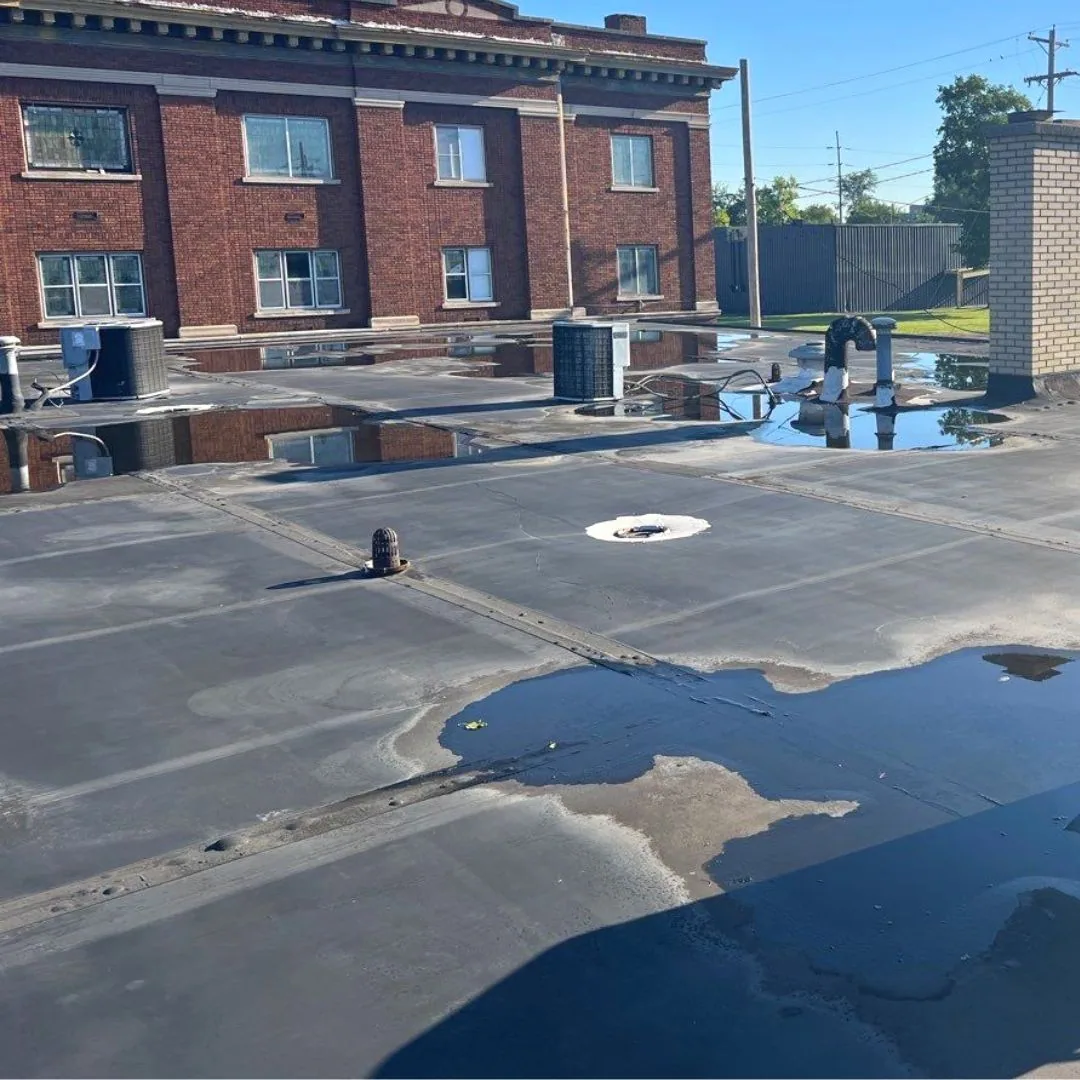
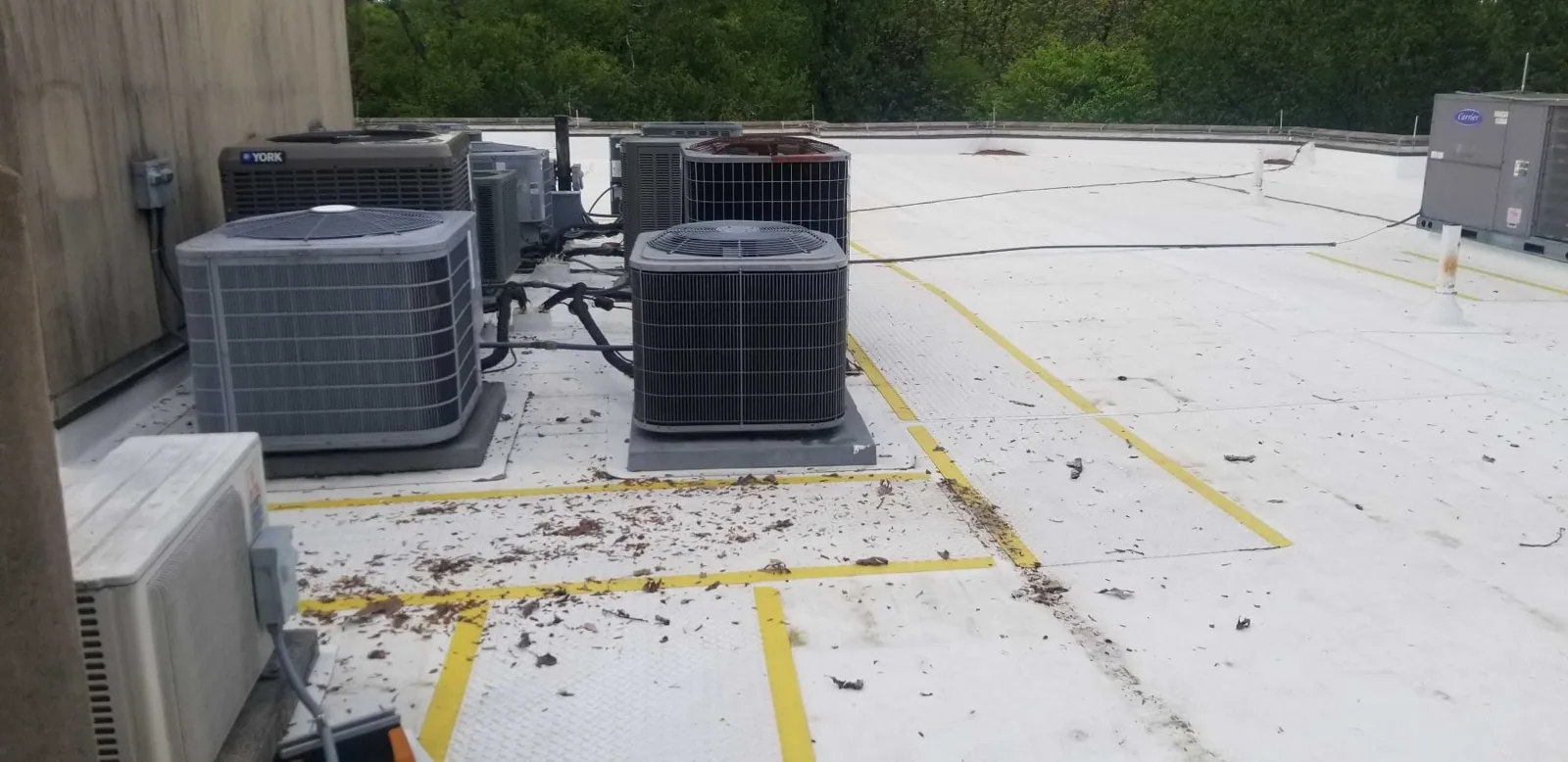
How do you follow water to the roof opening?
We start from the reported interior location and inspect the roof area above and around it, then extend the search along plausible routes. A seam may have separated, flashing may have pulled from a curb, a pipe boot may be split, or water may be reaching an opening from an upslope detail. Ponding and blocked drainage can complicate the path, while an old patch can hide a second entry point at its edge. We photograph each condition with a roof-area reference, compare it with event timing, and note whether the material is wet, displaced, brittle, or otherwise compromised. If more than one route remains possible, we state that rather than presenting a guess as a finding. On a roof with concealed insulation concerns, an approved infrared moisture survey or selective core cut can add evidence. Separate flashing work or seam repair can then be drawn to the conditions actually found.
What happens while water is still entering?
Active water calls for safe containment before the permanent scope is complete. We identify the affected area, protect contents where practical, and use a temporary cover or dry-in measure suited to the roof and conditions. A temporary measure reduces exposure; it does not establish that the underlying assembly is repaired. The work note should show where protection was placed, what material it covers, and what must happen before a permanent fix can be completed. Wind and rain can change access conditions quickly, so we do not leave an open roof section without an appropriate protection plan. After a localized summer storm, for example, a leak may be active in one section even while other areas remain dry. Our response runs around the clock, all week and through holidays, with the first priority being safe access and control of ongoing water entry. Once weather allows, we return to trace and repair the source under a defined scope.
How is the permanent repair selected?
The right repair depends on the roof system and the failure detail. A membrane puncture may need a compatible patch with sound material beyond the opening. A separated lap needs preparation and a seam repair appropriate to the membrane. Flashing work may require removal of failed material, correction at the transition, and a secure termination. If water has reached insulation or deck, the repair boundary may extend beyond the first visible opening. We record the material involved and distinguish a temporary measure from completed work. Columbia's recurring freeze-thaw conditions can stress exposed transitions, while spring storm exposure may reveal damage to edges or penetrations. Those are reasons to inspect; the actual scope follows the observed condition. When several roof areas show related failures, an owner can compare the focused repair with planned commercial roof repairs or replacement work. If the existing assembly may qualify, recover evaluation also requires moisture and layer review.
What confirms that the leak file is complete?
The file should connect the first report, field observations, temporary protection, repair performed, and follow-up recommendation. Before-and-after photographs identify the roof area and detail rather than relying on an unmarked close-up. We state whether the reported entry path was confirmed, what was repaired, and which adjacent areas were not part of the work. If a stain returns, the owner can compare the date and location against the previous record and see whether the same detail changed. A follow-up check after the next substantial rain may be appropriate when the original path was difficult to confirm or the repair involved concealed layers. A condition report with dated observations can preserve that history for facilities and insurance discussions. Pairing the repair with scheduled roof maintenance helps keep drains and exposed transitions on a recurring inspection list.
Close the report only after the repair location, material, preparation, and tie-in are recorded with dated photographs. The file should also show the reported interior location, the roof area reviewed, any areas that could not be reached, and the next observation point. A rain check can confirm that the reported path has not reappeared, but it does not establish the condition of every roof zone. Columbia's spring is the wettest season, so owners may receive multiple reports after one storm. Keep each report tied to its own building and time, then compare the locations against drains, curbs, and earlier repairs before calling them one shared failure.
Commercial Roofing Questions
Why can a leak show up far from the roof opening?
Water can travel along the deck, insulation, or framing before reaching an interior finish. We use the room location to guide the inspection, then trace upward and across likely roof details. The report separates a confirmed opening from any route that remains uncertain.
Can you stop the water before the permanent repair?
When safe access is available, we can place a temporary cover or dry-in measure to control exposure. The record identifies that protection as temporary and states what inspection or material preparation is still needed for a lasting repair. Conditions and access determine how quickly each step can occur.
What if the leak only appears in wind-driven rain?
We note the direction and timing reported by the building contact and inspect transitions that could admit water under those conditions. That history narrows the search, but it does not prove a single detail failed. We photograph the evidence and explain any remaining uncertainty before proposing work.
How should we handle repeated water entry at one location?
We compare each dated report with the previous repair boundary and photographs. A repeat may indicate that the original defect extended beyond the patch, that a nearby detail is also open, or that moisture has another route. The next scope should record which explanation the field evidence supports.