
Modified Bitumen Roofing in Columbia, MO
Granules collecting beside a drain can be normal surface loss or a sign that a cap sheet is wearing through; the location and depth matter. A modified-bitumen roof may use multiple plies with an SBS or APP modifier, and its installation method varies by system. We inspect the cap sheet, laps, flashing transitions, patches, and drainage, then compare those details with the repair history. Columbia's seasonal freeze-thaw cycles, snowfall, wet spring, and summer heat create separate weather exposure. Only a property-level inspection can establish the condition of an individual roof. The LeMone Industrial Park includes office and light-industrial uses, and the Central City, Columbia inventory includes research buildings, garages, residences, and utility facilities. Those facts describe local property mix without specifying any roof assembly. Our assessment follows the layers and details actually present, marking where the cap sheet is intact, where a lap has opened, and where moisture testing may change the scope.
How do modified-bitumen layers work together?
A multi-ply roof relies on bonded or attached layers that share the work of shedding water and protecting the deck. The base sheet, interply, and cap sheet each have a role; a surface patch should not obscure a separation or wet layer below. SBS and APP modifiers change how a product behaves and what application method is specified. We identify the visible system, inspect cut edges or records where available, and document whether the cap sheet is granulated, smooth, or coated. A roof inspection can map blisters, open laps, exposed reinforcement, and prior repairs. If a field condition suggests moisture below the sheet, testing may help define where a test cut is useful. The repair proposal should note each layer removed and restored, not only the top surface that is visible from the roof.
Related Roofing Work
More commercial roofing work connected to Modified Bitumen Roofing in Columbia, MO.
Which details should be checked at laps and flashings?
We look for open end laps, fishmouths, wrinkles, exposed asphalt, loose granules, and movement at wall and curb transitions. Around drains, scuppers, and penetrations, the membrane should turn into a detail that sheds water instead of leaving a pocket at the edge. A blister can result from trapped moisture or adhesion issues; cutting it without understanding the cause may create a new opening. We document location, size, nearby seams, and whether the condition is active or dry at inspection. Columbia's wet spring brings heavy rain and the region's highest likelihood of severe storms, while hot summers can increase surface temperature. These conditions make a dated comparison useful, not a substitute for a roof-level finding. Drainage review can address outlet details, and perimeter work can inspect the edge termination. If wind or hail damage is reported, a storm assessment can separate the event observation from older wear.
When can a modified-bitumen roof be repaired?
A localized repair may work when the surrounding plies remain bonded, dry, and strong enough to accept a compatible patch. The scope identifies the removal boundary, preparation method, primer or asphalt where specified, reinforcement, and final surfacing. The application method must match the product: some assemblies use torch application, others use hot asphalt, cold adhesive, or self-adhered sheets. We do not select the method from the system name alone. If multiple laps are open or water has reached the insulation, replacing isolated spots may not restore the assembly. Repair planning can define a seam or flashing correction; replacement planning can compare broader layer removal and new assembly options. Built-up roofing also uses multiple plies, but its materials and installation details differ. EPDM is a single-ply alternative with a different seam method and repair approach. The owner should receive a photo record and an explicit statement of adjacent areas that remain outside the repair. A cost and schedule review should account for access, layer removal, disposal, drying time, and the application method. If a test cut is needed to confirm moisture or bonding, define its location and restoration detail before the crew opens the roof.
What affects installation safety and timing?
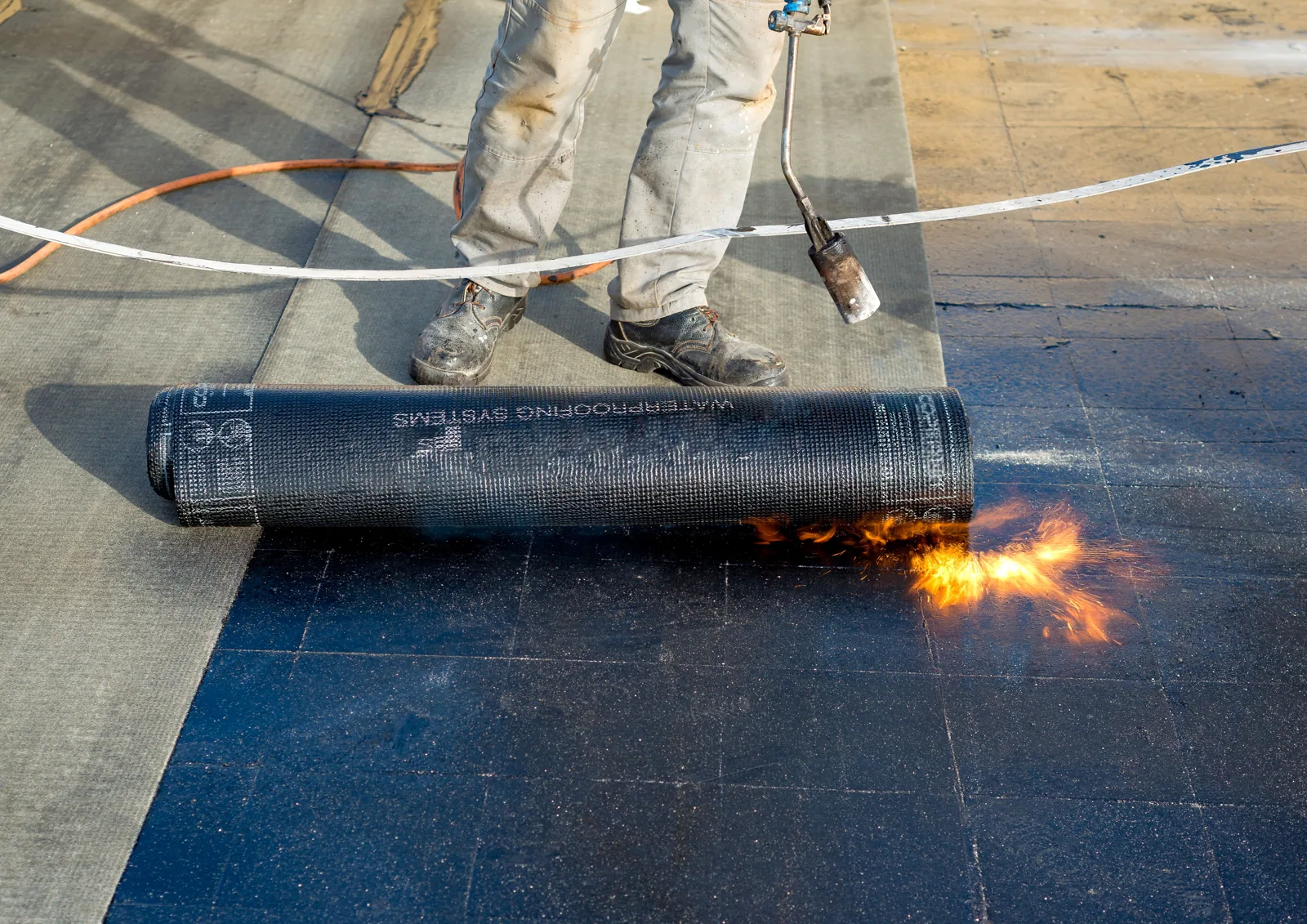
Work method, roof access, material staging, ventilation, fire prevention, and weather determine how a modified-bitumen installation proceeds. Where heat or torch application is specified, the crew follows the project's fire-safety controls, watches penetrations and concealed spaces, and maintains the required extinguishing equipment and monitoring. Other application methods still need dry substrate, temperature limits, and a clean tie-in. Columbia's spring rain and summer storm cells can change the day's available work window. We mark what can be completed before opening a section and protect each tie-in if conditions shift. The sequence should account for drains and edges so water does not enter below an unfinished layer. The field record notes the chosen method, materials, date, and any pause caused by weather or safety conditions. A closed shift boundary gives the next crew a clear point to resume. Where heat-based methods are used, the work plan should identify fire-watch responsibility and how penetrations or combustible materials are protected. The field report records the method used, weather conditions, and inspection checks required by the project.
How should a modified-bitumen roof be tracked?
Keep product and application information with photographs of field laps, flashings, drains, and penetrations. A roof-area map helps distinguish a patched cap sheet from a full multi-ply repair. Note granule loss, exposed reinforcement, blisters, ponding, and any area that could not be inspected. Columbia's 2024 commercial code package includes existing-building provisions; a major recover or replacement should be evaluated under the specific project scope. Maintenance visits can track recurring laps and surface wear after the project. The record should also identify whether repair materials are compatible with the original system and where a future tie-in can be made. This history helps an owner compare new findings with earlier photographs instead of treating every visible mark as recent damage. It can also show when a prior patch was temporary and needs a permanent detail review. Keep that record with current photographs and project notes.
Label the roof zones and record the observed surfacing, cap-sheet condition, seams, flashings, repairs, and drainage. If the assembly includes multiple plies, preserve any available project documents that identify their sequence rather than inferring the build-up from one exposed edge. After a repair, photograph the prepared substrate, tie-in, and finished surface. A later inspector can compare granule loss, splits, blisters, or open laps with the prior condition and decide whether maintenance remains suitable. Columbia's winter freeze-thaw changes and wet spring can affect transitions and drainage at different times; the dated record should show which condition actually changed.
Commercial Roofing Questions
How does SBS differ from APP in a modified-bitumen assembly?
They use different asphalt modifiers and can have different product and application requirements. We identify the installed system and follow its specifications rather than choose a repair method from the label alone.
Can a blister in a modified-bitumen roof be cut and patched?
The cause and extent should be checked first. A blister may involve trapped moisture or a bond issue, so the repair must restore the affected layers and not simply cover the surface opening.
Can you install modified bitumen without a torch?
Some products use self-adhered, cold-applied, or hot-asphalt methods, while others specify torch application. The approved product and project conditions determine the method and related safety controls.
When does granule loss require a replacement decision?
A small worn area and widespread exposed reinforcement are different conditions. We map the surface, check the layers and repair history, and state whether a local treatment or broader replacement review is supported.