Commercial Roofing along Business Loop 70, Columbia, MO
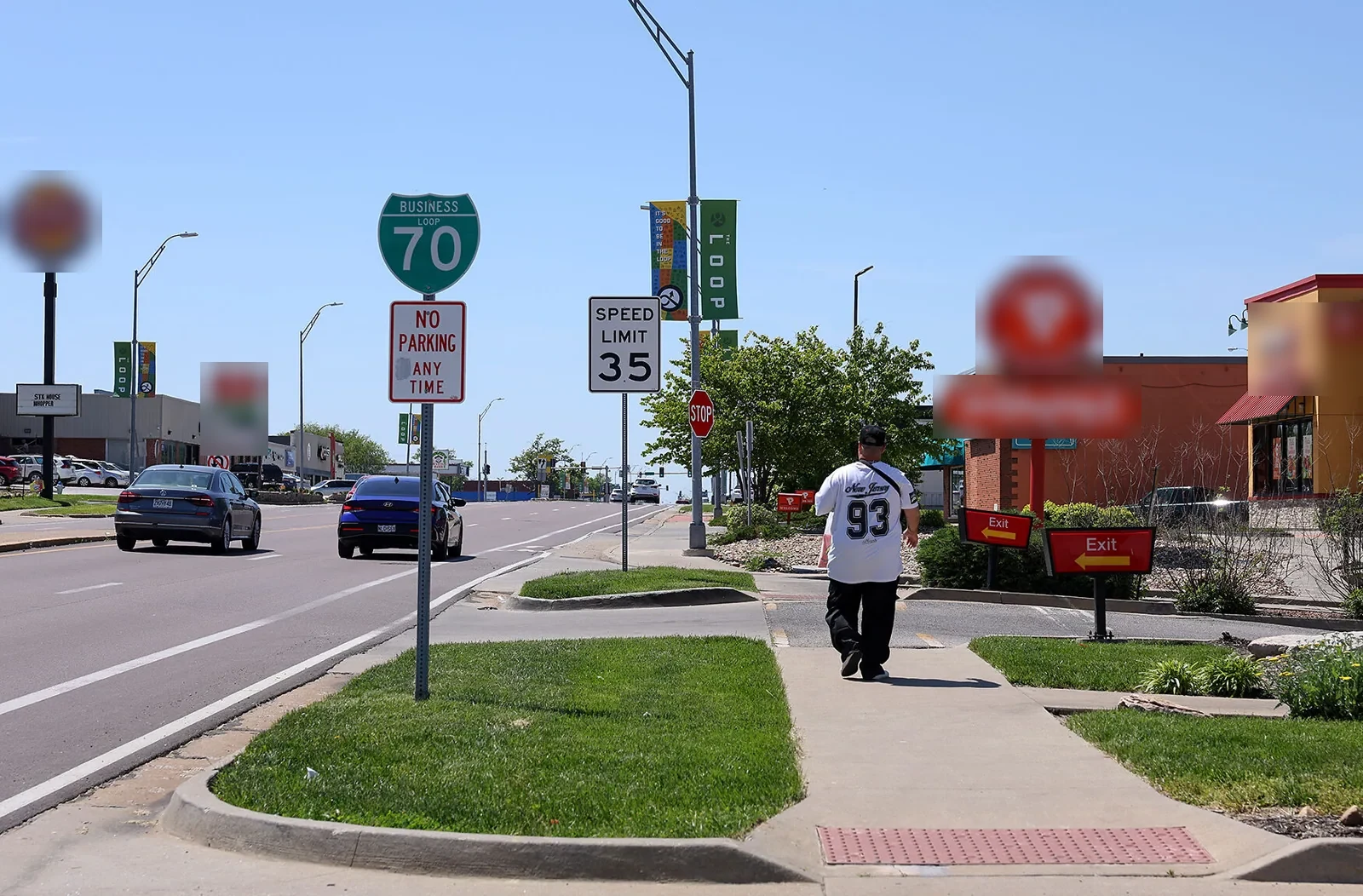
A roof on a commercial property along Business Loop 70 needs an address-level inspection; the corridor name alone does not identify its assembly, use, or condition. Columbia's corridor study covers roughly four miles between Stadium Boulevard and Eastland Circle. The area combines commercial and industrial activity with the Cosmopolitan Recreation Area and Columbia Cemetery, and the study notes institutional activity around Hickman High School and routes toward the University of Missouri and Stephens College. That context describes a varied corridor, not a particular parcel. We confirm the site's street address and roof access, then document the membrane or metal field, drainage, transitions, penetrations, and any reported interior condition. Wet spring storms and winter freeze-thaw in Columbia influence the inspection questions, but weather patterns do not establish damage at a Loop property. A useful record connects each finding to a roof zone, photo, and recommended next step.
What does a corridor study establish about the roof?
The study boundary helps place a property between Stadium Boulevard and Eastland Circle, but it does not say whether a specific building has a low-slope roof, what material is installed, or who controls access. Commercial and industrial activity can include different building forms and operating arrangements. We verify those details with the owner or site contact instead of projecting them across the corridor. For each roof area, note the access point, surface observed, elevations reached, and any sections that could not be entered. A commercial roof inspection can create a repeatable photo record, while a condition report can separate current observations from older maintenance notes. If there are multiple addresses or roof sections under one ownership, use a distinct label for each. A map reference should not imply that one inspection covered adjacent parcels. This basic identity work prevents an estimate or future leak call from being attached to the wrong building just because both are described as being on Business Loop 70.
Related Roofing Work
More commercial roofing work connected to Business Loop 70 in Columbia, MO.
Which roof conditions should be recorded first?
Start with the field membrane or metal and examine the transitions where a defect can admit water: seams, wall flashings, drains, curbs, skylights, pipes, and edges. Record ponding, debris, open laps, punctures, cracked sealant, prior patches, displaced trim, and any interior leak report with its date and location. The presence of industrial or commercial activity in a corridor does not prove that a particular roof carries rooftop equipment or process exhaust. Confirm installed equipment and operating constraints with the property contact. A curb and penetration review can document the exact interface; flashing repair should identify which wall or edge transition is included. Water may move laterally before appearing indoors, so a stain should be treated as a report to investigate rather than a map of the roof opening. Photographs should pair a broad location view with detail. Mark inaccessible surfaces and any test needed to distinguish a surface defect from concealed wet insulation.
How do Columbia's seasons affect follow-up?
Columbia's climate normals record many winter days at or below freezing and recurring snowfall, so an inspection can note how seams, drains, and edge details look after freeze-thaw periods. Spring is the city's wettest season and more likely to bring severe storms with large hail and tornadoes. Summer thunderstorms can produce localized heavy rain, with damaging winds a more prominent later-season threat. These are city-level patterns for planning questions, not evidence that an individual Business Loop roof suffered a storm loss. If the owner reports a date, compare the condition with earlier photos and state what changed. A hail review should record observed impact and distinguish it from ordinary aging; a wind assessment should identify lifted or displaced components and their location. After heavy rain, check the reported interior area and the roof's drainage route. A follow-up date can test whether the suspected area remained dry without turning a regional forecast into a conclusion about cause.
How can the owner compare a repair with larger work?
A repair is easier to evaluate when the defect is confined, the surrounding material is sound, and the tie-in method can be described. The written scope should specify preparation, compatible materials, affected roof zones, edge details, and exclusions. If there are repeated patches, suspected wet insulation, widespread seam movement, or drainage issues, document why a local repair may not address the full condition. A repair proposal can separate confirmed work from optional investigation. For a recover or replacement, review existing layers, moisture, deck condition, insulation, drainage, and perimeter work before comparing bids. Columbia uses its current commercial building, existing-building, and energy code package for plan review. The project documents and review process determine the requirements for a specific alteration; a roof inspection can note questions but cannot make that determination. Keep the dated observations and code-review questions in the decision file. That distinction is useful when a property owner compares a limited leak correction with a broader capital project, since the two scopes answer different questions and carry different levels of uncertainty.
How should work be coordinated across a busy corridor?
Confirm site access, staging, material delivery, protected areas, and who will make the daily close-in decision. The corridor study's references to school, college, recreation, cemetery, commercial, and industrial activity do not establish schedules or restrictions at a particular site. Ask the owner for the property's actual operating requirements and note them before mobilization. Occupied-building sequencing can define roof zones, daily handoffs, and temporary protection; a maintenance program can establish repeat inspections after the work is closed. Where a job involves multiple areas, identify which drains were checked and which transitions remain outside the approved scope. At completion, retain before-and-after photos, material notes, weather date if relevant, and the next inspection point. Keep roof findings tied to the named address in LeMone Industrial Park or The District, since access, building identity, and repair history differ by property. A final walk should confirm temporary coverings are removed or intentionally left in place and that the responsible contact received the closeout record.
The City’s corridor study covers roughly four miles between Stadium Boulevard and Eastland Circle, and city material describes mixed commercial and industrial activity along the route. The length and variety of the corridor make precise building identification essential. A request should include the property name, street address, roof access contact, and interior location of any leak. The corridor study helps establish context; it does not prove a roof problem or identify a system. During inspection, label photographs by property and roof zone so observations from one address cannot be confused with another.
When planning work near active businesses, institutions, or industrial operations along the loop, confirm the owner’s access and staging requirements for that building. Define which roof section can be opened in a day, how it will be protected if weather interrupts work, and who receives the close-in update. These are project controls, not evidence about roof condition. Pair them with a separate scope that states the observed defect, included repair, excluded adjacent work, and conditions that would trigger a change. A dated record can then support a later comparison without treating the entire corridor as one property or one maintenance program.
Commercial Roofing Questions
Does Business Loop 70 include only commercial buildings?
No. The corridor study describes mixed commercial and industrial activity and also identifies recreation, cemetery, and institutional context. A roof assessment applies only to the property and roof areas actually inspected.
Can the corridor study identify my building's roof system?
No. It defines a study area and describes surrounding activity. We confirm the street address, records, access, and roof assembly on site before naming a system or proposing materials.
What should be included after a storm inspection?
Keep the event date supplied by the owner, photos of the areas inspected, notes about access limits, and a separate list of confirmed versus suspected conditions. Follow-up can compare later observations with that baseline.
When should a repair be expanded into replacement planning?
That decision depends on the roof's documented condition, moisture findings, repair history, drainage, and remaining sound material. We state what the inspection confirms and identify further testing where the evidence is incomplete.