
Commercial Roof Replacement in Columbia, MO
A replacement decision should start with the roof record, not with a calendar date. In Columbia, freeze-thaw winters, spring hail and tornado-producing storms, and summer downpours put different parts of a roof under stress. None of that proves a roof has reached the end of its service life. We inspect the membrane or metal, seams, flashing, drains, insulation, and deck where accessible, then connect each dated observation to its location. That gives the owner a repair boundary and a basis for comparing another repair with a full tear-off. Occupied buildings need a work sequence that accounts for people, deliveries, equipment, and weather windows. A commercial roof inspection can establish that record before replacement is scoped, while Central City, Columbia lists residence halls, garages, research buildings, and utility facilities, making building-specific roof records useful.
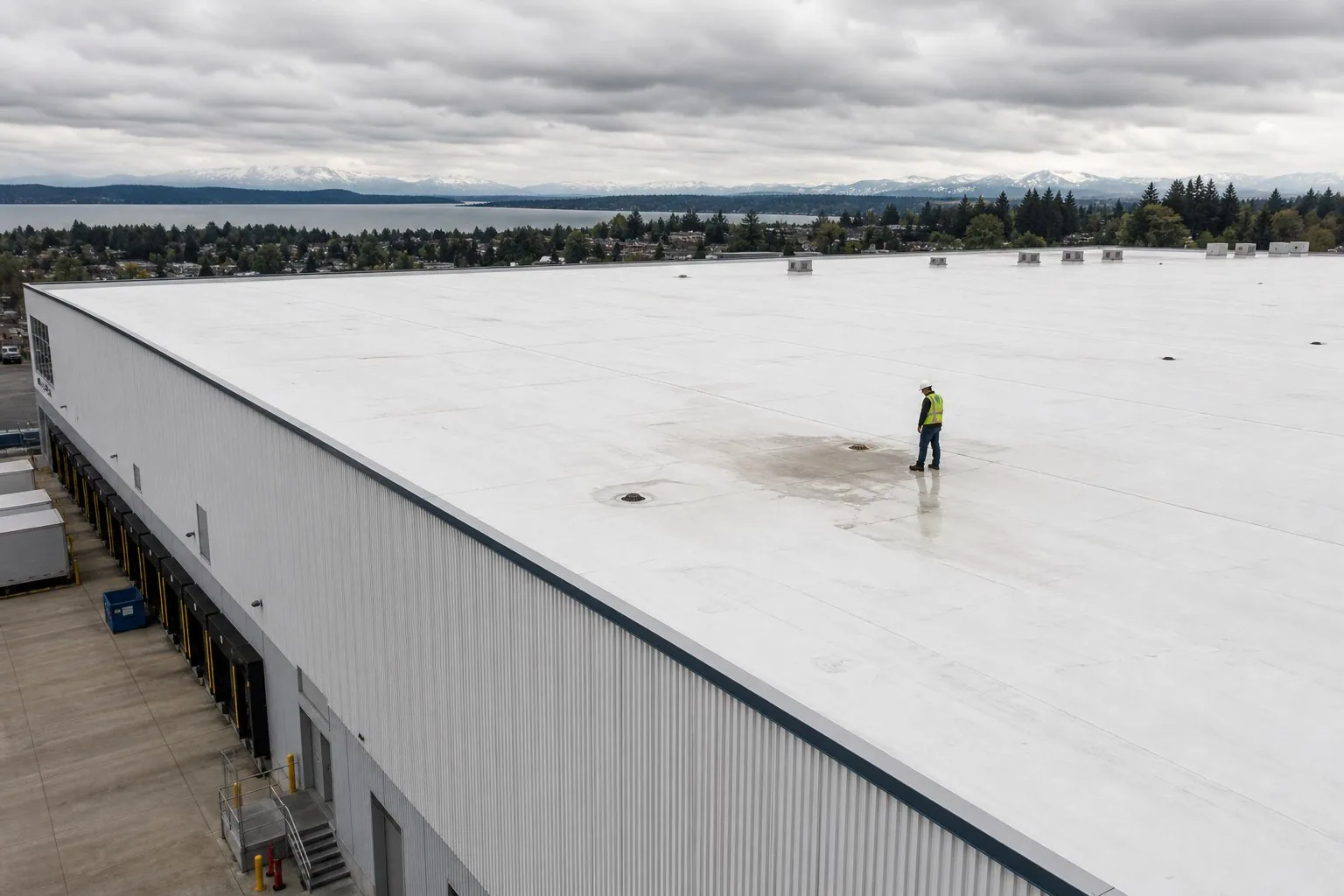
Which weather marks belong in the replacement file?
Columbia's weather history creates a sequence worth documenting. The local climate record includes recurring nights at or below freezing, seasonal snowfall, a wet spring with greater potential for large hail and tornadoes, and summer days that can reach 90 degrees or higher. On an actual roof, we look for conditions that can be photographed and located: open seams, brittle or displaced flashing, damaged edge metal, wet insulation, recurring ponding, or a drain path blocked by debris. The date and roof area matter because a single spring storm does not establish the condition of every section. We keep storm exposure separate from older wear when the evidence supports that distinction. Before inspection, we confirm the building address, available roof plans, access route, and operating contact. Roof-area conditions determine what can be documented safely. An owner can compare that record with a focused hail-damage review or a snow and ice condition check before choosing a broader scope.
Related Roofing Work
More commercial roofing work connected to Commercial Roof Replacement in Columbia, MO.
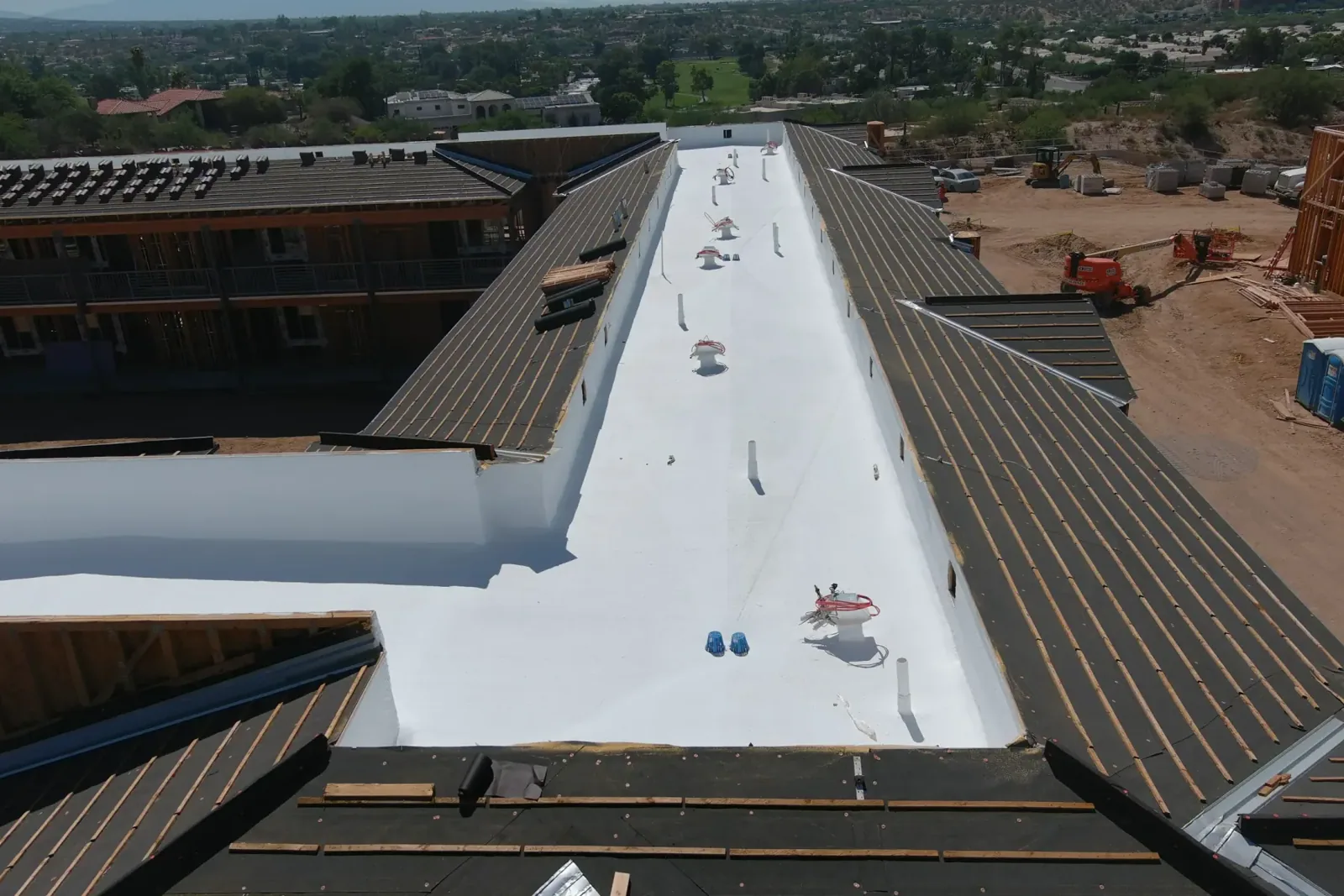
What must be known before tear-off begins?
A sound replacement scope describes more than the new membrane. We map the existing assembly, note known repairs and moisture evidence, identify penetrations and equipment, and review how water reaches the drains and scuppers. During removal, concealed conditions can differ from what the surface showed. The crew records exposed deck damage, saturated insulation, and transitions that require a decision before they are covered. We do not turn an unknown into an assumed allowance; the owner receives the observed condition and a defined repair boundary for approval. At an institutional property, we confirm access limits and work areas with its facility contact before opening the roof assembly. Where the evidence calls for it, a written roof condition report can preserve the before-and-after photo record, and a cover-board and insulation review can clarify how the replacement assembly addresses the exposed deck and thermal layer.
How do repair and replacement compare?
The useful comparison is between scopes, not labels. A localized repair may be appropriate when failures are limited, surrounding material remains serviceable, and moisture has not spread beyond a defined area. Replacement becomes a stronger option when defects recur across sections, wet insulation is widespread, seams and flashings are failing in several locations, or the deck and drainage conditions make isolated patches hard to maintain. We show the observations behind that recommendation and identify what remains uncertain. The estimate should separate tear-off, disposal, deck repairs, insulation, membrane, edge details, penetrations, drainage corrections, and any work that depends on concealed conditions. Columbia uses the 2024 International Building Codes package for plan review, including existing-building and energy provisions; the applicable requirements should be confirmed for the project with the City as the scope is developed. Owners comparing systems can review TPO roof assemblies and modified-bitumen options against the building's use, details, and maintenance record.
What changes when the building stays open?
On an occupied property, replacement work has to be divided into areas that can be opened, dried in, and closed without leaving the next shift to guess what was protected. We coordinate access, material staging, noisy work, loading areas, and weather watch with the site's operating contact. The day's limits should be clear before tear-off: which roof zone is active, what temporary protection is in place, and what condition would change the sequence. The District in Downtown Columbia includes a dense mix of businesses, residences, public uses, and event venues. For any active business or industrial property, we confirm staging and access with the operating contact. A replacement plan can include phased work and temporary dry-in, but the actual sequence depends on roof geometry, forecast conditions, and what the opened assembly shows. For buildings that cannot stop normal activity, occupied-building reroofing is planned around practical work boundaries rather than a generic promise about disruption.
What will the owner be able to verify?
The closeout record should let someone who was not on the roof understand what changed. We document the removed assembly where visible, deck repairs, insulation and membrane installation, flashing transitions, drain details, and any approved change in scope. Photos should identify the roof area and observation date, not merely show a close-up without context. We also note items that need a follow-up check after substantial weather or at the next scheduled review. That record helps facilities staff compare conditions over time, maintain a decision file, and distinguish completed work from remaining recommendations. For a multi-building campus or a property with several tenants, a roof plan with labeled areas is more useful than a folder of unlabeled images. A new system can also be paired with preventive roof maintenance so drains, seams, flashings, and penetrations receive recurring attention. If wind or hail later affects a section, dated baseline observations can support a focused insurance claim file without treating weather alone as proof of damage.
Before the first section is removed, the owner should have a marked roof plan showing the planned limits and any retained area. During the work, photographs can document deck condition, insulation removal, drainage corrections, new attachment, flashing, and tie-ins before they are covered. The closeout should show the final boundary and list any condition that changed the scope. Columbia's 2024 commercial code package includes building, existing-building, and energy provisions, so the project team should identify the review path when an alteration changes the assembly. A clear file lets facilities staff compare the installed work with the approved scope and set a useful first maintenance check.
Commercial Roofing Questions
How do you decide whether a Columbia roof needs replacement rather than another repair?
We map repeated failures, moisture evidence, condition of surrounding materials, and the repair history. If the defects stay within a defined boundary, a repair may remain practical. If moisture or failures extend across separate areas, the replacement comparison should show why more patching would leave unresolved conditions. The report distinguishes observed facts from concealed conditions that require a decision during removal.
Can tear-off proceed during a wet Columbia spring?
The work area and forecast determine the daily limit. Spring is Columbia's wettest season and the period most associated with severe thunderstorms, so we plan to open only the area that can be protected and closed safely. If conditions change, the crew secures the active section and revises the sequence instead of leaving exposed material without a documented dry-in plan.
What if the crew finds wet insulation or damaged decking?
A dated photo and location record should show what became visible after removal. We pause that area long enough to define the repair boundary, explain the added work, and receive direction before covering it. The original scope and the field condition remain distinct in the decision file, so the owner can see why the change was needed.
How is replacement handled at a busy campus or industrial property?
The property contact confirms occupied areas, access, deliveries, sensitive equipment, and any schedule limits. We divide the roof into phases with a defined daily opening, weather protection, and close-in point, then record each change and completed zone.