Commercial Roof Recover in Columbia, MO
A second roof layer is only a sound option when the assembly below it can carry the decision. On a Columbia building, winter freeze-thaw conditions, spring hail and heavy rain, and hot summer periods can leave different evidence at seams, drains, flashings, and insulation. We inspect those areas before discussing a recover, document moisture indicators and existing layers, and mark locations that need a core cut or closer review. A recover can reduce tear-off activity, but it does not correct trapped moisture, a weak deck, poor drainage, or details that remain buried. Columbia's I-70 Business Loop includes mixed commercial and industrial activity, while the city also has institutional facilities. These different settings reinforce the need to document each roof assembly separately; access is confirmed for the individual site. A roof condition inspection and moisture survey can help establish whether the existing assembly is a candidate before the owner compares a recover with full roof replacement.
What is already under the roof surface?
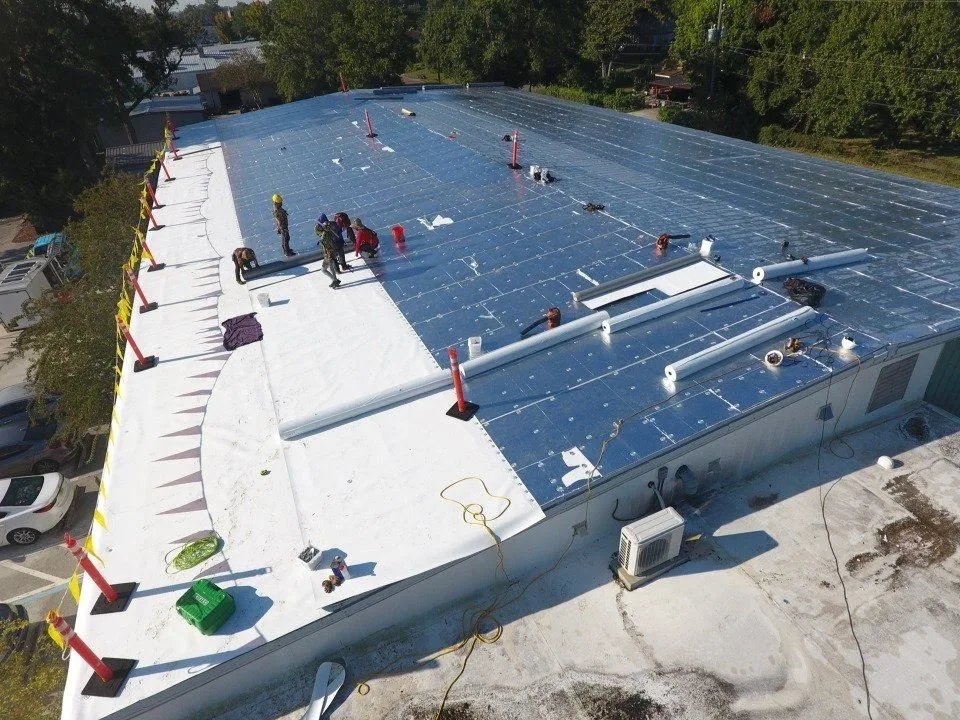
Before a new membrane goes down, we identify the existing roof construction as far as the accessible edges, records, and test locations allow. A roof can have prior overlays, abandoned penetrations, concealed repairs, or insulation that has taken on water. Each condition changes whether another layer is appropriate. We map visible seams and transitions, review the number and type of existing layers, and use test cuts where the owner authorizes them to see the assembly itself. A test location is patched and recorded, with the finding tied to a roof area rather than left as a loose sample. LeMone Industrial Park has office and light-industrial uses. Building use does not establish the roof assembly or moisture condition, so any test plan identifies the exact roof areas sampled. When records are incomplete, the proposed scope should name that uncertainty and explain what would trigger a change. A photo-based condition record keeps the observed layer build-up and any concealed-condition limits clear for the next decision.
Related Roofing Work
More commercial roofing work connected to Commercial Roof Recover in Columbia, MO.
How do you find moisture before covering it?
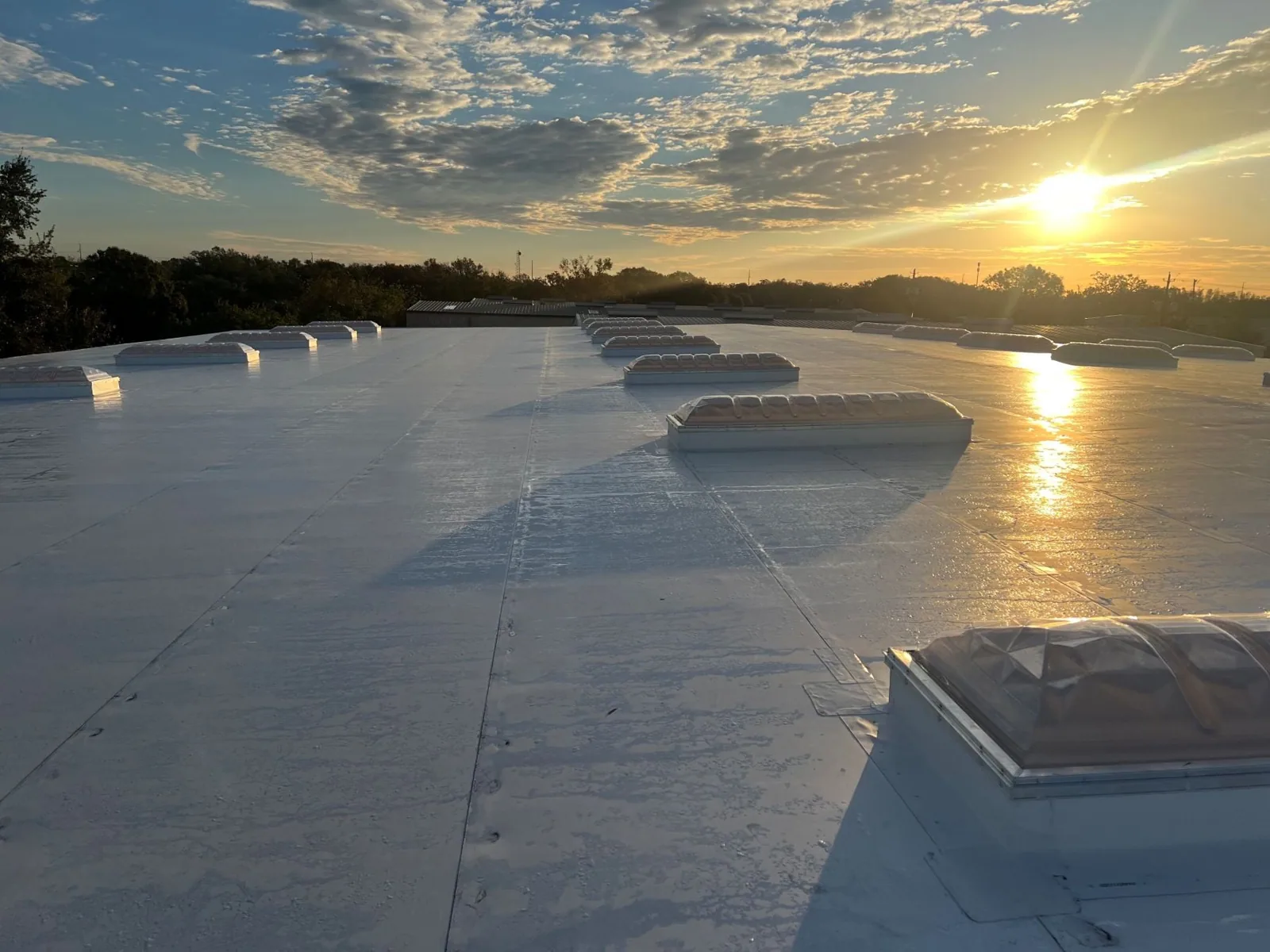
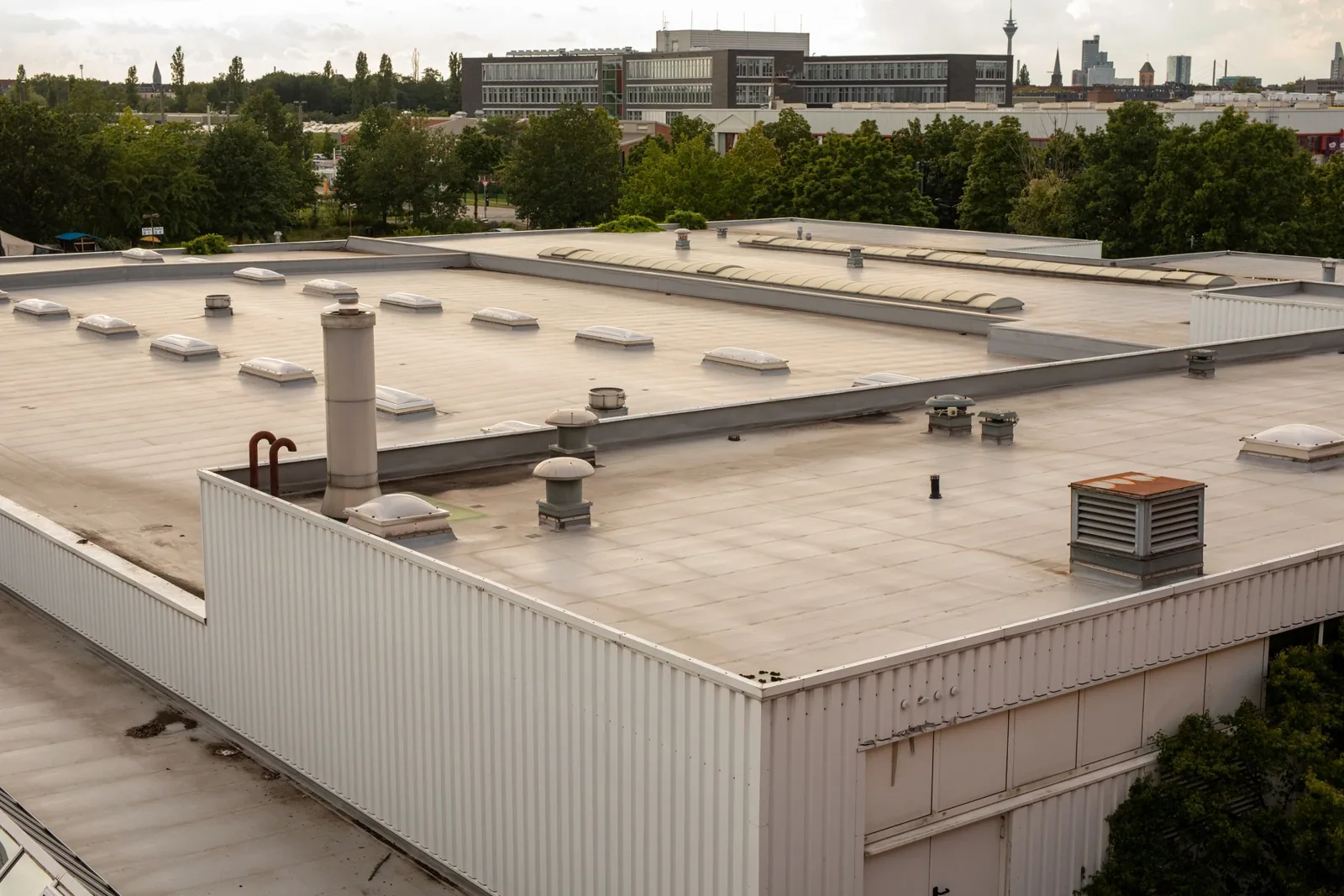
Water can enter at a seam or penetration and travel before it becomes visible indoors. We compare roof observations with interior stains, known leak locations, drainage patterns, and the results of approved testing. Infrared readings can help identify areas with a temperature pattern consistent with retained moisture, but the reading needs confirmation and context; a core cut can reveal the actual layers and insulation condition at a selected point. Neither method alone proves the condition across an entire roof. Columbia's wet spring storms and localized summer downpours make drainage and moisture records particularly useful, while a dry day does not erase evidence from an earlier event. We mark where a survey was taken, what it showed, what was confirmed, and what remains uncertain. Owners weighing repair against a recover can also review leak tracing and repair where active water entry has a limited boundary, or consider ponding-water correction when low areas hold water after rainfall.
Which conditions rule out another layer?
A recover should stop being considered when the supporting roof cannot be relied on. Broad saturated insulation, significant deck deterioration, repeated failures across many sections, unstable attachment, or drainage problems that cannot be corrected within the planned assembly all point toward more investigation or removal. We also check penetrations, perimeter edges, curbs, and the tie-in to walls, because these details cannot be made sound by hiding them under a new field membrane. The City of Columbia reviews commercial work under its 2024 building-code package, including existing-building and energy provisions. Project-specific requirements, existing layers, and the proposed assembly need review before the owner assumes an overlay is permitted. If an assembly does qualify, the design still needs a secure attachment approach that accounts for substrate condition and wind exposure. A cover-board and insulation scope may address specific assembly needs, while TPO or modified bitumen should be compared by details and building use rather than by the membrane name alone.
What does a recover change for building operations?
Less material removal does not mean the roof can be treated as a no-disruption project. We still need safe access, staging space, protected entries, controlled lifting, and a daily weather plan. The work sequence should identify how the old surface is prepared, where attachment points go, how perimeter and penetration details are rebuilt, and how drainage paths remain open. At an operating business or institutional site, we coordinate deliveries and roof access with the contact responsible for daily activity. Columbia's downtown District includes residences, businesses, nonprofits, government entities, and event venues, so a staging plan there may differ from work at an industrial property. We establish the active zone, the area that stays closed, and the temporary protection used if rain threatens before the day's work is complete. When removal becomes necessary at a test area, the crew records the exposed condition and obtains direction before expanding the scope. Owners can plan these limits with occupied-building roof work rather than treating a recover as a shortcut around site coordination.
How should the owner compare the two scopes?
The comparison should state what each option includes and what it leaves in place. A recover proposal needs to identify preparation, attachment, new membrane, edge metal, flashing, penetrations, drainage corrections, and any test results that support covering the existing assembly. A tear-off proposal should show the removal boundary, disposal, deck review, insulation replacement, and the process for approving concealed repairs. We separate confirmed observations from assumptions so the owner can compare likely service needs without mistaking an allowance for a finding. The record should include dated photos, test locations, and areas that need follow-up after substantial weather. For a portfolio or a facility team, the same roof-area labels can carry into future maintenance and capital planning. A maintenance visit can preserve the condition record after either project, and a capital plan can rank remaining roof areas by condition and timing drivers. The decision is stronger when it is tied to the roof that was inspected, not to a generic preference for fewer layers.
A recover option should identify the existing assembly, how moisture was evaluated, which areas will remain in place, and how the new layer will attach. A replacement option should state what removal includes and how the deck and insulation will be addressed if conditions differ from the visible survey. Compare drain heights, edge terminations, rooftop equipment, transitions, and the added assembly thickness in both scopes. The decision is not only about immediate disruption: an overlay can leave limited future access to older layers, while tear-off exposes the substrate for direct repair. The record should state the assumptions that made each option feasible on this building.
Commercial Roofing Questions
Which existing conditions can rule out a commercial roof recover?
No. The existing layers, moisture condition, deck, attachment, drainage, and project requirements all matter. We inspect and test selected areas, then state what the evidence supports. A recover recommendation should identify the limits of the inspection and the conditions that would require removal instead.
Does an infrared scan prove the roof is dry?
An infrared pattern is an investigative clue, not a stand-alone determination. We mark the area, compare it with roof and interior observations, and use an authorized test cut when confirmation is needed. The decision record says which areas were scanned, what was confirmed, and what was not tested.
How does wet insulation found in a test opening change the recover scope?
We document the location and exposed layers, patch the test opening, and explain how the finding changes the recover boundary. A single test point does not define every roof area, so additional sampling may be appropriate before the owner chooses between selective removal and a larger tear-off.
Will an overlay solve recurring leaks?
Only if the leak paths and weak details are corrected as part of the scope. Water can travel from a seam, curb, wall transition, or drain before appearing inside. We trace the reported condition and make sure the selected option addresses the cause instead of placing another layer over unresolved entry points.