
Commercial Roof Flashing Failure Repair in Columbia, MO
Curb flashing can split at the membrane transition while the nearby field still appears intact. We inspect the transition, nearby fasteners, counterflashing, termination bar, and adjacent roof field, then document the detail and any interior report. Columbia winters bring recurring freeze-thaw conditions, which can move dissimilar materials and stress an older transition; the cycle is a reason to inspect, not proof of failure. The I-70 Business Loop includes mixed commercial and industrial properties, while East Broadway / Route WW is a major arterial in eastern Columbia. Those settings help place the local work, but they do not identify a specific curb, parapet, or wall assembly. The repair record should name the material interface, preparation, tie-in, and area that remains outside the scope. If water has reached insulation or deck, we record whether that condition was confirmed or still needs testing.
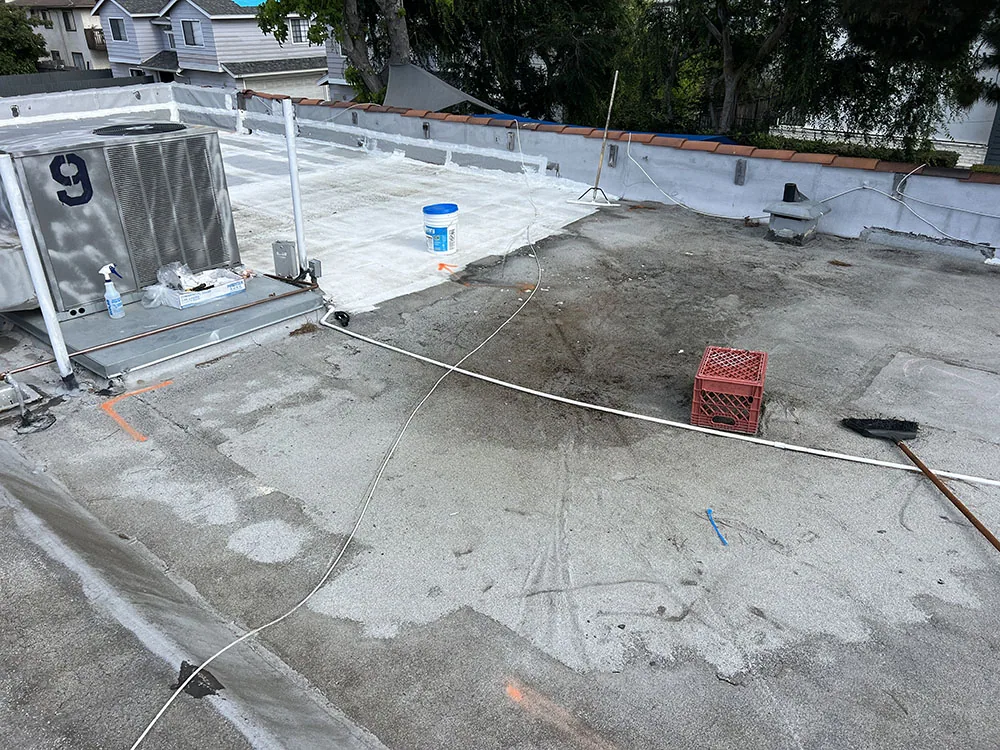
Which transition is allowing water through?
We check wall upturns, equipment curbs, skylight frames, penetrations, coping, edge metal, and the points where a membrane meets a different material. The inspection looks for split sealant, open laps, lifted metal, loose fasteners, gaps, and movement at the substrate. A crack in a bead does not by itself reveal how far moisture has traveled. We compare the detail with accessible areas around it and photograph each observation with a direction and roof-zone reference. Penetration and flashing review can focus on a curb or frame; edge-metal inspection considers perimeter details. East Broadway / Route WW is a Columbia arterial corridor, while the inspected building's own plans and field conditions determine the repair method. If access is restricted, we state that limit and identify what access would resolve. A field diagram should mark the transition relative to a roof corner or fixed equipment label so another inspector can return to it. We also record how the flashing terminates above the membrane and whether a patch from an earlier visit overlaps the current condition. Where metal has moved, the owner needs to know whether the repair resets the attachment or only closes a visible opening. That distinction changes the materials and inspection sequence. We do not infer the cause from the location alone; the scope follows what the detail shows.
Do not assume the visible mark points straight above. Trace likely paths from the reported location toward wall joints, curb corners, counterflashing, terminations, and roof-to-wall transitions. Record the detail where water is observed entering, if it can be confirmed, and note any route that remains a hypothesis. When a wall or cladding trade owns a connected component, identify the scope boundary before opening or resealing the assembly. A coordinated repair should leave the interface continuous and document which party handled each layer. Columbia's wet spring can reveal a flashing weakness during prolonged or intense rain, but the field inspection still needs to show the failed connection.
Related Roofing Work
More commercial roofing work connected to Commercial Roof Flashing Failure Repair in Columbia, MO.
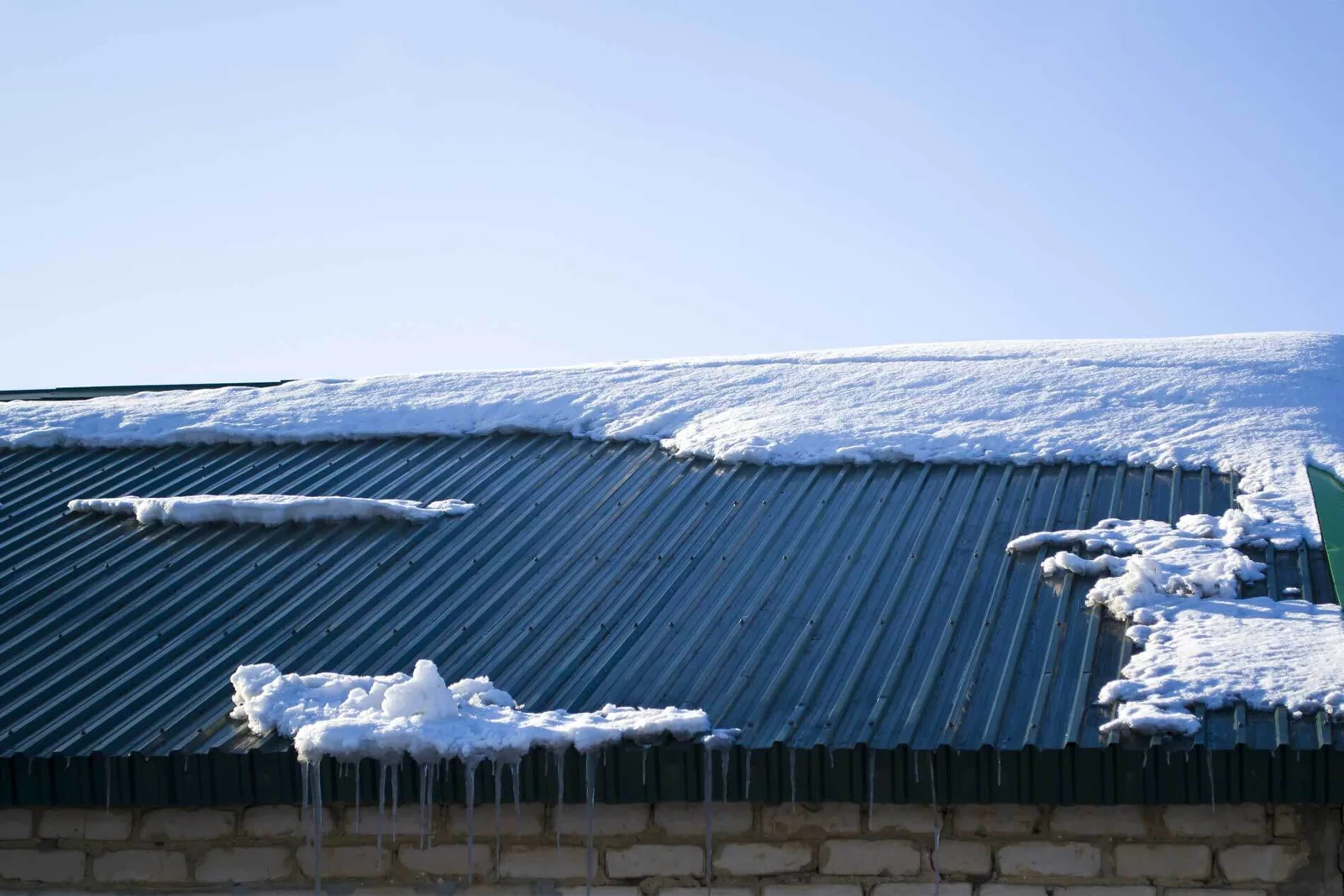
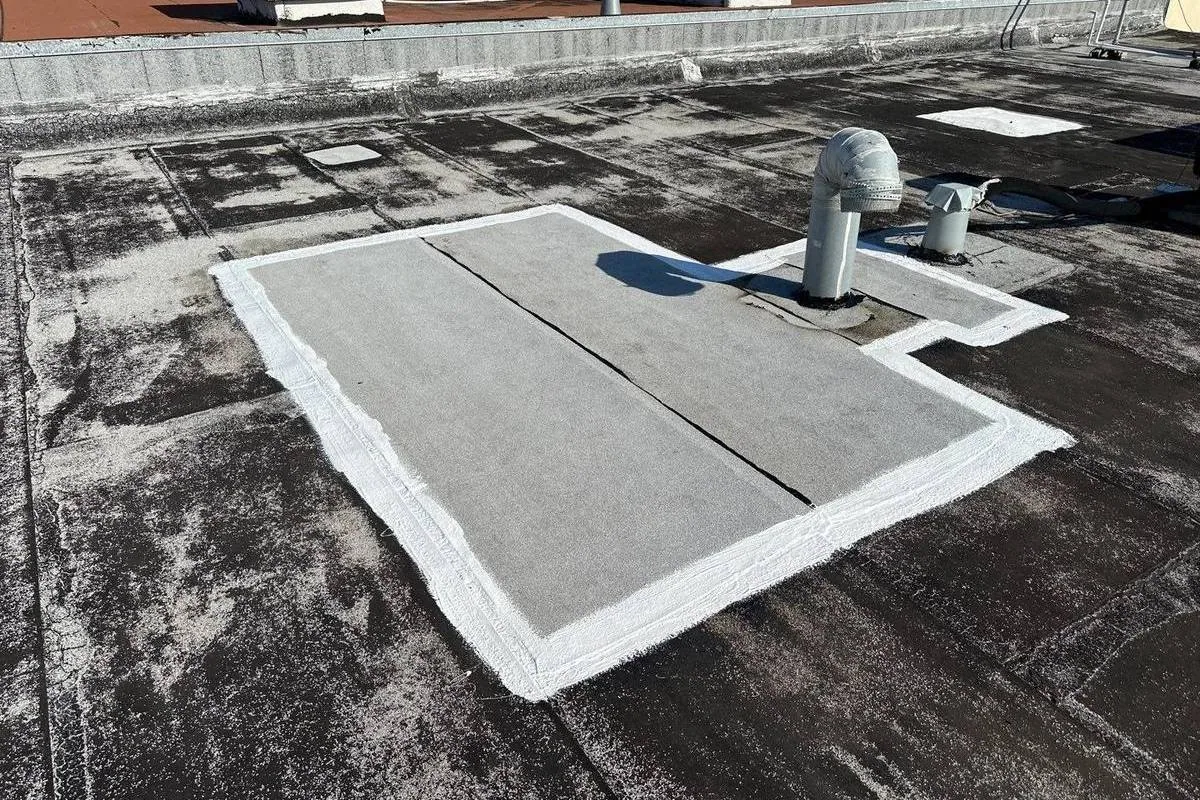
How should the moisture path be documented?
A ceiling stain can appear away from the failed flashing because water follows a deck, insulation joint, or structural line before it reaches the interior. We note the reported room, compare it with the roof transition, and check for signs of wet material or an open seam nearby. Infrared review or a selective opening may be considered when it would change the repair boundary. Moisture assessment is a separate step from replacing visible sealant. Columbia's freeze-thaw winters and wet spring weather create different inspection conditions, but neither identifies a path at a named building. Central City, Columbia is one of the area's institutional settings; the roof detail at the property under review still controls the finding. A Diligence Notes should distinguish confirmed wet insulation from a suspected path and name any area that was not reached.
What makes a flashing repair durable?
The repair needs compatible materials, sound substrate, proper surface preparation, and a connection to secure surrounding components. Depending on the detail, work may include removing failed sealant, replacing loose metal, restoring a membrane termination, or rebuilding the curb interface. We do not cover a gap without examining the adjoining layers. The scope should identify which materials are removed and installed, how the new work ties into the existing assembly, and whether insulation or deck work is excluded. A seam repair addresses membrane continuity; wind-related edge work may also be relevant if movement is observed. Columbia's commercial plan review uses adopted existing-building and energy requirements for applicable projects. If the repair becomes part of a larger alteration, project documents should define those requirements before installation. Closeout photographs should show the full transition, not only a close-up of fresh sealant. For a broad curb or wall, include an image that identifies both ends of the repaired run and where the new work meets original material. If a section remains concealed behind equipment or a screen, note the limit and whether the owner should arrange later access. Timing depends on dry conditions, substrate preparation, material compatibility, and safe access. If rain interrupts the sequence, protect the exposed edge and preserve the unfinished boundary in the daily record. That leaves the next visit a clear point to resume rather than an assumption that the transition is complete.
At a roof-to-wall transition, inspect the termination, counterflashing, substrate, and nearby membrane or panel edge as one connected detail. Note gaps, loose fasteners, cracks, sealant condition, and evidence of water below the surface. A photograph should show both the specific failure and enough wall or roof context to locate it later.
When should the repaired detail be revisited?
A follow-up can compare the same curb, wall, or edge after rain and through a later seasonal change. We retain the original photographs, repaired boundary, material description, and any condition that remained unresolved. Columbia's spring is its wettest season, while summer can bring intense localized downpours; an inspection date helps explain what weather the roof experienced after repair. Preventive maintenance can revisit transitions and drains. Commercial repair work should close with a Diligence Notes stating what was corrected and whether interior drying remains open. If a second leak report comes from a different room, keep it separate until the inspection establishes whether it shares the same moisture path. The decision file then shows whether the repair held, another detail failed, or more investigation is needed.
Set the return check around the next meaningful rain or a period when the affected assembly can be safely inspected. Photograph the same wall, curb, or edge transition and compare the repaired flashing with its original condition. If an interior stain remains after the roof detail is corrected, note whether it is drying, changing, or receiving new water before expanding the repair. Columbia's winter freeze-thaw conditions can move transitions over time, while spring rain tests the water-shedding detail. A dated follow-up helps distinguish a repair that needs adjustment from an interior finish that is still releasing moisture from an earlier event.
Commercial Roofing Questions
Can new sealant solve a flashing leak?
Only if the failed seal is the supported defect and the adjoining materials remain suitable. We inspect the substrate, metal, membrane, and transition before selecting the repair, and record any concealed condition that remains uncertain.
Why can water appear far from a roof curb?
Water may travel along insulation, deck, or framing before becoming visible inside. We compare the room report with nearby roof details and identify whether testing is needed to confirm the path.
Should every loose edge be replaced after a wind event?
No. We inspect attachment and adjoining membrane, then define whether the movement is isolated or part of a broader failure. The proposal names each included edge and any area not examined.
What photographs should be retained after a flashing repair?
Keep a wide view locating the transition, close views of preparation and finished work, the date, and the roof-zone label. The record should also list any adjacent detail left outside the repair boundary.