
Silicone Roof Coatings in Columbia, MO
A silicone coating may be a useful restoration layer on a suitable roof, but it cannot correct a wet substrate, an open seam, or a failing drain connection by itself. We first identify the existing roof assembly, coating history, adhesion, moisture condition, and drainage behavior. Then we decide whether localized repair, full restoration, or another roof approach better matches what is present. Silicone has properties that can make it useful where water may remain temporarily, yet chronic ponding and blocked outlets still need attention. Columbia’s wet spring and summer storms make it valuable to distinguish a coating decision from a drainage correction. The Forum Boulevard Corridor includes laboratory and research facilities, while the West Broadway Corridor is part of a complex institutional setting. These facts do not establish either site’s roof construction. They show why access, equipment coordination, and occupied-building work sequencing must be confirmed for each property. A coating recommendation should explain the substrate, preparation, and details it will address.
Which roofs can accept a silicone restoration?
Before coating, the roof surface must be structurally sound, sufficiently dry, and compatible with the proposed system. We identify membrane type, existing coatings, seams, flashings, penetrations, and prior repairs. Test patches or adhesion tests can help show whether the prepared surface will bond. A coating should not be applied over wet insulation, loose material, trapped debris, or blisters whose cause has not been understood. If test cuts are used, we record each location and restore the opening with a compatible detail. A commercial roof inspection can document the current condition, while the proposed system manufacturer’s requirements should guide surface preparation and primer selection. For a foam assembly, SPF roofing has substrate and coating considerations of its own. The written scope should say what the coating can bond to and list any areas that are excluded because their condition is uncertain.
Related Roofing Work
More commercial roofing work connected to Silicone Roof Coatings in Columbia, MO.
Does silicone make standing water harmless?
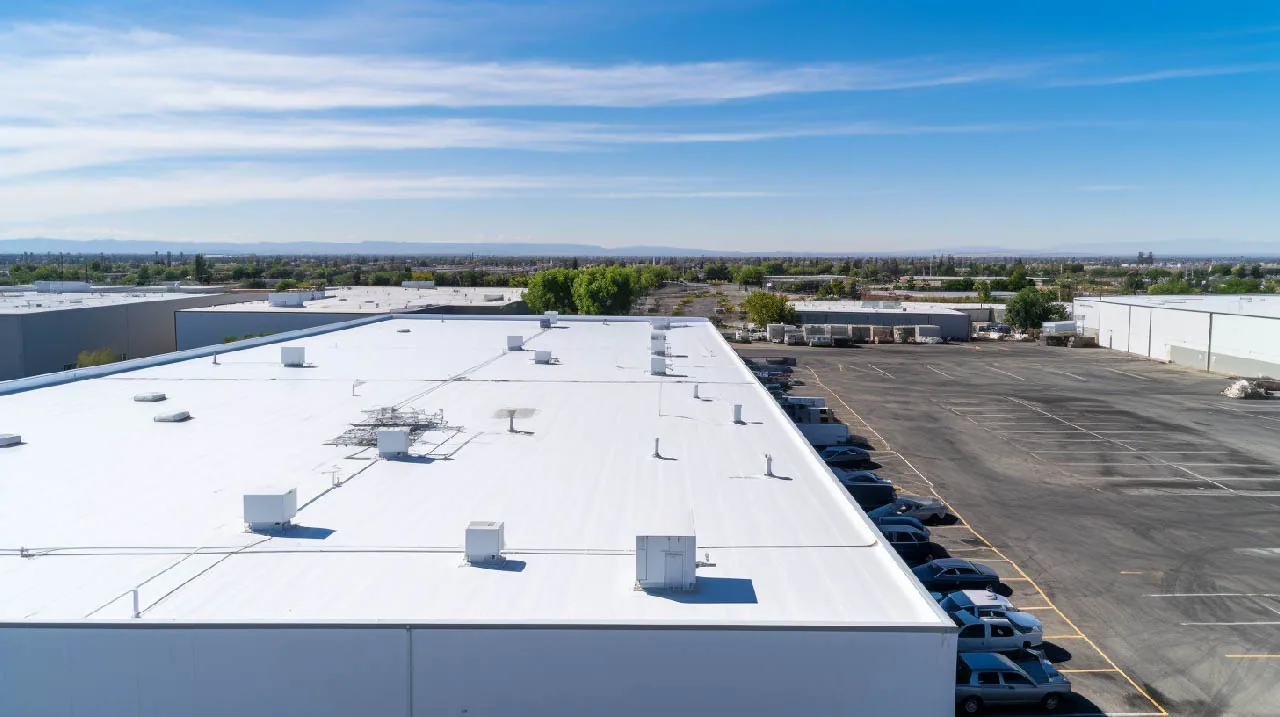
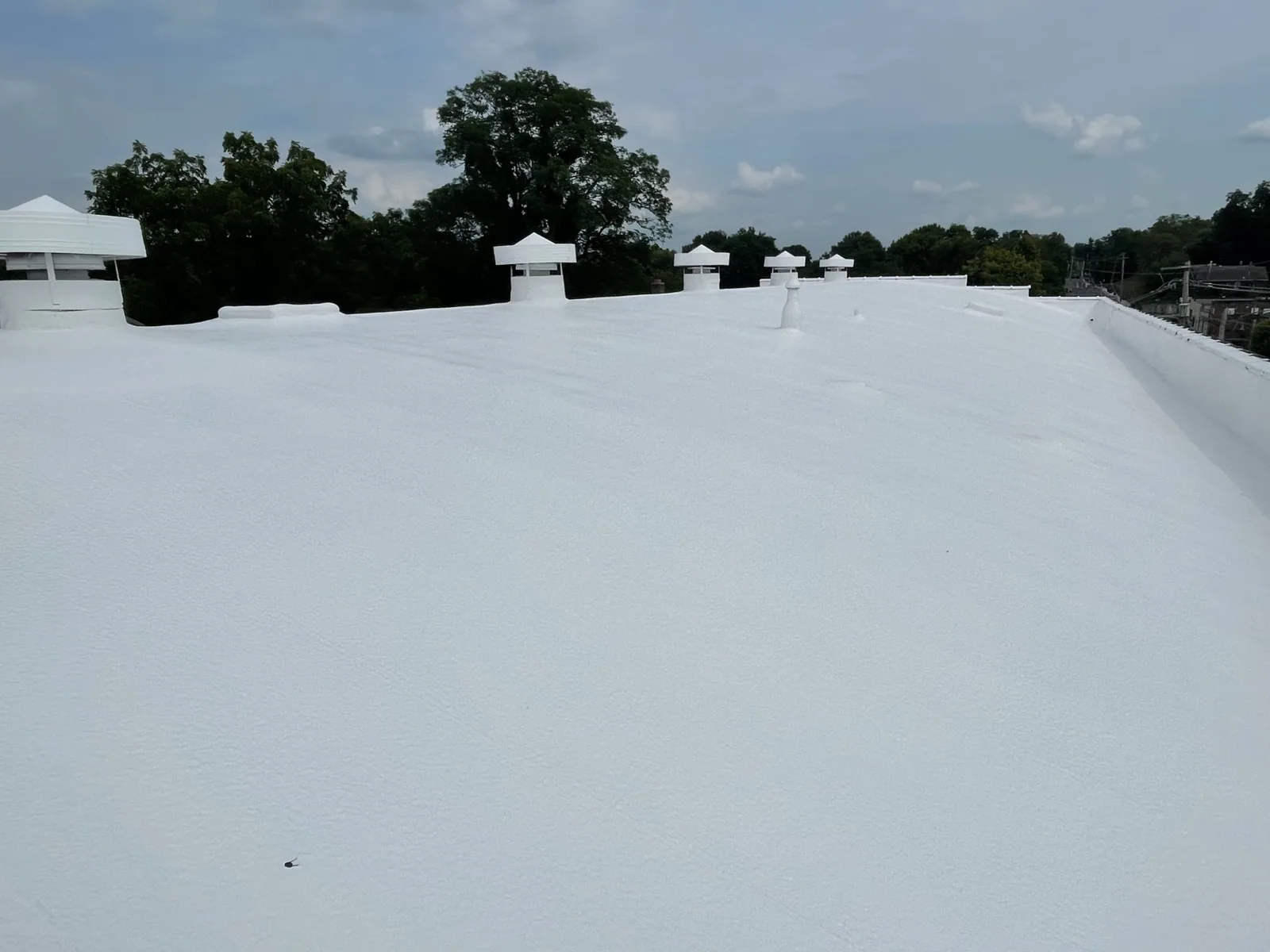
Silicone can tolerate temporary ponding better than some coating chemistries, but water that remains because of poor slope, a blocked drain, or a depressed roof area still deserves attention. The coating may weather differently under a permanent water line, and the underlying assembly can remain wet or deteriorate. We record the depth and extent of ponding after rainfall, confirm drains and scuppers are open, and note whether the low area changes over time. Water behavior should be evaluated before it becomes part of the coating proposal. Drainage review can assess the outlet path, while a coating scope should state whether ponding is being corrected, monitored, or accepted as part of the design. Spring is Columbia’s wettest season, so photos after a rain can help show where water remains. They do not replace checking slope and outlet capacity. The goal is to describe the condition and decide whether it alters the restoration detail.
What preparation controls the result?
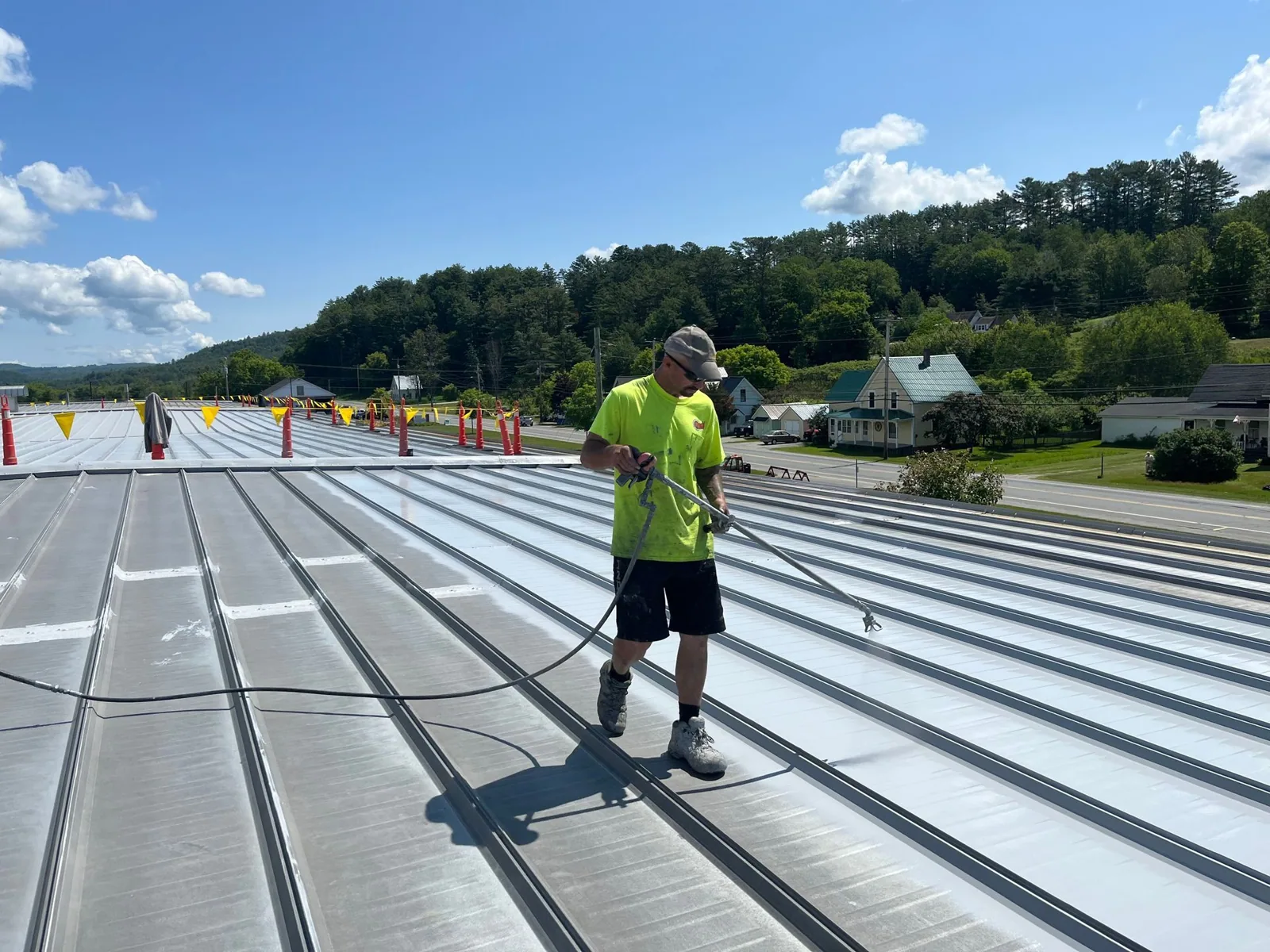
Preparation can include washing, removing loose coating, treating rust, repairing seams, replacing failed sealant, and priming the substrate. The right sequence depends on roof material and the coating manufacturer’s instructions. Dirt, oils, incompatible layers, and residual moisture can weaken adhesion, so the scope should describe how crews will verify the surface is ready. Reinforcement may be required at seams, penetrations, drains, and transitions; not every roof field needs the same detail. Application thickness and coverage should be measured according to the specification, and crews should protect equipment and walk paths from overspray. Weather windows matter because rain or dew before cure can disrupt work. Roof coating restoration should identify preparation and quality checks as clearly as the product name. A sample area can help align expectations about texture and appearance. Photographs of prepared and finished surfaces preserve what was completed and make later inspections more useful. The job log can also record the sequence for each roof zone, where material was staged, and any interruption caused by weather. If the next shift cannot continue immediately, the contractor should identify how the exposed area was protected. At closeout, compare the work against the marked plan and note any detail changed in the field, including who approved that adjustment. This leaves the property team with a record of the installed system rather than only a product receipt.
When is a coating a poor substitute for repair?
If seams are open, flashing is detached, insulation is wet, or the membrane has failed, a coating may hide rather than resolve the defect. We separate surface restoration from repairs to the underlying assembly. Localized openings can sometimes be repaired before coating, but the proposal should state how far the repair extends and what evidence supports that limit. Widespread moisture, poor attachment, or repeated leakage may call for a different scope. Commercial roof repair can address a defined defect; replacement planning can compare restoration with a new assembly when the existing roof no longer offers a sound substrate. Acrylic roof coatings may be appropriate in other conditions, but they have different water exposure limits and application requirements. The decision should consider roof history, test results, drainage, and the owner’s plans for the property, without promising a service life unsupported by an inspection.
What should owners track after application?
Keep the coating manufacturer, product, batch information, application date, measured thickness, preparation details, and warranty documents with the roof plan. Mark repaired seams, reinforced penetrations, drains, and any surface excluded from the work. Record the weather window and quality-control observations required by the specification. A follow-up inspection can look for wear at walk paths, equipment service points, drain bowls, and any locations where water persists. If other trades work on the roof, the maintenance record should show whether their penetrations or equipment changes were reviewed after the coating. Preventive maintenance can compare current photographs with the application record and identify localized damage before it spreads. The record should distinguish coating condition from the condition of concealed insulation or deck, which cannot be confirmed by a surface view alone.
Keep a map of the coated area, repairs made before coating, reinforcement at seams and penetrations, drain conditions, and any excluded roof zone. Record the application date and product information with photographs of representative details. Follow-up visits should check coating continuity, exposed reinforcement, debris, and movement at transitions without treating a reflective surface as proof that the roof assembly below is dry. Columbia's localized summer downpours make low areas and drains worth tracking after heavy rain. If ponding remains, record its location and duration and determine whether it is within the project design before calling the coating a drainage correction.
Commercial Roofing Questions
What conditions must be met before a silicone restoration is applied?
No. The existing surface, moisture condition, adhesion, and compatibility must be checked first. Preparation and any needed primer depend on the substrate and the selected product system.
Can silicone coating stop leaks on its own?
It may restore a sound surface, but open seams, failed flashings, wet insulation, and drainage defects need to be addressed. The repair boundary should be defined before coating covers the area.
Is silicone suitable where water ponds?
Silicone can tolerate temporary ponding in many approved systems, but standing water still warrants assessment. The roof’s slope, drain performance, substrate condition, and product requirements shape the recommendation.
How is coating thickness verified?
The project specification should identify the target and how it will be measured, with inspection records tied to the application area. The product manufacturer’s installation instructions govern the required checks.