
Acrylic Roof Coatings in Columbia, MO
Acrylic coatings need a compatible substrate, sound preparation, and a workable drying window. We identify the existing assembly, examine seams and flashings, and check for moisture or recurring ponding before discussing a coating. Acrylic systems are water-based and need suitable conditions to dry and cure, so a forecast matters as much as the product label. Columbia’s wet spring can narrow a project window, and summer storms may arrive locally rather than across the whole city. Ewing Industrial Park includes mixed commercial and industrial-zoned lots off Route B, while East Broadway / Route WW Corridor is a major arterial connecting Columbia neighborhoods and commercial areas. Ewing Industrial Park and East Broadway / Route WW have different access patterns, so the property contact confirms current staging and operating limits. The property contact confirms operating limits while we assess the roof surface and preparation requirements.
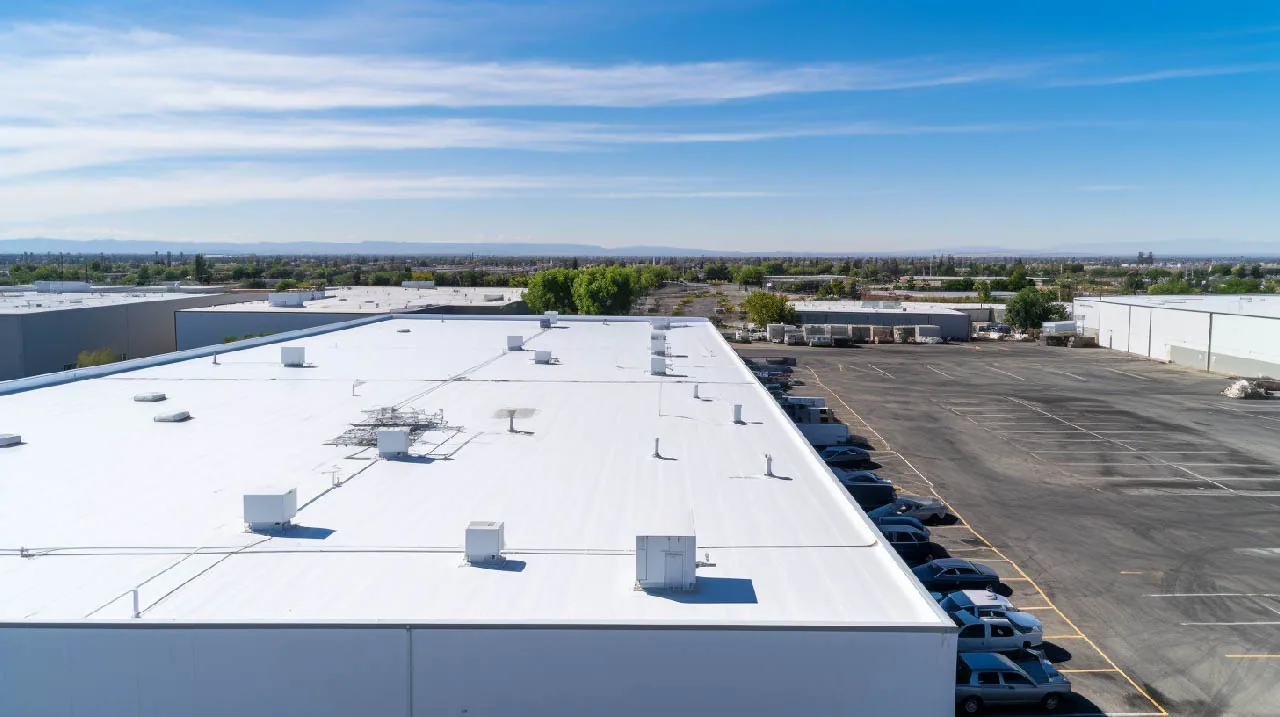
Which roof conditions support acrylic coating?
The substrate should be stable, clean, dry, and compatible with the selected acrylic system. We inspect existing coatings, membrane seams, metal panels, flashings, penetrations, and repaired areas to understand whether the surface can be prepared consistently. Adhesion testing or a sample patch can help evaluate a doubtful coating or mixed substrate. Wet insulation, loose material, open seams, blisters, and active leakage need attention before a new film covers them. We mark areas that cannot be confirmed from the surface and avoid extending a recommendation beyond the inspected limits. A commercial roof inspection can record the current assembly and suspect areas. If the roof has an existing silicone layer or another incompatible coating, a compatibility review is needed before changing chemistries. Silicone coating systems have different ponding-water characteristics and surface requirements, so they should be evaluated as a distinct option rather than interchangeable products. TPO roofing is a membrane assembly rather than a coating, so it offers a different path when the owner is considering a new roof system.
Related Roofing Work
More commercial roofing work connected to Acrylic Roof Coatings in Columbia, MO.
Why does the forecast affect acrylic work?
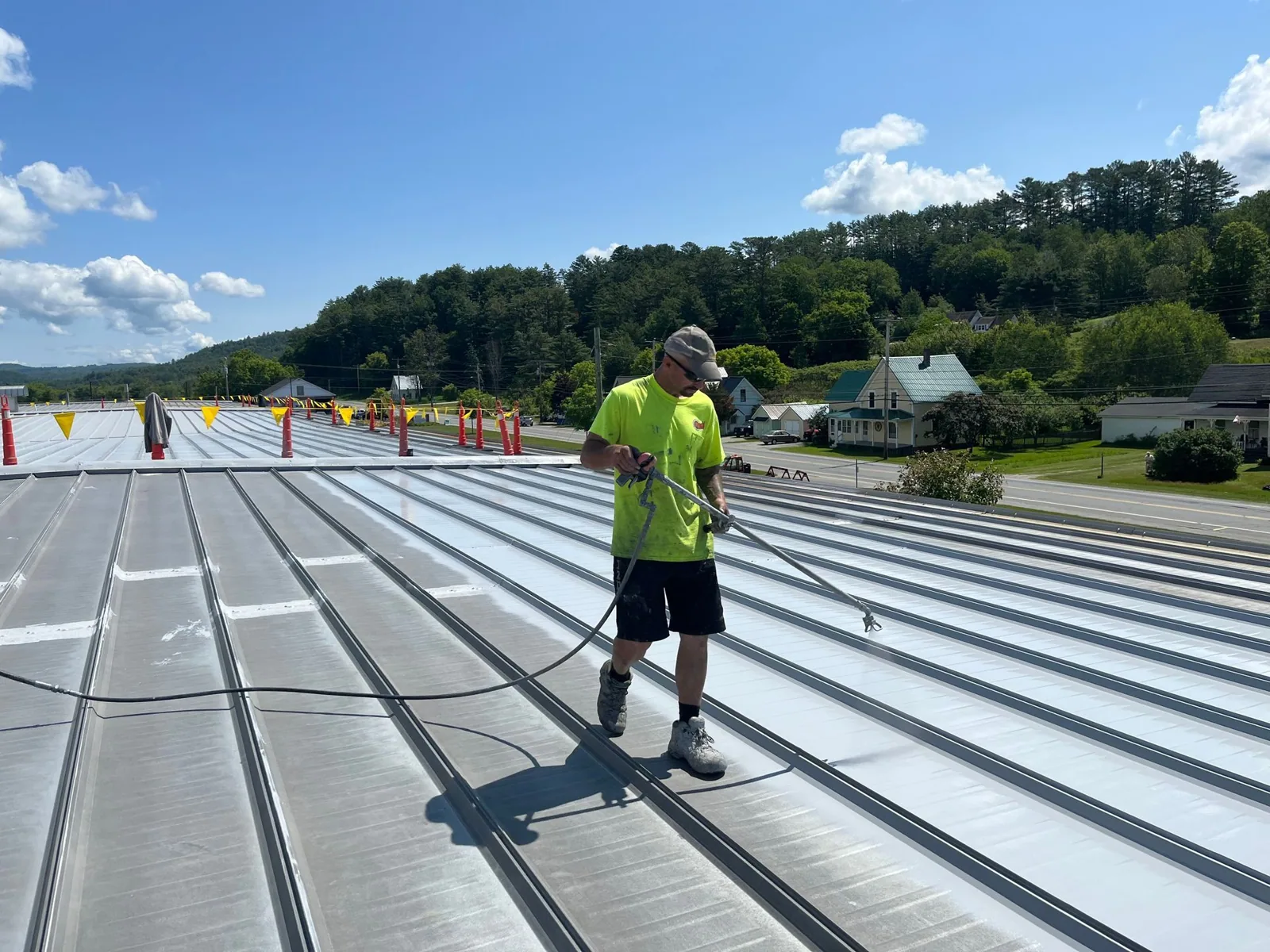
Because acrylic coatings use water as a carrier, rain, dew, high humidity, and low temperatures can affect drying and film formation. Application should follow the product requirements for surface and air temperatures, humidity, and time without precipitation. Columbia’s spring is the wettest season, so the crew may need to divide the roof into areas that can be prepared and coated within a safe weather window. A project plan should identify what happens if rain approaches, how open or coated areas will be protected, and when a new coat may be applied. Use the product’s air, substrate, and recoat limits to decide whether work can start and when another coat can follow. The application log can record zone, start and finish time, weather, material batch, and any pause. Those details help explain why one section received a second pass later or why a planned work area remained untouched.
How should low areas be handled?
Acrylic coatings are generally less tolerant of prolonged ponding than silicone systems, so persistent standing water can change the recommendation. We check drain bowls, scuppers, roof edges, and low spots, then note whether water remains after rainfall. A coating may follow the existing surface without correcting its slope. If drainage needs work, that change should be planned as part of the project rather than assumed to disappear under a reflective layer. Roof repair may address a localized defect, while replacement planning can compare a new assembly if the substrate or slope is not suitable for restoration. Water can also enter at a flashing above a low area, so the leak search follows seams and transitions as well as the pond itself. Photos taken after rain should include the roof location and a time reference to help distinguish normal drying from a persistent collection point.
What should a coating scope specify?
A useful scope states cleaning method, removal of unsound material, seam reinforcement, primer needs, detail treatment, target dry-film thickness, and how coverage will be verified. It should identify whether the coating will be applied in one or more passes and what cure conditions govern each coat. Flashings, penetrations, roof edges, and equipment supports may need separate reinforcement details. The contractor should define protection for rooftop equipment, skylights, walls, and nearby operations before spraying or rolling. We record prepared surfaces and completed zones with photographs, noting any area that was excluded or changed during work. Roof coating restoration should include the installation checks that make the proposed system verifiable. If the substrate requires a repair before coating, the written scope should say whether that repair is included, who will approve it, and how the transition into the new film will be made. Before full production, a sample area can help the owner review the finish and confirm the detail treatment at one representative seam or penetration. The sample gives the owner a close view of the finish and detail treatment; adhesion testing and manufacturer requirements remain separate checks. The application log should record which roof zone received the sample and whether it was accepted, revised, or removed. That decision gives the crew a clear reference for the remaining areas and supports a more consistent closeout record.
What should be checked after the coating cures?
A completed acrylic roof still needs inspection at seams, drains, walk paths, and service areas. We look for exposed substrate, thin or missed spots, peeling edges, damage from later trades, and areas that remain wet after rain. The project record should preserve the product name, batch, application dates, measured thickness, preparation, and weather observations. If roof equipment is serviced later, the repair method should be compatible with the coating and documented. A reflective finish makes old and new work easier to distinguish, while adhesion and coverage should be checked against the application record. Preventive roof maintenance can return to marked locations and compare them with the closeout photographs. A maintenance plan should also state which issues call for prompt attention, such as an open seam, puncture, blocked outlet, or coating damage that exposes the substrate. That guidance keeps small repairs from being mistaken for a complete roof renewal.
Inspect the finished film for coverage, pinholes, skips, reinforcing fabric at specified details, and tie-ins around penetrations and edges. Record the weather and substrate conditions relevant to the application, the areas completed, and any exclusions. A later check should compare the same low points and drain approaches rather than only reviewing the broad reflective field. Columbia's wet spring and summer storms create different exposure windows; the owner should retain the application and cure record alongside the inspection date. If drainage remains slow after the coating, identify the contributing slope or outlet condition separately so surface restoration is not mistaken for a correction to roof geometry.
Commercial Roofing Questions
Can acrylic coating be applied over any roof material?
No. The existing roof and prior coatings need compatibility and adhesion review. Moisture, loose layers, or active defects should be addressed before coating is considered.
Is acrylic coating a good choice for standing water?
Prolonged ponding can be a concern for acrylic systems. The roof’s slope and drainage should be checked, and the product’s limits should be compared with actual water behavior.
How long does acrylic roof coating take to dry?
Drying depends on the product, application thickness, temperature, humidity, and forecast. The project should follow the manufacturer’s conditions and record how weather affected each work area.
Can an acrylic coating stop an active leak?
A coating should not be treated as a substitute for locating and repairing an active leak. Seams, penetrations, flashings, and wet materials should be assessed before restoration begins.