
Commercial Roof Drains and Scuppers in Columbia, MO
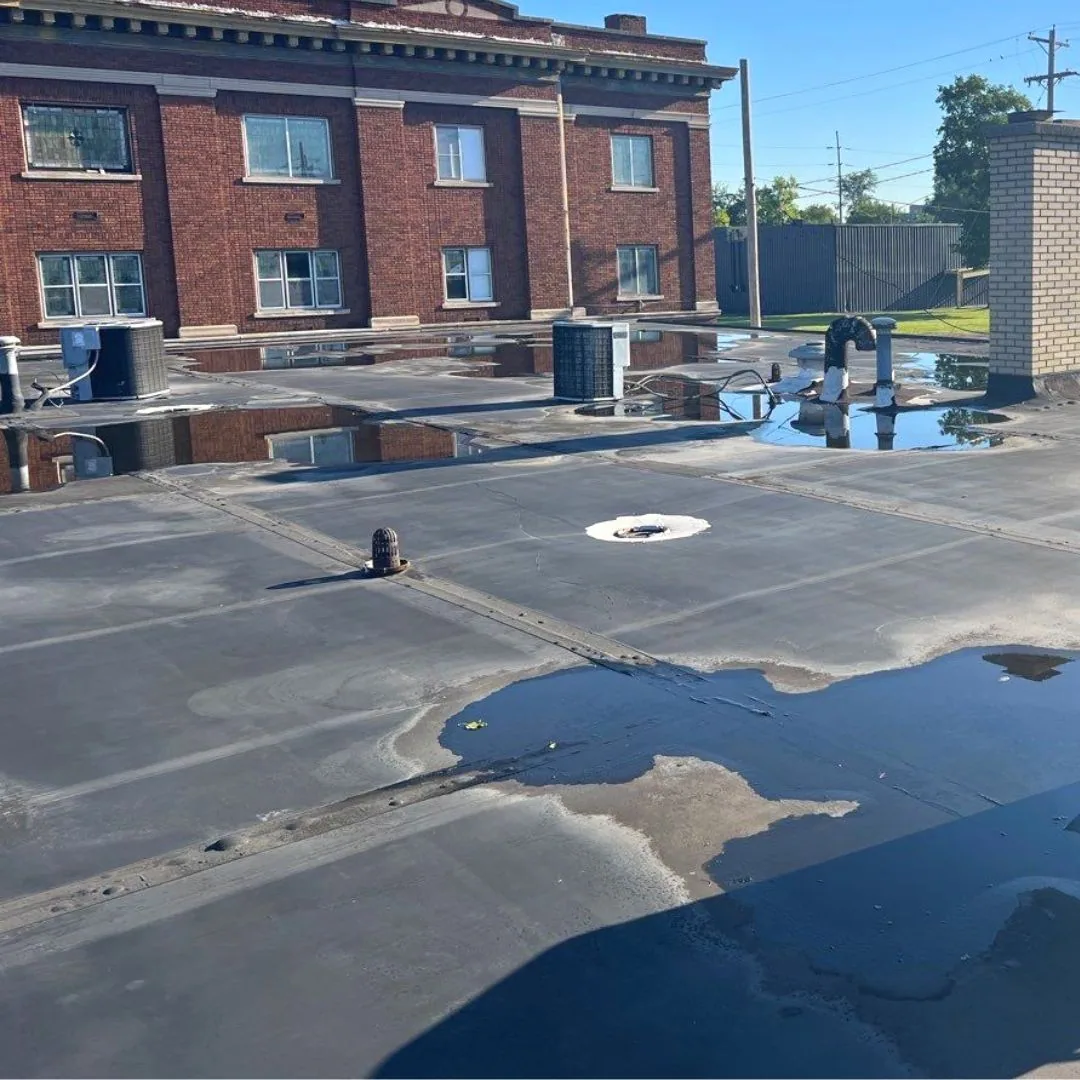
A drain can be open at the grate and still fail to move water from the roof. The inlet may sit above the surrounding surface, debris may collect below the visible opening, or a low area may hold water beyond the drain's reach. In Columbia, spring is the wettest season, while summer thunderstorms can bring heavy rain over a localized area. A roof drainage review starts with the entire path: roof slope, drain or scupper, leader, and discharge point where accessible. We document where water remains after a reasonable drying interval, whether the basin is obstructed, and whether nearby seams or flashings show damage. The Forum Boulevard Corridor is part of Columbia's institutional property mix, and the I-70 Business Loop includes commercial and industrial properties; neither place determines what drainage detail any one building needs. Our assessment is based on the actual roof, visible water path, and available records. It distinguishes cleaning from repair, and repair from reworking the slope or outlet. That distinction keeps the work order specific and helps the owner decide what should be corrected first. We also check whether water can leave the roof after passing through the drain. A clear inlet does not solve a disconnected leader, a blocked conductor, or a discharge point that sends water back toward the foundation. When the lower part of the route is outside our inspection, the report identifies that limit and recommends who should verify it.
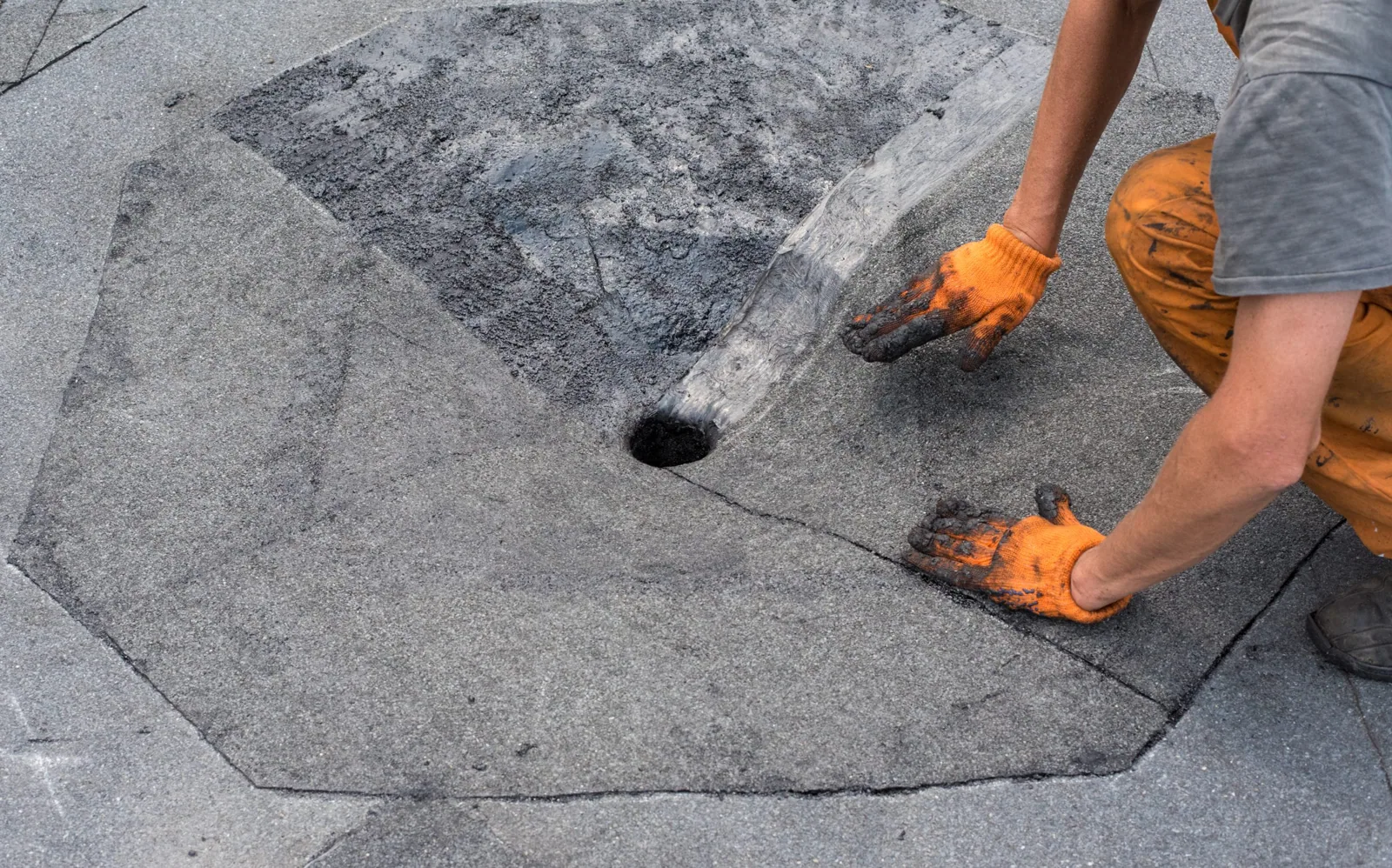
How do you find the cause of standing water?
We map the roof plane and note drain locations, scuppers, overflow openings, crickets, and visible low points. A controlled water check may help when conditions allow, but a single observation during rain does not establish whether the outlet is undersized or improperly located. We look for an obstructed basket, damaged flashing at the drain bowl, a loose clamping assembly, a clogged leader, or a discharge problem at ground level. The inspection also checks the membrane around the opening, because a leak can develop at the flashing even when the drain carries water away. Ponding can relate to settled insulation or deck movement, but we do not infer either condition from a puddle alone. We record the relative elevation of the drain and surrounding field where measurement is practical. We also ask whether ponding recurs after ordinary rain or appeared only during an unusually intense event; that history helps prioritize observation without replacing a field check. A full roof inspection can place drainage observations alongside seams, penetrations, and roof history. When concealed wet insulation is possible, moisture testing may help identify where further investigation is justified. If a punctured or open detail appears beside the water, a localized repair assessment should be included in the same roof-area record.
Related Roofing Work
More commercial roofing work connected to Commercial Roof Drains and Scuppers in Columbia, MO.
Which drainage corrections may be appropriate?
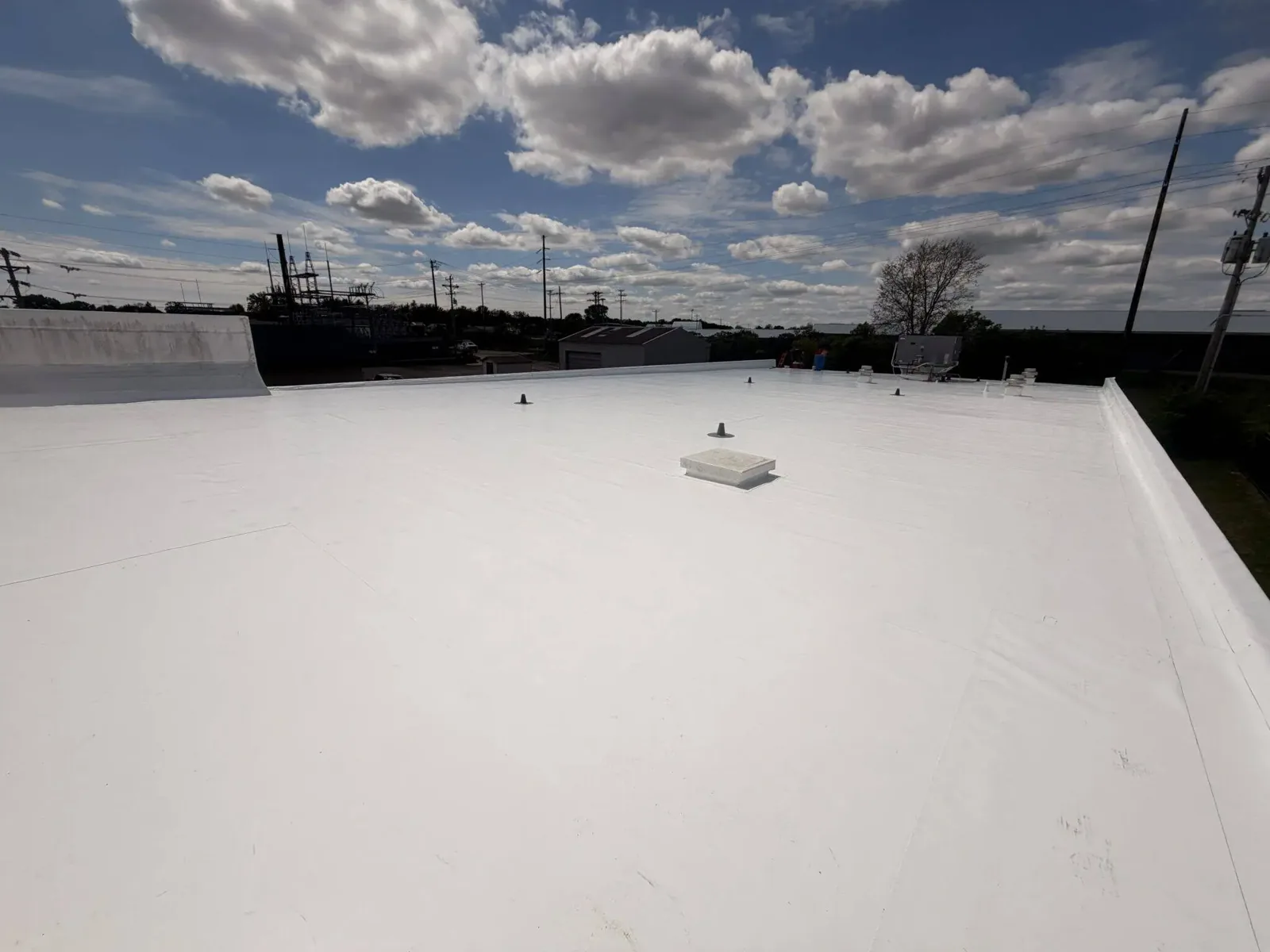
The correction depends on the cause. Routine debris removal may restore flow through an otherwise serviceable inlet. A damaged drain flashing may need a compatible repair around the bowl and membrane transition. A scupper can require rebuilding the opening, repairing its liner, or correcting the exterior discharge connection. If the water collects in a broad shallow area, a tapered cricket or localized slope adjustment may be considered after the underlying assembly is understood. The proposal should say whether insulation or deck work is included, and what happens if concealed deterioration appears during removal. New or altered drainage can affect roof elevations, overflow paths, structural loading, and code review; that work needs a project-specific assessment instead of a generic promise to eliminate every puddle. The scope should note whether existing overflow openings remain functional during the work and whether the property contact needs to keep roof access clear. If drain components are replaced, the material connection should be described so the owner can understand how the new flashing interfaces with the existing membrane. Tapered insulation and cover board can shape drainage when the design and substrate support that approach. Recover work should also account for drainage and existing layers, while TPO membrane details illustrate why the new flashing must be compatible with the roof system.
How is drain work planned on an occupied property?
Before work begins, we confirm roof access, drain locations, staging, water control, and the protection needed for the building below. The work sequence should keep open drains protected from debris without blocking them longer than needed. If an outlet must be temporarily isolated, the site contact needs to understand the timing and any weather limits. We identify whether the correction occurs at the drain, in the roof field, or at a discharge connection outside the roof area. A roof with several elevations may need separate phases so crews can track which area is open and which is ready for water flow. Columbia's spring rainfall patterns make a forecast review practical, but an exact work window must be coordinated for the building and the crew. Occupied-building roof planning can help define access, separation, and daily work limits. The place name alone does not establish hours, loading areas, or restrictions; those details come from the property contact.
What should the closeout confirm?
Closeout should show the corrected drain, scupper, or slope transition and identify the roof areas included. Photographs can record the inlet before cleaning, the flashing or liner during repair, and the finished connection. We note whether a water test was performed and describe what it showed without claiming that a brief test proves performance during every storm. The report can flag adjacent low areas that remain outside the scope and list any follow-up observation the owner should make after rainfall. A drain that worked on the inspection date can later collect leaves, sediment, or debris, so routine checks still matter. A maintenance log can include drain clearing and photo records, and preserve recurring ponding locations for comparison. In Columbia's climate, freeze and thaw cycles add another reason to watch flashings and transitions over time. The final notes should distinguish the completed correction from any roof-wide drainage design question left for a separate evaluation. Where multiple roof areas connect to one discharge route, the owner may also want a ground-level check after the first substantial rain. That observation is useful only when recorded with the date and roof area, not treated as proof of future performance.
Identify each outlet checked, the debris or obstruction removed, any attachment or flashing defect, and the roof area that drains toward it. Where standing water remains after work, record the observed limit and the next step rather than marking the whole drainage system corrected. Photographs should show the drain before and after service and a wider view of nearby seams or low areas. Columbia's summer thunderstorms can deliver heavy rainfall in localized areas, so a later check after a meaningful rain may help confirm how the repaired outlet performs. Keep that observation separate from any conclusion about the full roof slope or concealed drain piping.
Commercial Roofing Questions
Can cleaning a drain stop every ponding problem?
Only when an obstruction is the cause. We inspect the inlet, flashing, slope, and discharge path before recommending cleaning alone. If the surrounding roof is low or the drain detail is damaged, another correction may be needed.
How can an inspection separate ponding from an active roof leak?
No. Ponding and leakage are separate observations, though retained water can expose weak details over time. We document the water location and inspect nearby seams, penetrations, and the drain flashing for evidence of entry.
Can you add a drain or scupper to a commercial roof?
A new opening requires project-specific review of structure, slope, overflow, discharge, and the existing roof assembly. The assessment should identify design and code questions before cutting the roof or promising a particular result.
Will a hose test prove the drainage system is fixed?
A controlled test can show how water moves under the test conditions, but it does not duplicate every storm or demonstrate concealed conditions. The closeout should state what was tested, what was observed, and which areas remain unverified.