
Big-Box Retail Roofing in Columbia, MO
Commercial redevelopment is occurring along Missouri Boulevard and in central Jefferson City, while Mexico’s business base includes retailers and service firms as well as manufacturing and logistics. Jefferson City and Mexico show a range of municipal commercial settings; their use does not identify the roof type or condition at a big-box store. We confirm the actual property layout, receiving route, operating rules, and roof evidence before choosing a repair or replacement sequence.
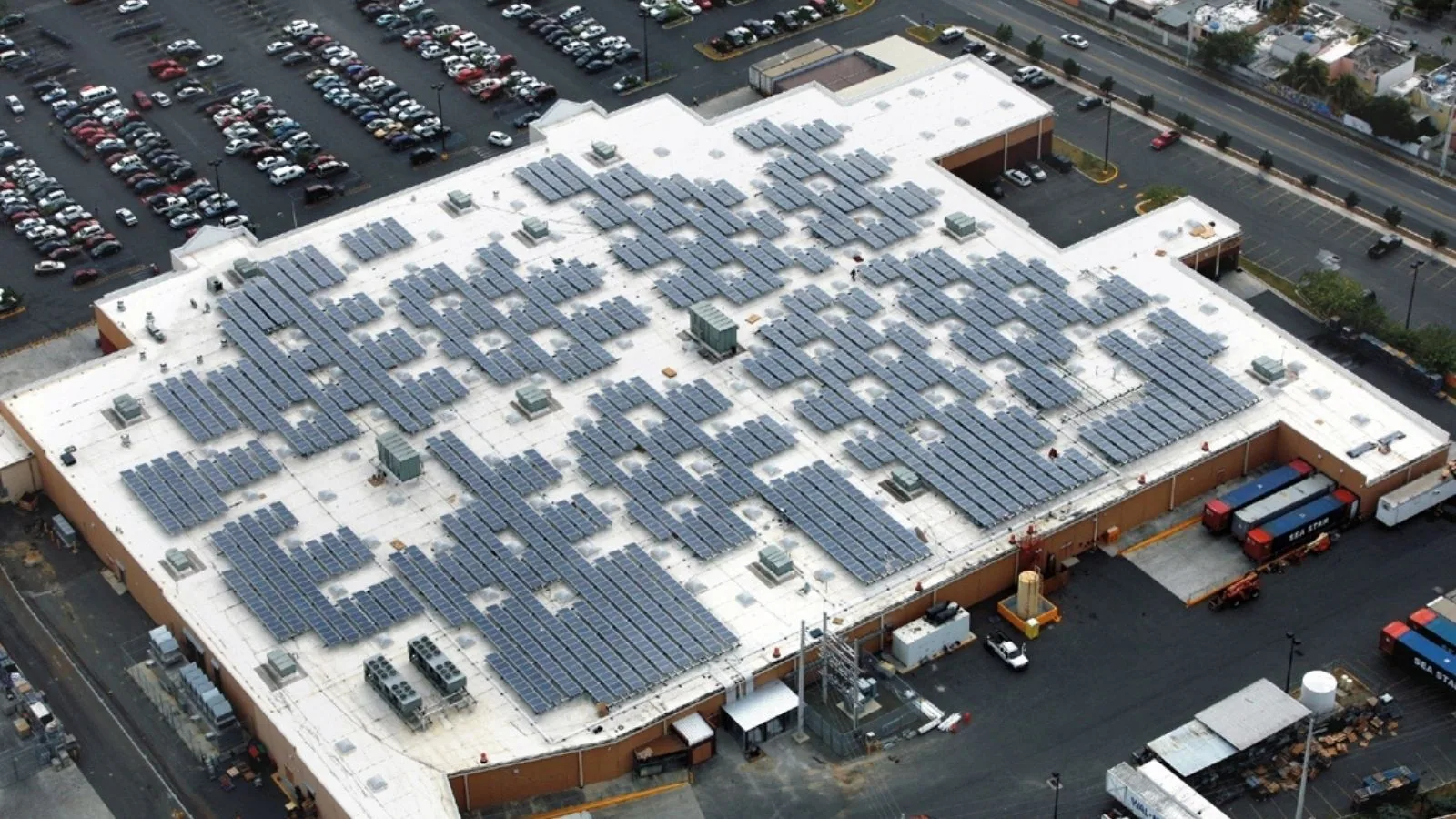
How do receiving routes affect roofing work?
Loading docks, delivery schedules, pallet staging, and customer traffic can compete for the same exterior space. Before mobilization, we identify where the lift or crane can stand, when material may arrive, and which lane must stay open for deliveries. The store or property contact identifies high-traffic periods and temporary access limits, then we mark the work area and route on a site plan. If a shipment delay changes the sequence, the active roof zone should be reviewed before moving the crew. Occupied-building reroof planning can organize daily zones and close-in points. The work record identifies what was completed and which entrance or receiving path returned to service, so operations staff can coordinate the next shift without relying on a general notice that roof work is underway. If the store has separate vendor and customer entrances, the property contact can identify which one the crew should use and where a delivery truck can wait without blocking a route. We confirm how tools and removed material leave the property at shift end. A brief daily handoff notes any temporary barrier, roof opening, or area that remains restricted, allowing store staff to update their own operations before the next phase begins.
Related Roofing Work
More commercial roofing work connected to Big-Box Retail Roofing in Columbia, MO.
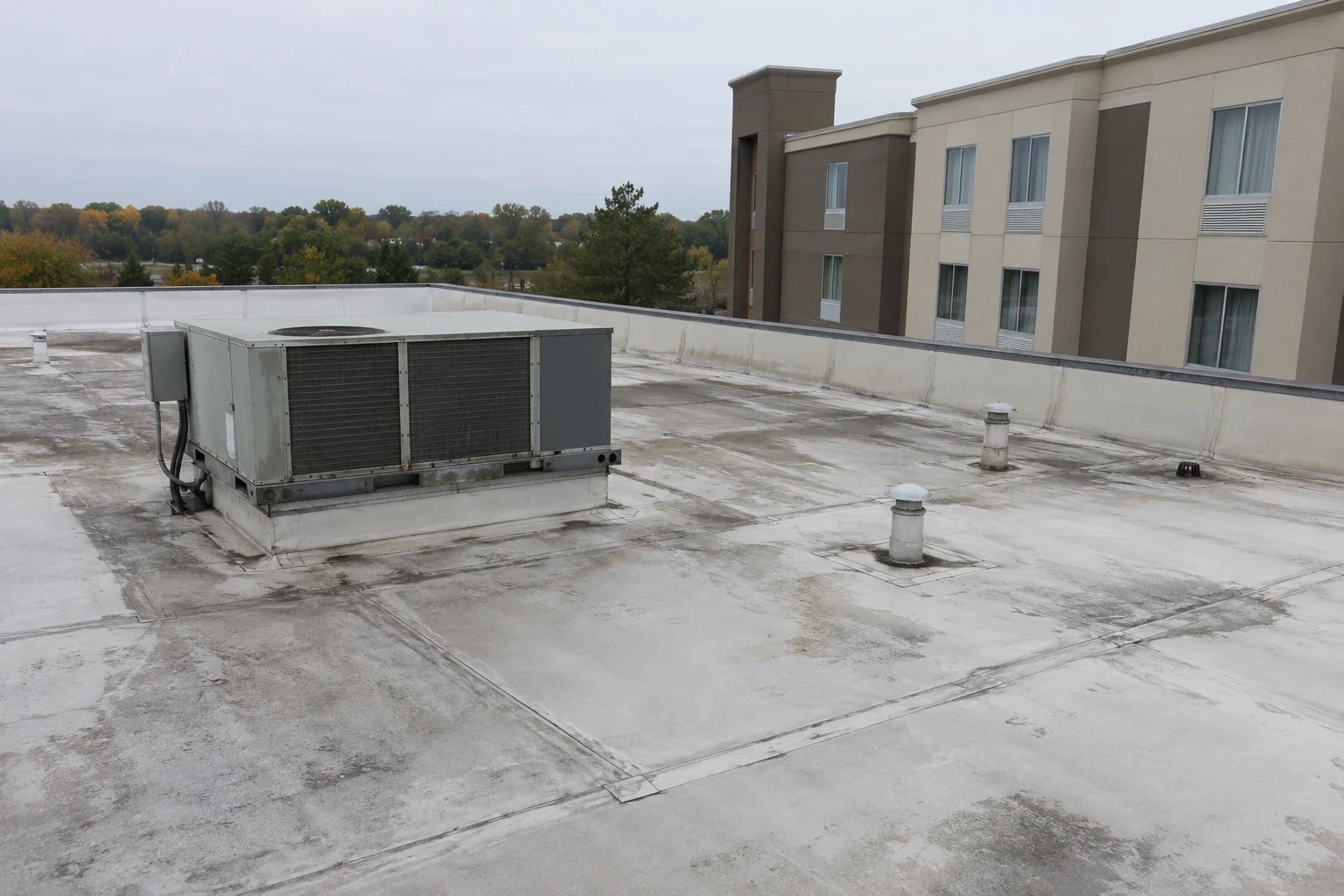
What should be inspected across a broad roof field?
A large retail roof may include multiple membrane sections, drains, rooftop units, skylights, and expansion joints installed at different times. We divide the plan into labeled zones and record repeated defects by location rather than describing the roof as one uniform surface. If a reported leak sits near a curb, we inspect its flashing and the nearest seam but also trace the path toward drains and roof edges. A commercial roof inspection can map the visible conditions and areas that need closer testing. Aerial roof imagery can help document a wide field or access-limited area, though it cannot confirm concealed moisture. Columbia’s spring storms may bring hail and heavy rain; a post-storm inspection should identify what was actually found on each building section.
Which rooftop interfaces deserve a separate record?
Units, exhaust, service platforms, conduits, signs, and supports interrupt a continuous roof surface and may be serviced by different trades. We identify each penetration, check its flashing and attachment, and note recent service work if the property can provide it. A sign support or equipment curb should not be sealed without confirming how it is attached and what movement the detail must accommodate. Curb and equipment-support service can address the roof interface. The facility contact confirms whether a unit or sign can be accessed during a repair. A closeout photograph should show the restored detail and a reference point, not simply a close-up of sealant. That makes it easier to compare a later service call with the installation record and determine whether the same penetration was changed.
When does a retail roof need more than a patch?
A localized repair may work when a single seam, flashing, or puncture is defective and adjacent materials remain stable. Several leaks in different sales areas, broad wet insulation, or recurring failures across a roof zone can support a larger comparison. We document the repair boundary and state which areas were not opened or tested. Commercial roof repair can address a confirmed defect; a phased replacement may separate the work by roof section, receiving needs, and weather window. A shopping center may have shared roof or tenant-specific equipment responsibilities; shopping-center roofing considers those property boundaries. A grocery building can have refrigeration and service details that alter its roof coordination; grocery-store roofing addresses that use. The owner should compare the actual materials, protection, phasing, and concealed-condition assumptions in each option. If work spans sales floors with different operating patterns, the proposal should identify which section can be completed first and how the temporary edge will be secured before the next shift. We record the sequence and the next point where an inspection is required, particularly before a covered detail disappears beneath the finished system.
For a large store, the decision often turns on how defects cluster across the field. We compare the number and spread of confirmed openings, wet insulation, recurring seam failures, and unstable edge details against the condition of the surrounding assembly. A roof map can show whether the work is one isolated zone or a pattern across several sections. Separate the price and schedule drivers for immediate water control, exploratory openings, and a broader reroof so the owner can see what each choice resolves. Columbia's I-70 Business Loop includes commercial activity, but delivery access and roof findings still need to be assessed at the store.
What should the store team receive after repairs?
The closeout record should include the roof-zone map, repair materials, before-and-after photos, dates, and any limits on the inspection. It should show whether a section was opened, what wet material was removed, and how the tie-in was closed. Columbia’s 2024 commercial building-code package includes building, existing-building, and energy provisions, so an assembly alteration should be checked against the requirements that apply to the project. The permit or plan-review record can stay with the roof file. Drainage review can revisit outlets, while later maintenance compares repaired seams and curbs with the original photos. A manager can then connect a new leak report to a particular section instead of assuming the previous repair covered the whole retail roof. Keep the inspection date, weather note, and repair approval together with before-and-after images. If a later equipment contractor changes a curb or conduit, add that event to the same roof history. A repeated call at one location may call for another test, while a report at a separate zone should be investigated on its own. The record helps staff decide which issue merits a quick follow-up and which can wait for the next planned maintenance visit.
Give the store a zone map that operations can read without translating roofing shorthand. Label the repair by dock, sales-floor quadrant, or equipment row, and identify drains or curbs that were checked at the same time. The closeout should state what was removed, how the tie-in was made, and whether wet insulation or damaged deck was found. If the visible evidence did not support opening adjacent areas, say where the repair boundary ends and what condition would trigger another review. Columbia's localized summer downpours can stress one drainage area more than another, so a zone-specific record is more useful than a general note that the roof was serviced.
Commercial Roofing Questions
Can a big-box store stay open while roofing work continues?
The facility contact sets customer routes, delivery windows, and any limits on noise or access. We plan a roof zone and ground staging area that can be protected and closed each shift, then record any schedule change.
How should merchandise under a roof leak be protected?
The store identifies the affected aisle or stock area and its handling rules. We use that location to inspect above, document the roof condition, and agree on the work boundary before opening the assembly.
Does a large roof area mean replacement is necessary?
No. We assess conditions by roof zone, including seams, moisture, drainage, and prior repairs. The recommendation depends on the extent of confirmed defects, not the building’s overall footprint.
What if a leak appears after rooftop equipment service?
We record the service date supplied by the property and inspect the unit curb, nearby flashing, and other plausible water paths. The timing helps guide the review but does not establish the cause without roof evidence.