
Commercial Rooftop Equipment Curbs and Supports in Columbia, MO
Back-edge flashing can open while a rooftop curb looks intact from the access hatch. We map the base, nearby fasteners, seam transitions, and runoff path before setting a repair boundary. Equipment curbs, pipe supports, sleepers, and stands create roof penetrations and concentrated attachment points, so the inspection has to follow each transition into the membrane. We record curb height and condition, counterflashing, fasteners, movement, sealant, nearby seams, and whether water can drain around the support. The Forum Boulevard Corridor includes research buildings and a chilled-water plant in its facilities inventory; the East Columbia / East Area Plan describes a broad mix of industrial, commercial, and office uses. Those local facts describe different facility settings, not rooftop equipment or roof conditions at any individual address. Our assessment starts with the installed assembly and documents the repair boundary before equipment work or membrane repairs are proposed. If the support is loose or the curb is too low for the roof build-up, the scope should address the cause rather than cover the symptom with sealant.
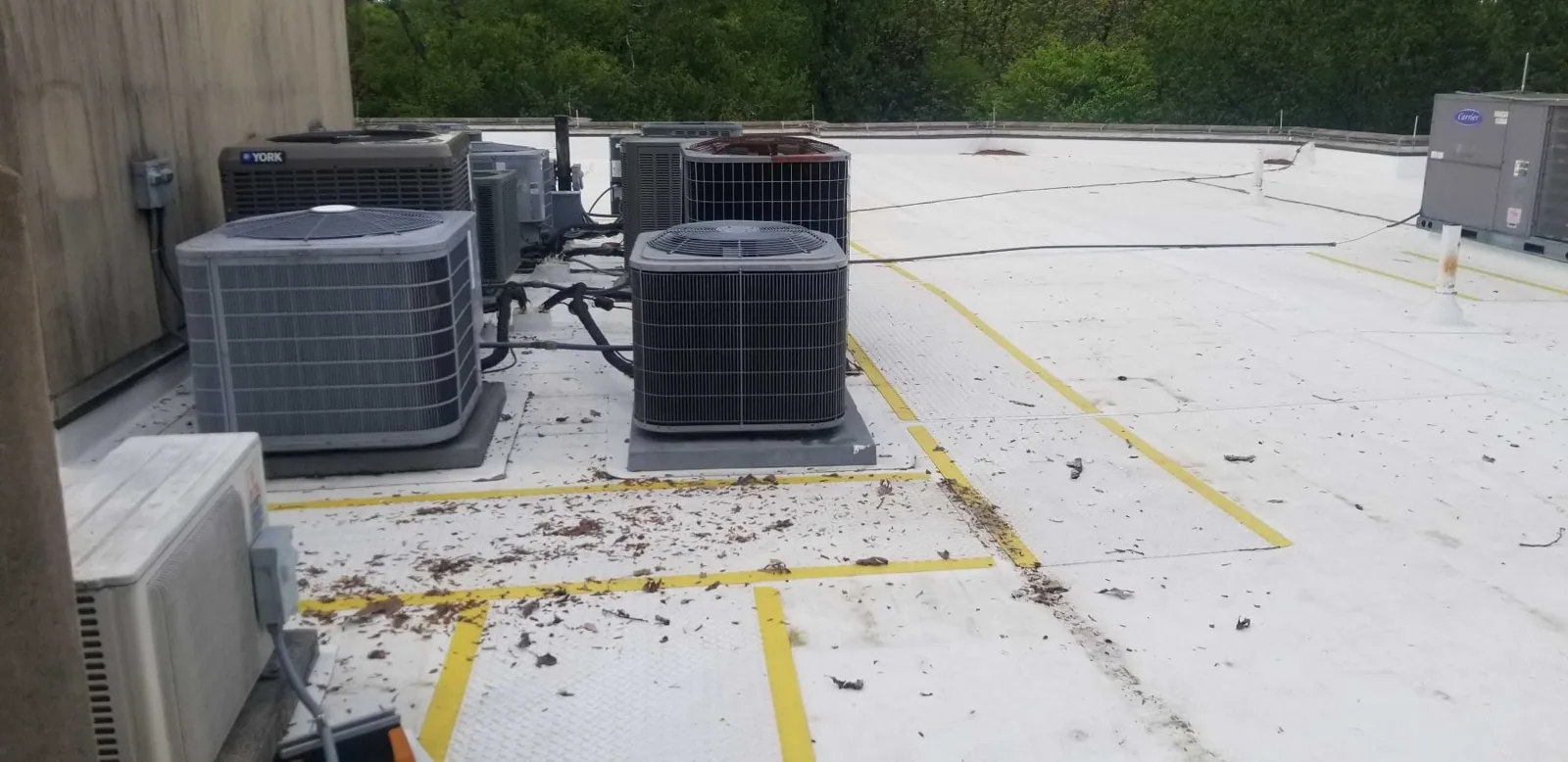
Which details around a curb can admit water?
Water can enter where the membrane flashing pulls away from a curb, where a corner patch has split, or where a fastener or conduit interrupts the roof surface. We inspect all sides, including the side facing away from the roof hatch, and note obstructions that prevent a complete view. A steel support can rust, a wood sleeper can compress, and a pipe stand can shift as connected equipment moves; those conditions need separate documentation. We also note whether the support is attached to a curb, rail, sleeper, or structural member, since the flashing approach and movement risk can differ. The report should avoid treating a sound-looking pipe stand as proof that its base is watertight. The roof membrane should turn up and terminate at a detail compatible with the system, with counterflashing where the design calls for it. We look for ponding beside curbs and inspect the downhill edge for trapped debris or open seams. A full roof inspection can place each equipment detail on a roof-area map. If water is reported inside, leak investigation can compare the interior location with the nearest openings. Where hidden moisture is a concern, infrared review may help determine whether further testing is useful.
Related Roofing Work
More commercial roofing work connected to Commercial Rooftop Equipment Curbs and Supports in Columbia, MO.

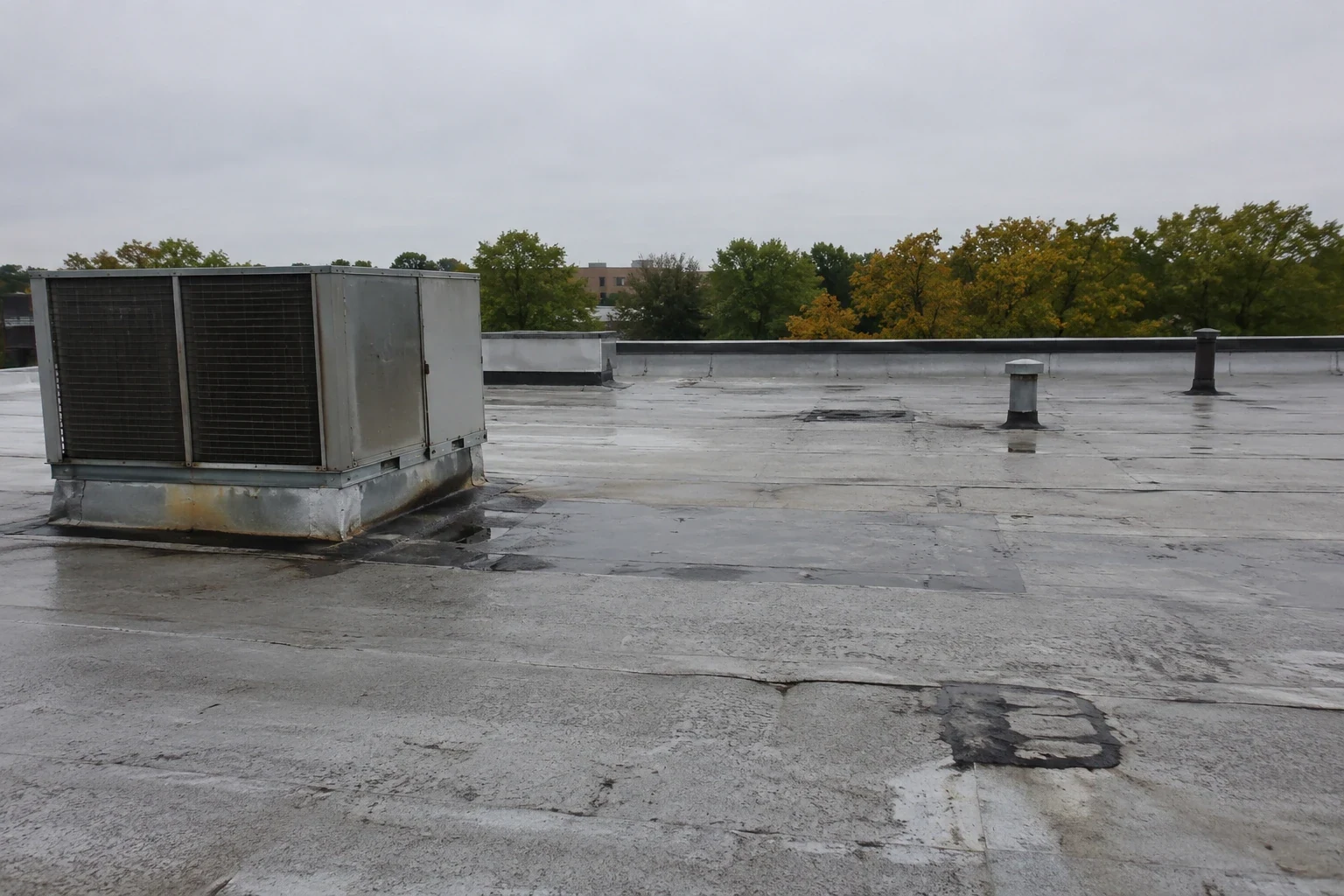
Can a curb be repaired without moving the equipment?
That depends on clearance, curb stability, equipment connections, and the detail that failed. Some repairs can be made with the unit in place if the flashing is accessible and the curb remains secure. Other conditions require temporary isolation, lifting, or coordination with a mechanical contractor before roofing can rebuild the transition. We identify which trade is responsible for disconnecting or resetting equipment, and we do not include that work unless it is stated in the scope. The roofing proposal should specify material removal, substrate preparation, new flashing or membrane, fastener treatment, and how the repair ties into the existing assembly. It should also identify the unit or support by roof-area label, distinguish observed movement from a suspected cause, and state whether temporary protection remains after the roofing crew leaves. If access is blocked or a mechanical connection cannot be safely moved, the scope should list that limit before mobilization. Commercial roof repair can address a localized transition. If the curb is low relative to a new assembly, replacement planning should account for curb height and equipment reconnection. For TPO details or modified-bitumen work, materials and attachment should remain compatible with the installed system. The field record should show whether the equipment itself stayed in place and which party completed any mechanical connections.
How should equipment work be sequenced?
Before mobilization, we confirm roof access, the equipment contact, safe shutdown or isolation requirements, protection for nearby units, and the sequence for exposing and closing each curb. A mechanical service visit can leave a roof opening, loose conduit, or disturbed flashing, so the scope needs a clear handoff between trades. If the roof crew must wait for a unit to be disconnected, that dependency belongs in the schedule. We protect the exposed assembly at each shift end and record what remains incomplete. Columbia's spring storms can bring large hail and tornadoes, while summer rain can be concentrated over a small area. A forecast review matters when a curb or support is temporarily open, but the specific work window must be confirmed for the building and crew. Occupied-building sequencing can help define zones and access limits. For facilities associated with the University of Missouri campus, work arrangements still come from the property contact and project requirements rather than assumptions about the campus as a whole.
What belongs in the curb repair record?
Take a wide photograph that identifies the curb or support, then close views of each repaired side, corner, termination, and fastener area. Record the material used, date, roof section, and any work by a mechanical contractor. The closeout should identify whether the equipment was moved, whether connections were restored by others, and whether adjacent supports were outside the work boundary. If a curb base or deck was damaged beneath the flashing, photograph the exposed condition and document the approved repair before covering it. For commercial permit review, Columbia follows its 2024 code editions, including separate rules for existing structures and energy use. Altering equipment, curb elevation, or roof layers can trigger a project-specific review. A follow-up check after service work can catch a disturbed detail early. Maintenance visits can put these curbs on a recurring observation list, while a roof condition record can keep unit identifiers and photographs together for the next facilities contact. A clear record prevents a later leak report from being matched to the wrong curb. If several supports share a roof zone, the report can list each one separately so a future mechanical visit does not reopen a detail that was already repaired.
Identify the equipment tag, curb perimeter, flashing condition, support attachment, and nearby membrane or metal seams. Record which trade performed work on the unit and whether the roof detail was disturbed during service. A closeout image should show all sides of the curb where accessible and a wider reference to its roof zone. If a support or curb requires replacement, coordinate the opening, temporary protection, and final tie-in so equipment work does not leave an unclosed roof detail. A later service call can then distinguish a fresh mechanical change from a roofing condition that was already documented.
Commercial Roofing Questions
Does every rooftop unit need a new curb during reroofing?
No. We check the existing curb height, attachment, condition, and compatibility with the planned roof build-up. A sound curb may remain, while a low or deteriorated curb may need modification or replacement.
Who reconnects equipment after roofing work?
The scope should name the trade responsible for disconnecting and reconnecting the unit or piping. Roofing work includes the roof transition only when that responsibility is explicitly included and coordinated.
Can you flash around a pipe support that cannot move?
Often a detail can be rebuilt around a fixed support, but access and movement matter. We inspect how the stand is attached and whether the membrane can be turned up, sealed, and protected without trapping water.
What if a technician opens the roof during a later service call?
The service contractor should restore the roof flashing disturbed by that work. A dated photo record and curb identifier help the owner compare the roof before and after the visit and arrange a follow-up inspection if needed.