
Commercial Roof Due-Diligence Surveys in Columbia, MO
Property acquisitions need a roof record that identifies what was repaired and what remains open. A due-diligence survey gives the buyer, lender, or owner a current field record tied to the property under review. We identify accessible roof areas, visible assembly details, drainage, penetrations, edge conditions, prior repairs, and signs that further investigation may be needed. Columbia's commercial building review uses a 2024 codes package, while its spring weather can bring heavy rain, hail, and tornado-producing storms. Neither fact determines the condition or compliance of a specific roof. The District has a varied collection of downtown property uses, and the University of Missouri campus inventory includes facilities such as research buildings, residence halls, garages, a power plant, and a student center. Those local examples make precise asset identification useful; they are not substitutes for inspection at the subject property. The survey should help a decision-maker understand what was observed, what remains unknown, and which finding could change the transaction's roof allowance.

What can a transaction survey establish?
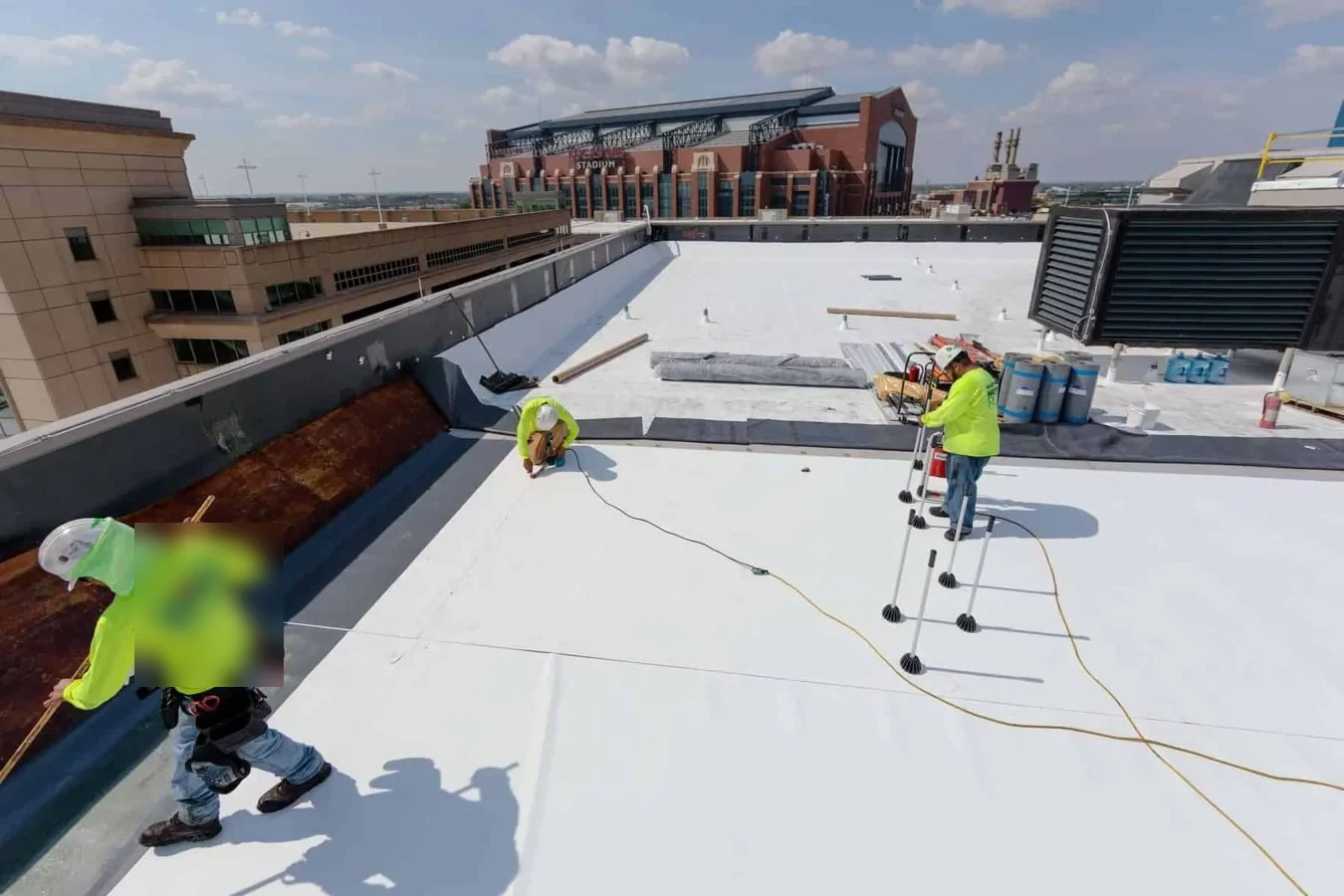
We inspect accessible areas and document conditions that can be seen without destructive testing. The report can note membrane or metal-system characteristics when identifiable, visible repairs, open or deteriorated details, drainage concerns, surface wear, roof access limits, and indications of moisture that warrant confirmation. It should not assign a remaining-life figure when age, assembly, or concealed conditions cannot be established. A photo-based condition report can make observations easier to trace during review. Request existing plans, prior inspection records, repair invoices, warranty papers, and any history of interior leaks before the site visit. Missing records do not prove a roof is defective, but they can increase the amount of follow-up required. If a seller supplies a roof age, identify whether it is documented, estimated, or simply repeated in prior paperwork. A field inspection should capture which areas were walked, viewed by drone, or unavailable. The resulting survey provides an evidence boundary, not an assurance about concealed conditions or future performance. Columbia's 2024 building-code package includes existing-building and energy provisions for plan review. For transaction purposes, note that local review context as a project consideration, then have the planned alteration and property's jurisdiction determine what requirements apply.
Related Roofing Work
More commercial roofing work connected to Commercial Roof Due-Diligence Surveys in Columbia, MO.
Which roof findings can change the transaction?
Active water entry, wet insulation, deteriorated deck, unstable perimeter details, repeated repairs, or blocked drainage can affect near-term work and should be presented with location and supporting photographs. A single surface mark may not justify a broad replacement allowance. We separate an observed defect from a suspected condition, and both from a planning assumption. If opening the assembly is necessary to verify moisture or deck condition, state where the test is recommended and what result could change the scope. Transition conditions and drainage observations can have different causes and repair costs, so do not combine them into a single undifferentiated roof rating. Columbia averages repeated freeze-thaw days and seasonal snow, while summer heat and spring storms create separate inspection points. Use weather exposure to frame questions about seams, drainage, and prior repairs, never to infer an unobserved failure. A buyer considering a building near the I-70 Business Loop should receive the same roof-specific evidence as a buyer looking at East Columbia / East Area Plan. The corridor study and council records describe area development and uses, but do not establish the inspected property's roof age, assembly, drainage, or tenant needs. Those facts need to come from the seller's records and field review.
How should repair allowances be presented?
Show separate scenarios for confirmed corrective work and investigation that remains open. A localized repair allowance should name the area and visible defect; an assembly opening should explain what it will confirm; a larger replacement comparison should state which roof areas and components are included. Identify exclusions such as parapet metal, rooftop equipment curbs, interior ceiling work, or insulation beyond the test area. A repair scope should not be described as a complete correction when the inspection could not verify adjacent materials. If moisture is suspected over a larger field, an infrared survey may help guide test locations when conditions permit. The finding still requires interpretation and, where needed, verification. The City's code process, the owner's project plans, and the property's current use can affect the timing and review path for future construction. Keep those project questions distinct from the survey's condition findings. A buyer may also request a roof review at a facility with active business operations. We record the access window and observed boundary provided for that visit rather than inferring operating hours from nearby commercial uses.
What records matter beyond the visible surface?
Review warranty documents for building name, roof area, system, term, required maintenance, service contacts, exclusions, and transfer provisions. Do not assume a document transfers with the property or covers a condition simply because it is still within a stated period. If the system or warranty cannot be matched to a roof area, record that gap for the parties to resolve. Warranty records may affect the buyer's next maintenance step, while capital planning can put confirmed near-term scopes into a project sequence. A Columbia property serving healthcare, education, retail, or manufacturing may have operational needs that alter access, staging, and phasing. The city identifies those sectors and institutional employers in its local economy, but we do not infer the subject building's operations from the sector alone. The owner or transaction team should identify contacts, access limits, tenant requirements, and planned work. The survey can record those supplied constraints next to the physical roof findings. If a building contains multiple additions or roof elevations, the report should clarify which parts were inspected and which were outside scope. A transaction reviewer can then decide whether to request more evidence before signing, closing, or budgeting.
What should the final survey answer?
The report should answer four practical questions: what is visible now, what needs prompt attention, what could not be confirmed, and what next action would narrow the uncertainty. We can provide a marked roof plan, dated photographs, condition notes, recommended repairs, investigation items, and a distinction between immediate work and longer-term planning. Each recommendation should identify the area and evidence behind it. For property in Columbia, include the correct street address and building designation, even when a campus or district name is familiar. The District occupies many downtown blocks and the University of Missouri manages a broad physical campus; neither name identifies one roof by itself. The District location is context for local service, while a transaction report must follow the subject parcel and building. We can review available records with the owner, inspect accessible roof areas, and return a file that preserves both findings and limits. If a lender, insurer, or buyer needs a particular format, confirm those requirements before mobilization. A survey is most useful when the decision-maker can connect each allowance to a photograph, marked area, and clearly stated assumption.
Commercial Roofing Questions
Can a roof survey tell us how many years remain?
A survey can describe current conditions and factors that affect planning, but a precise remaining-life figure requires reliable system, age, repair, and concealed-condition evidence. We state what the inspection supports and identify what would narrow the estimate.
Should the seller provide a roof plan?
A roof plan helps locate areas and compare the survey with prior work. If no current plan exists, we can use a marked sketch or aerial base and label the drawing as an inspection reference rather than an as-built document.
Does a clean roof walk rule out hidden moisture?
No. A visual review records what can be seen from accessible areas. Suspected moisture may require infrared screening, test openings, or another method selected for the roof assembly and conditions.
Can you separate immediate repairs from future capital work?
Yes. We identify conditions needing prompt protection, repair items supported by visible evidence, and larger alternatives that need more testing or budgeting. The report keeps those decisions and assumptions distinct.