
Commercial Roof Warranty Management in Columbia, MO
A warranty file can look complete until an owner needs the system identification, approved detail, or service record that explains a roof repair. We organize the documents that are available, inspect accessible areas, and distinguish written warranty terms from conditions observed in the field. Coverage depends on the actual document, manufacturer requirements, roof assembly, and maintenance history; a contractor cannot infer a term from a membrane name alone. Columbia's freeze-thaw winters and snowy periods can expose movement at seams and transitions, while spring storms may bring hail or high winds. Weather context is useful for planning a review, not proof that a warranty claim applies. The University of Missouri's campus Facilities group manages maintenance and project planning across a varied campus inventory. A campus record still needs to identify the building, system, and governing document before anyone can decide what service obligations apply. We keep those elements connected so the next inspection or repair begins with a usable file.
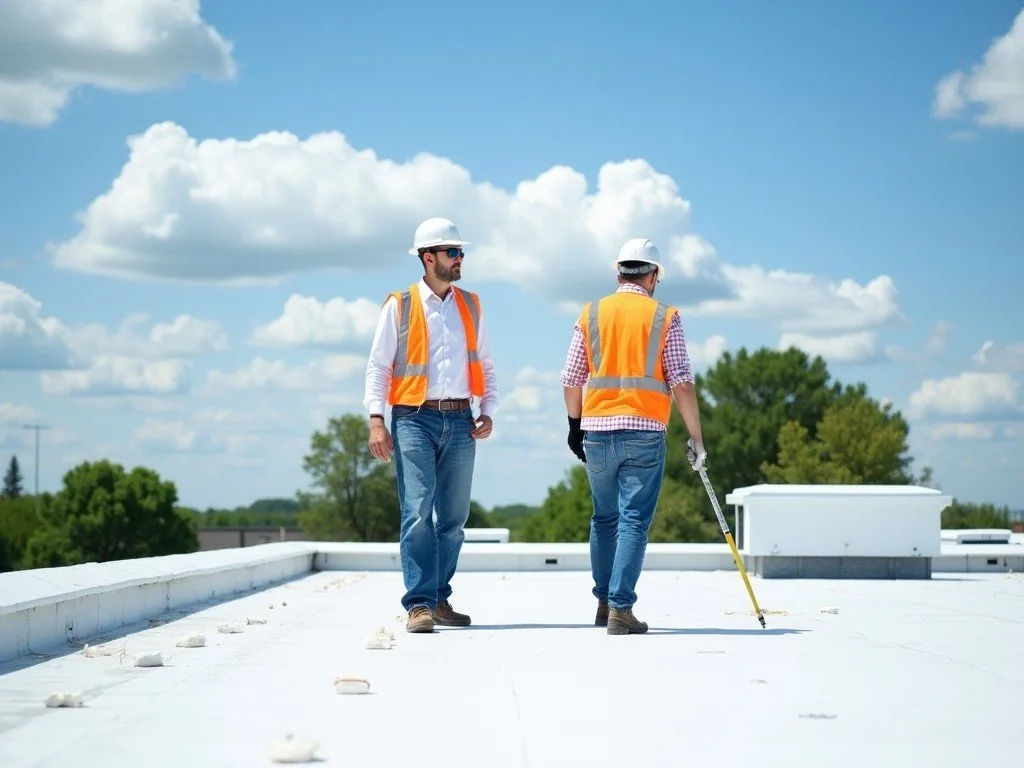
Which records should stay with the roof?
Collect the executed warranty, system description, approved submittals, closeout photographs, repair invoices, inspection reports, maintenance notes, and correspondence about prior service. Confirm that each item names the building and roof area clearly. If a document is missing or the system cannot be confirmed, record the gap rather than filling it with an assumption. A photo-supported condition report can add current evidence, while routine maintenance records can show what was checked and when. Compare the observed condition with the actual written obligations before describing a repair as covered. The City of Columbia uses a 2024 commercial building-code package that includes existing-building and energy provisions. That review framework may affect future alterations, but it does not replace the warranty terms for a past installation. Preserve permit approvals separately from manufacturer documents, and do not treat an approved permit as a warranty determination. The East Columbia / East Area Plan provides broad planning context for eastern Boone County, including distinct commercial, industrial, and office land uses. That context does not establish what roof assembly any individual property carries. For every asset, the document file should identify the roof itself and the source of each obligation.
Related Roofing Work
More commercial roofing work connected to Commercial Roof Warranty Management in Columbia, MO.

How do you handle a possible warranty issue?
First, document the condition and take reasonable steps to limit additional water entry. Photograph the affected area and a wider view, note the date, weather information supplied by the owner, interior observations, and any temporary protection. Avoid altering a detail before the applicable service process is understood, except where immediate protection is needed to prevent further damage. Then review the written document for notice requirements, authorized contacts, maintenance conditions, and the procedure for requesting service. A roof inspection can record visible conditions without promising a coverage outcome. If the issue is an opening at a lap or penetration, seam findings or transition observations should be described by location and condition. A recurring leak may follow a path away from its entry point, so separate the interior symptom from the roof detail observed. Columbia's wettest period is spring, and summer storms can produce intense rain in localized areas. That makes quick documentation useful, but the evidence and contract language still govern the next step.
Can an inspection prevent a coverage dispute?
An inspection cannot determine how a manufacturer or insurer will interpret a claim, but a dated maintenance record can make the roof's history easier to evaluate. Log debris removal, drain checks, repairs, roof penetrations, and any condition that was deferred. Record who authorized a change and whether the approved detail differs from what was first proposed. When the roof is accessed after a storm, note which areas were reviewed and which remained inaccessible. A property-level asset record can keep those entries beside system information and photographs. Drain and scupper maintenance should identify the outlet checked and any obstruction or attachment issue, rather than just stating that drainage was reviewed. Columbia's I-70 Business Loop spans a mix of commercial, industrial, and institutional activity; a roof portfolio may therefore include different building contacts and access processes. That corridor fact does not establish the condition of any property along it. The record for each building should state who provided access, what was visible, and what action followed, without relying on a general service note that could refer to several roofs.
What should be clarified before repair work?
Identify the suspected defect, the proposed work area, material compatibility, preparation, and any step that could affect the existing system. Check whether a manufacturer representative or other party must inspect before the condition is opened or altered. If temporary stabilization is necessary, photograph it and record the date and limits. A repair proposal should state whether it addresses only a visible opening or includes investigation of concealed material. A defined repair scope helps preserve that distinction. If the condition extends beyond the repair area, a broader capital comparison can consider restoration and replacement without treating a warranty document as a promise of coverage. The District in downtown Columbia includes businesses, residences, nonprofit groups, and public entities across its properties. For an occupied property there, or elsewhere in Columbia, coordinate access using the owner's current building contact and operating instructions. The district's mixed uses do not prove an individual facility's hours or roof layout. Before work starts, keep the written service direction, photographs, approved method, and closeout record together. Any disputed condition or excluded area should remain plainly identified in the file.
How do we keep the next review straightforward?
Maintain one building record with the current warranty document, roof-zone map, system evidence, dates of work, and unresolved questions. After a repair or inspection, add the new finding without deleting the earlier condition. This lets an owner see what changed, whether a prior opening recurred, and what the last service recommendation required. If coverage terms are unclear, preserve the exact document for the party responsible for interpreting it. We can inspect visible conditions, organize records, and prepare a repair recommendation tied to the roof evidence. The final file can list the condition, recommended action, materials proposed, and any next inspection needed. Columbia's summer heat reaches 90 degrees or more on many days in a typical year, and winter temperatures repeatedly cross the freezing point. Those patterns make repeat observation useful at vulnerable details, but the date and condition of the actual roof remain the controlling evidence. A dated report and a shared record structure can keep service information legible across an owner's properties while preserving each building's own warranty limits and repair history.
Commercial Roofing Questions
Does a manufacturer warranty cover every leak?
Coverage follows the actual written terms and the condition under review. We document the observed area and can help organize the service request, but the document and its administrator determine whether a particular repair is included.
What if the warranty document cannot be found?
We inspect and identify the roof as far as the available evidence permits, then record which documents are missing. The owner can search closeout records, prior invoices, or the party that issued the warranty before relying on an assumed term.
Should we repair a suspected defect before notifying the warranty contact?
Protect the building from additional damage, photograph the condition, and review the document's notice process promptly. If immediate stabilization is needed, record what was done and preserve the affected material when practical.
Do maintenance notes need photographs?
Photographs help show which detail was checked, what was visible, and whether a later condition changed. Pair each image with a date, roof-zone identifier, and a short Diligence Notes that states the finding.