
Solar-Ready Commercial Roofing in Columbia, MO
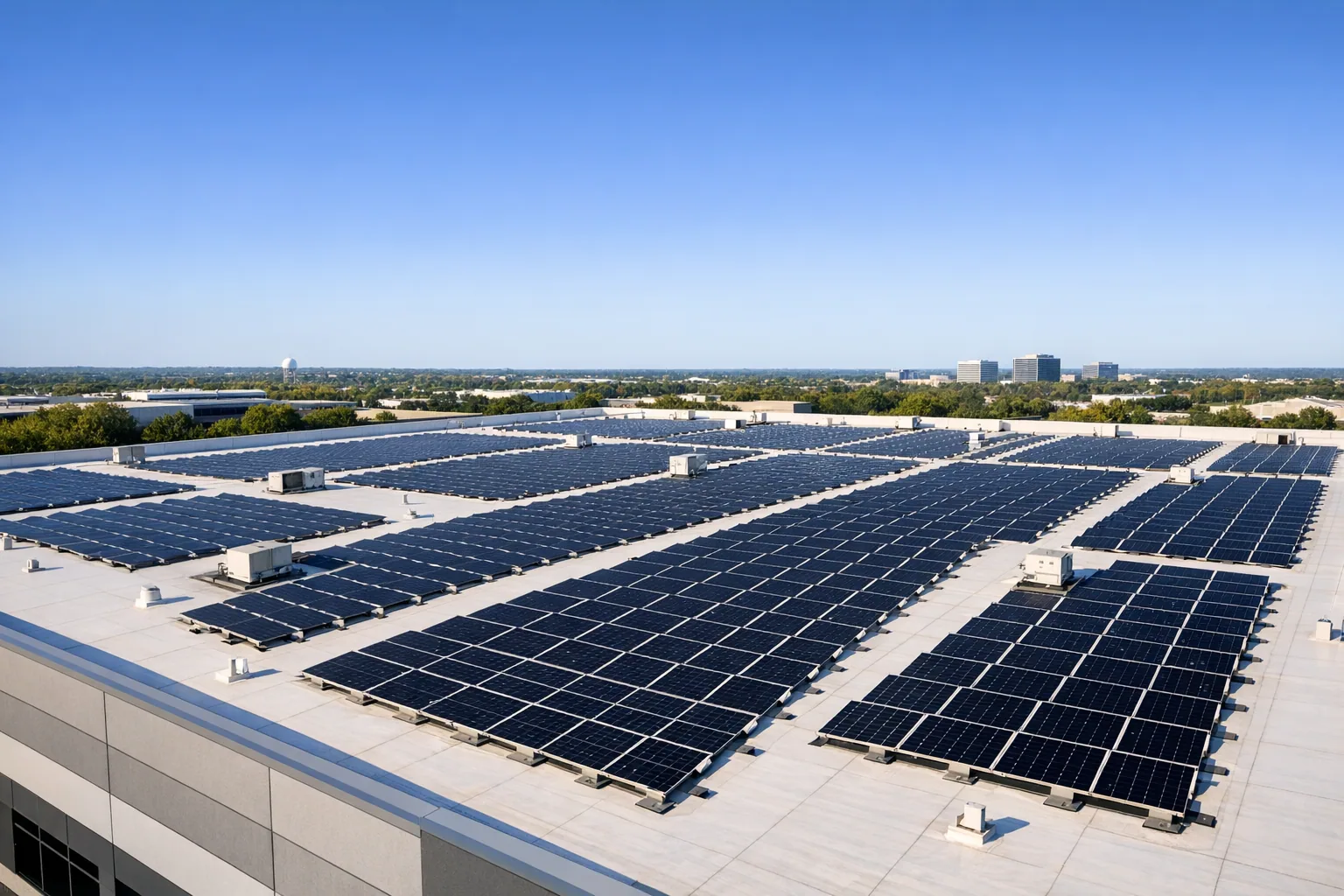
A solar layout belongs on a roof that can carry the planned work and remain serviceable after the array is installed. Before panels arrive, we review the roof assembly, remaining condition, drainage paths, penetrations, and the places crews may need to reach later. Columbia averages 34 days each summer with temperatures of at least 90 degrees, and spring storms can bring large hail and tornadoes. These exposures matter to both the roof membrane and the equipment layout, but they do not establish whether an individual roof is ready. The Discovery Ridge Research Park supports research activity in agriculture, health, engineering, and biology; East Columbia / East Area Plan is another named employment area near the city's highway network. Those settings provide local context, not evidence of solar equipment at a specific property. We document the existing roof and identify questions that belong with the structural engineer, solar designer, or electrical contractor before attachments or supports are selected. A roof-ready plan should protect drainage, preserve access to serviceable equipment, and show how the membrane will be maintained after the array is in place. It should name who owns each roof penetration and how repairs will be recorded.
What should be checked before an array is designed?
Start with the roof's age and repair history, but do not use age alone to approve an installation. We inspect seams, flashings, drains, curbs, penetrations, and previous patches, then record locations that need repair or moisture testing. A roof with active leaks, widespread wet insulation, weak attachment, or recurring detail failures should be addressed before adding equipment. The system should also have a documented repair boundary and a realistic remaining service plan. A roof inspection can map visible conditions and open questions. If moisture may be concealed, infrared review can help direct testing, and replacement planning may be preferable when the assembly is due for major work. The solar designer needs roof dimensions, obstructions, drains, and access zones, but the roofer should not certify structural capacity. That calculation belongs to a qualified design professional using the actual building and attachment proposal. A roof review should also flag membrane repairs that would become difficult to reach beneath the array, drains that could be screened by panel rows, and access lanes needed to inspect seams or service rooftop equipment. The final layout should preserve those routes on a drawing shared by the roofer and solar installer.
Related Roofing Work
More commercial roofing work connected to Solar-Ready Commercial Roofing in Columbia, MO.
How do solar attachments affect the roofing system?
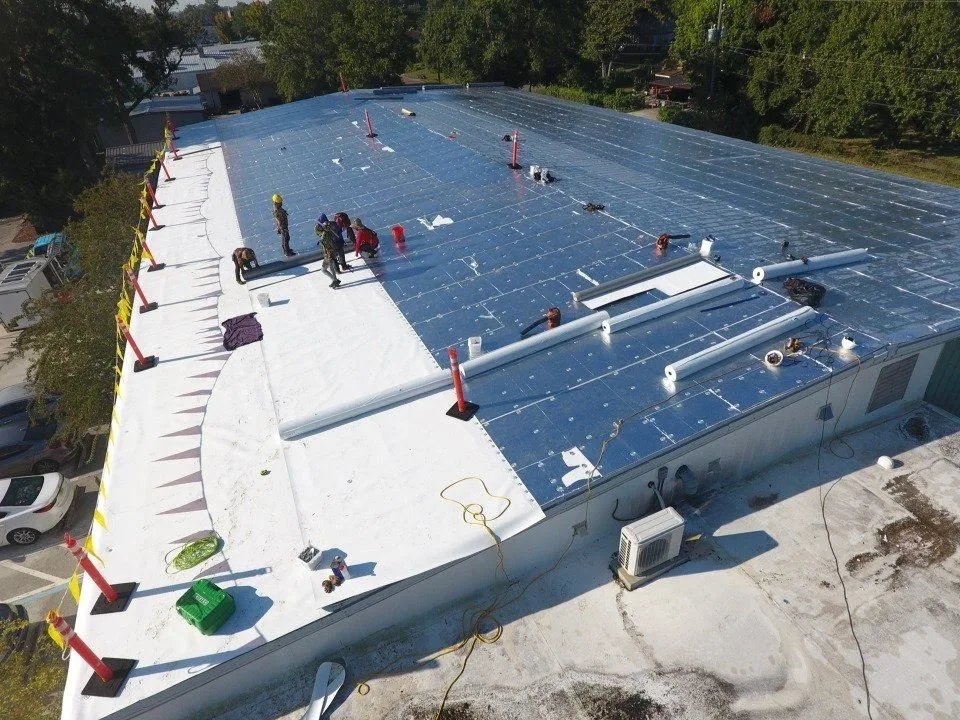
Every attachment creates an interface that must remain watertight and compatible with the roof assembly. Penetrating mounts require a designed flashing detail and secure attachment into the appropriate structure. Ballasted equipment avoids some penetrations but adds weight and can change wind exposure, access, drainage, and load distribution. The project engineer and solar designer determine structural suitability; the roofing scope documents the membrane connection and repair method. We identify how supports, conduit, and walk paths cross the roof so future service does not puncture seams or block drains. A layout that avoids one penetration can still create a maintenance problem if it leaves no way to inspect the field membrane or reach a drain basket. We mark those conflicts before installation so the design team can evaluate them while equipment is still on paper. TPO membrane work and standing-seam roofs use different attachment and flashing approaches. Equipment support review can address other roof-mounted components, while drainage checks protect the paths that must remain open beneath and around the array.
Should solar be installed before or after reroofing?
If a roof needs major work, it is usually easier to coordinate the membrane, attachment locations, and access plan before the array is installed. Removing panels later can add handling and coordination steps, though the correct sequence depends on the roof's condition, project design, and available budget. We can identify whether the roof needs repair, recover evaluation, or replacement, then provide roof details for the solar team to incorporate. A proposed recover should account for added height, curb clearances, and the attachment plan. In Columbia, the City's 2024 code package includes existing-building and energy provisions; the applicable review depends on the project's scope. Recover eligibility should be assessed with the planned array and existing layers, and occupied-building sequencing can help map work zones where tenants or operations continue. A written sequence should name the responsible party for electrical isolation, panel removal and reset, roof flashing, and final system inspection, avoiding gaps between trades. It should also preserve any manufacturer or installer requirements that apply to the roof membrane and array attachment, with each party documenting the work it completes.
How will the roof be maintained after solar installation?
The owner should keep a route to drains, roof access points, and equipment that requires service. The layout should show array boundaries, attachment locations, walk pads, and roof areas that remain available for inspection. If a leak occurs beneath a panel row, the repair plan needs a way to reach the membrane and document any equipment moved. We recommend dated photos of the completed roof and a record of the solar contractor's work that crosses the membrane. The property owner should retain both the roofing detail and system layout so future trades can identify the correct support and flashing. The roof condition record can preserve roof-area references, while maintenance visits can track seams, drains, and walk routes after installation. A solar array does not remove the need to inspect the roof surface around it. The owner should retain the original roofing documents, solar plan, electrical service records, and any later panel-removal notes in one property file. If a future reroof is needed, that history can help identify which contractor disconnects the array and who restores each roof penetration. The record should state which areas were inaccessible during each visit and distinguish the electrical system inspection from the roofing review.
Keep the roof plan coordinated with array rows, access aisles, attachment points, conduit runs, and the equipment contact responsible for the solar system. A maintenance visit should inspect the roof membrane or metal around penetrations, note any work by electrical contractors, and avoid moving equipment without authorization. Record the method used to protect the roof when panels or supports are serviced. If a leak appears, compare the location with the array map and roof-zone history before assigning cause. Columbia's building-code package includes energy provisions for commercial plan review; the project team should address applicable requirements during design and preserve the approved documents with the closeout record.
Commercial Roofing Questions
Can solar panels be installed on my existing commercial roof?
The roof needs a condition review, but structural capacity and attachment design require the appropriate engineering and solar professionals. We document membrane, moisture, drainage, and repair needs so the project team can decide whether the roof is ready.
Will the roofing contractor determine whether the structure can carry the panels?
No. Structural loading and attachment calculations belong to the design professional responsible for the building and proposed array. We provide roof-system information and detail the flashing or membrane work included in our scope.
What if the roof needs replacement soon?
The owner should compare the reroof sequence with the array schedule before installation. Completing roof work first may reduce later panel handling, but the decision depends on condition, project timing, and the system design.
Does the roof need inspections after panels are installed?
Yes. The roof and array have separate maintenance needs. A roofing visit can inspect visible membrane, flashing, drains, and access routes, while the solar service provider handles electrical and panel-system checks.