
Storm Damage Roof Repair in Columbia, MO
Hail debris beside a drain is a reason to inspect the surrounding roof, not proof that the membrane has failed. Columbia's spring storms can bring large hail and tornadoes, and summer weather can deliver localized heavy rain followed by damaging winds. After an event, we record the date reported, roof areas reached, visible impact, displaced metal, open seams, punctures, or water entry. The observations are photographed with enough context to locate them later, then compared with repair history where available. The event alone does not show whether a mark is new or whether every roof section was affected. A careful record separates the reported storm from the condition found on the building. The city's corridor study follows I-70 Business Loop between Stadium Boulevard and Eastland Circle and describes established commercial and institutional activity. Separately, The District directory counts more than 600 businesses, nonprofits, and government entities among its downtown properties and residents. These are different market snapshots, not damage findings; each assessment still follows the roof-area evidence at the inspected address.
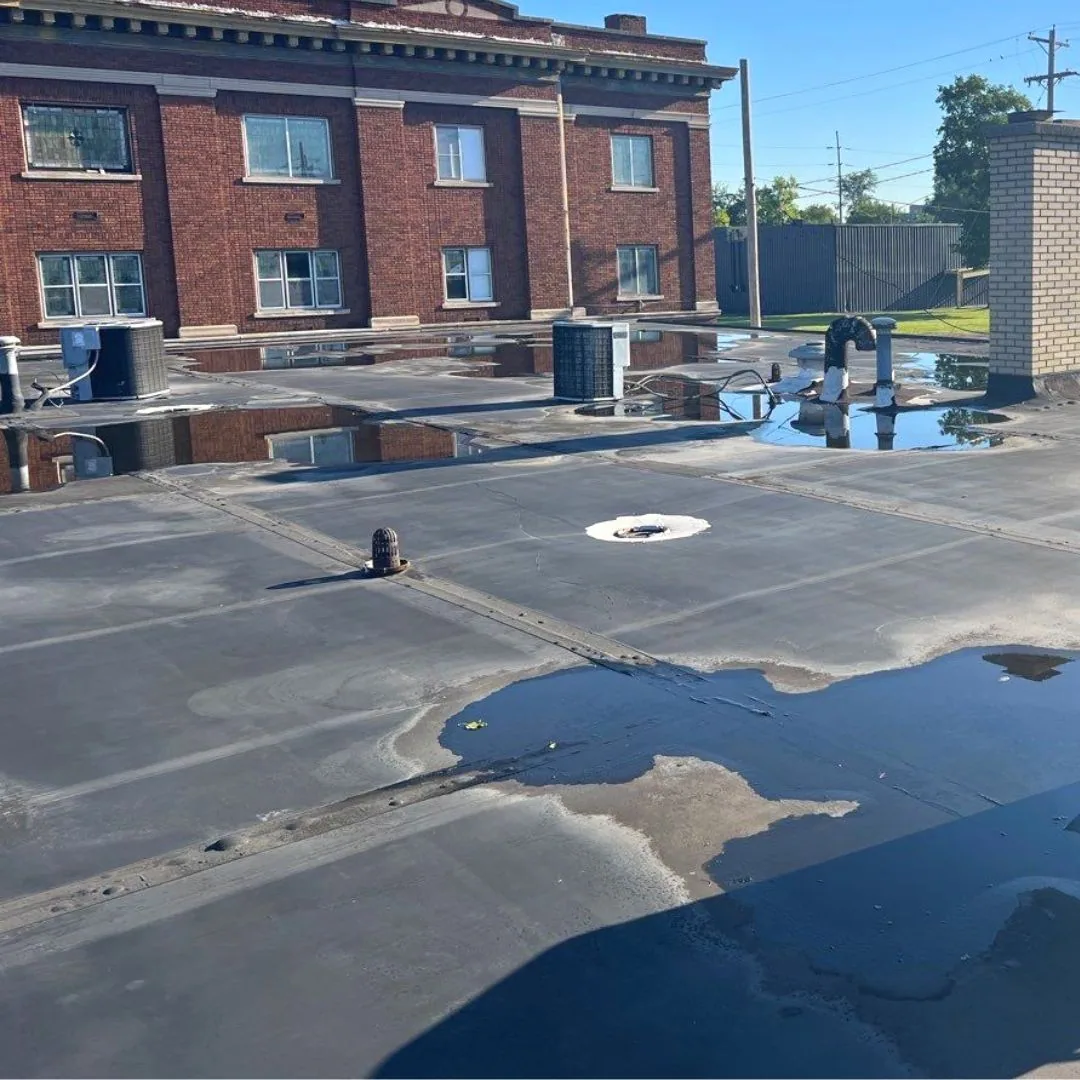
What should be checked after hail or wind?
We inspect exposed membrane, metal panels, seams, perimeter edges, coping, flashing, penetrations, skylights, and drains for a condition that can be tied to the event. Hail may leave marks, punctures, or damage to exposed components, while wind can displace metal, lift a termination, or open a vulnerable transition. We record each observation and note whether the detail is actively leaking, has lost attachment, or needs closer review. On a low-slope roof, a surface mark by itself does not establish that water has entered the assembly. We also look at the interior report, if available, and compare it with likely roof paths. A hands-on roof inspection can document the full accessible area, while a drone image record may help map large or hard-to-access surfaces. When concealed moisture is a concern, infrared testing is a separate investigative step.
Related Roofing Work
More commercial roofing work connected to Storm Damage Roof Repair in Columbia, MO.
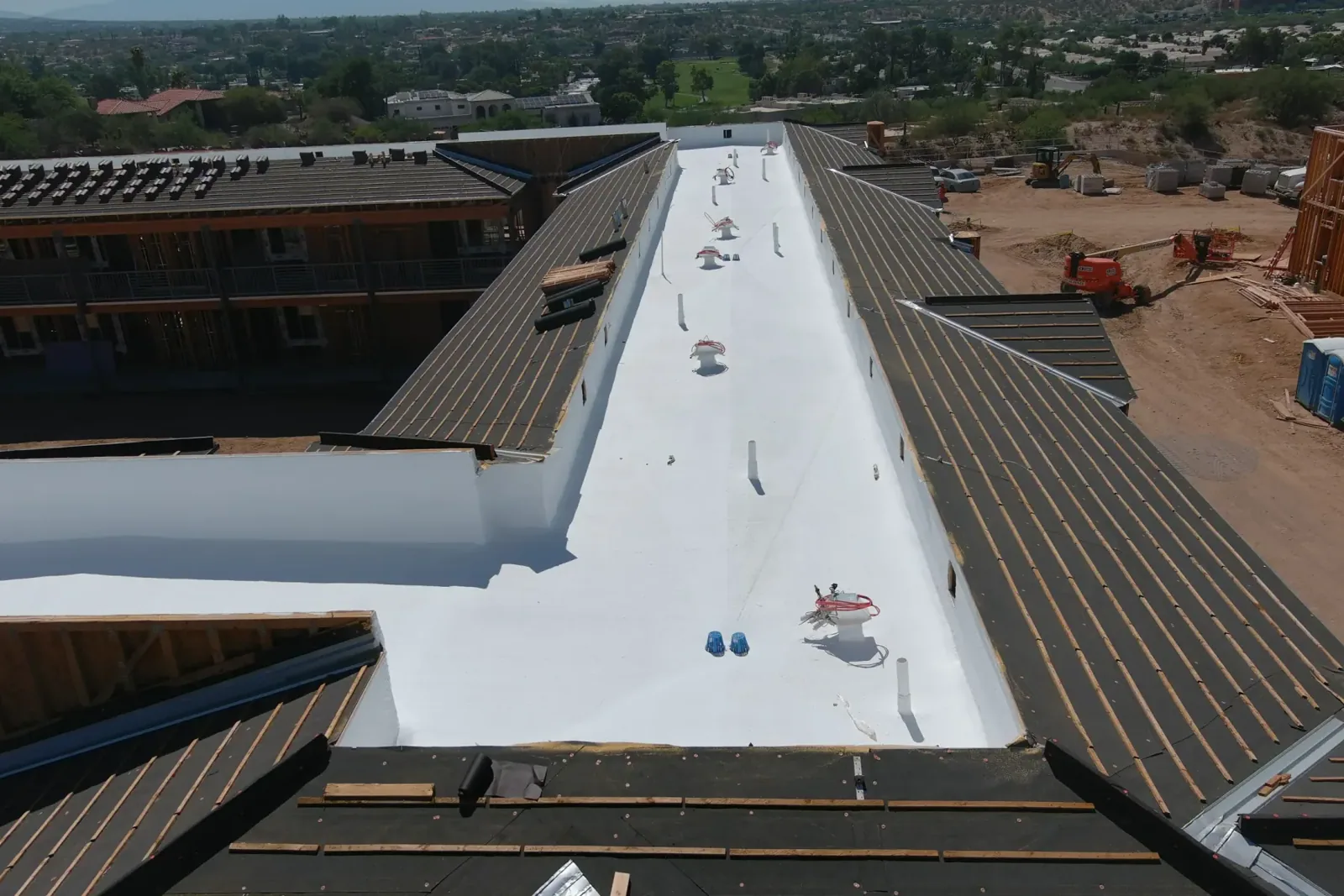

How do you separate new damage from older wear?
We compare the reported event date with prior photographs, maintenance notes, repair locations, and the material condition visible now. A fresh opening may have clean edges or displaced components, while older deterioration can show weathering, repeated patching, or movement that predates the event. Those patterns can be informative, but no single visual clue settles every cause. We state what is observed, what may be consistent with recent impact, and what cannot be dated from the available evidence. Columbia's freeze-thaw winters, wet spring, and hot summers expose roofs to more than one seasonal stress, so the file should not attribute longstanding wear to a single storm without support. Where a detail is obscured or the cause remains unclear, we mark that limit and suggest the next inspection or test. The owner receives an event-related photo record and a separate roof-history note, which can support a repair decision without blending distinct conditions. For a large roof, the map should identify each inspected section and any area blocked by equipment or unsafe to reach. This makes the report useful for follow-up while keeping unobserved areas clearly outside the assessment.
When should temporary protection come first?
Water entering an occupied space or a roof opening exposed to rain can require immediate containment before the permanent scope is known. We assess safe access, locate the exposed area, and place a temporary cover or dry-in measure when conditions allow. The Diligence Notes identifies what was protected, where the edge of the temporary work ends, and what remains open or uninspected. Wind speed, lightning, wet surfaces, and the building's access conditions can limit what can be done during the first response. Our emergency service is available around the clock, all week and through holidays, but the specific work still depends on safe conditions. Once the roof can be examined closely, we check whether insulation, deck, or adjacent details were affected and define the permanent repair boundary. Emergency roof response can control active exposure; planned repair work addresses the detail after the surface is ready for a durable fix.
What does the permanent repair scope show?
A repair proposal identifies the material and detail affected, preparation needed, limits of the work, and any condition that could change the scope once opened. A puncture may need a compatible patch extending onto sound material; a displaced edge may need securement and a restored termination; a seam failure calls for an appropriate repair to the membrane system. If water reached insulation or deck, the scope should show how those layers will be evaluated and corrected. We separate temporary protection from permanent work and list any adjacent area that was not part of the inspection. Columbia's 2024 building-code package applies to commercial plan review, including existing-building provisions; a larger alteration may require project-specific review. Owners comparing a localized repair with a broad replacement can use the same dated evidence to consider replacement scope or recover eligibility where existing layers and moisture conditions allow.
What records help with an insurance review?
A useful storm file keeps the event report and the roof evidence distinct. It can include the reported date and weather, inspection time, roof-area map, photographs before and after temporary protection, notes on older repairs, and a list of confirmed damage and remaining questions. We label each image by location rather than sending a set of unattributed close-ups. If a repair is completed, the record shows the material removed, work performed, and finished detail. We do not characterize a condition beyond what the inspection supports. A building owner can use the record when discussing scope with an insurer or comparing proposals, while the insurer determines coverage under the policy. Each item should be dated and tied to a roof area, with uncertainty recorded where the available evidence cannot establish cause. That organization helps keep a repair estimate, field photographs, and later review aligned without promising a coverage outcome.
Keep pre-event records separate from post-event observations and label each photograph with a date, roof zone, and viewing direction. Note the reported storm date, the owner's information about interior water, and any temporary protection already installed. Describe impact, displacement, puncture, or open flashing only where visible; distinguish these conditions from wear or earlier repairs. Columbia's spring is its wettest season and is the period most likely to bring large hail and tornado-producing storms, while damaging winds feature later in the season. Those patterns can focus an inspection, but the roof evidence must support the repair scope. A clear record makes the change in condition easier to review.
Commercial Roofing Questions
Does a hail mark mean the roof needs replacement?
Not by itself. We inspect the material, look for functional damage or water entry, and compare the affected area with the rest of the roof. The report identifies whether a focused repair is supported, more testing is needed, or broader deterioration changes the decision.
Can you identify which storm caused a roof condition?
We compare the reported event date with prior records and current observations. Some damage may be consistent with recent exposure, while older wear or an unknown cause should remain identified as such. The field record should not claim more certainty than the photographs and inspection support.
What if rain is forecast before permanent repairs can start?
We evaluate safe access and use temporary dry-in protection when the roof and weather allow it. The record shows the protected boundary and any remaining exposure. Permanent repair follows when the substrate and conditions are suitable for the specified work.
Which photographs should we keep for the claim file?
Keep dated images that show the building or roof area, a wider view of the affected detail, and a close view of the condition. Add the inspection date, reported event, and any temporary work. We can supply a labeled photo record and note areas that were not inspected.