
Standing Seam Metal Roofing in Columbia, MO
Boonville’s city planning department maintains an access-management guide for commercial and residential street design, while The District in Downtown Columbia includes a mix of shops and restaurants. Those settings help frame coordination questions, but they do not establish what any roof is made of. We document the actual panel, clips where accessible, movement joints, transitions, and drainage path before selecting a repair. The Boonville service area and The District are useful local references for different kinds of commercial access, not substitutes for a roof inspection.
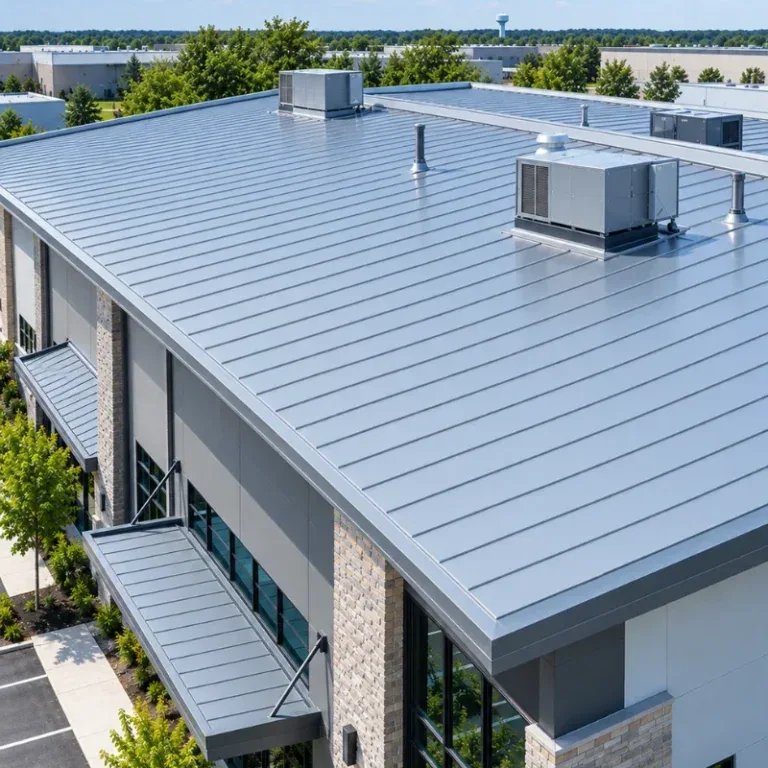
How do the seam and clip work together?
Standing seam panels connect along raised ribs, with clips or other concealed attachments holding the sheets to the supporting structure. Some profiles use field-seamed joints; others arrive with a formed seam. The exact design affects how a panel expands, how a repair is made, and which parts can be replaced without disturbing a larger run. We look for seam separation, distortion, loose closures, fastener evidence at transitions, and movement marks around penetrations. A rib that appears bent from below may need close inspection before anyone presses or seals it. Records of the original panel profile, metal, finish, and attachment help avoid a mismatched patch. A commercial roof inspection can document those details and create a photo map. A single-ply roof such as TPO has a different seam and attachment arrangement, so the comparison starts with the actual assembly. For an existing exposed-fastener assembly, metal-roof retrofit options follow a different attachment and restoration logic.
Related Roofing Work
More commercial roofing work connected to Standing Seam Metal Roofing in Columbia, MO.
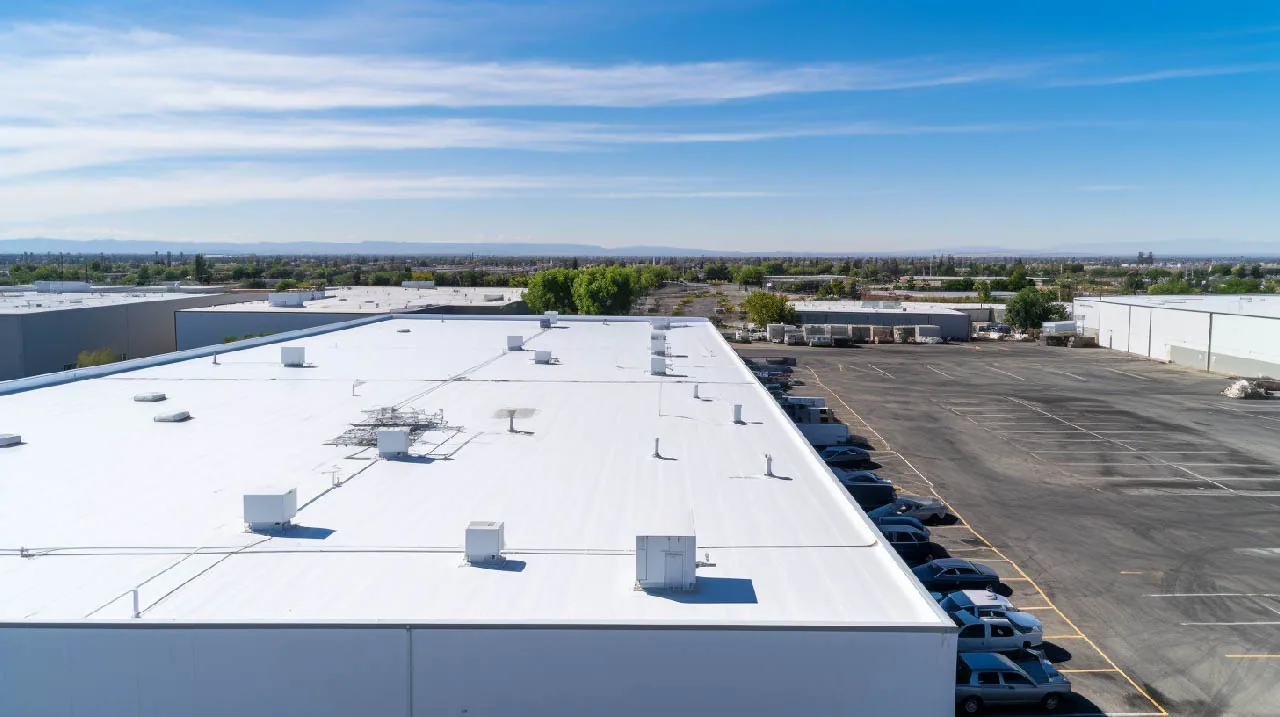
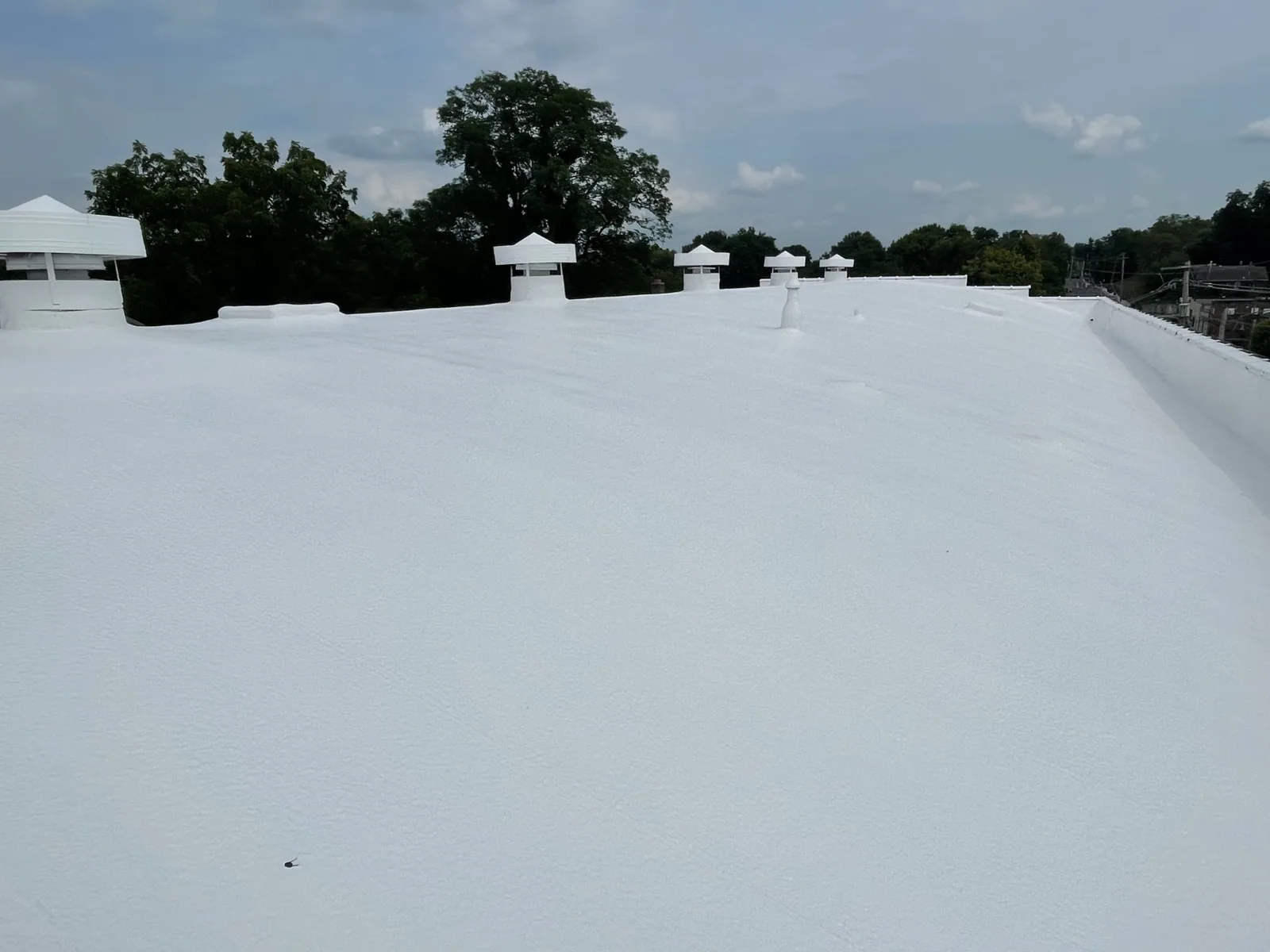
Why should a repair preserve panel movement?
Metal panels warm in sunlight and cool after sunset, and long sheets can move through the day. A sealant bead that bridges a moving joint may split, peel, or hold water at the seam. Before applying material, we identify whether the concern is a seam, a fastener or clip, an end condition, or a separate flashing detail. A repair should use a compatible product and follow the panel manufacturer’s detail where that information is available. It should not add a restraint that prevents intended movement. We also check whether the problem repeats along one elevation or is limited to a single penetration, because a localized fix and a system-wide correction are different scopes. Targeted repair work can address a defined defect, while replacement planning can compare the condition of the full assembly when wear is widespread. The recommendation should name the evidence supporting its boundary.
Where does water collect around metal panels?
Standing seam panels shed water toward an eave or another designed drainage edge, but roof geometry can still create trouble where valleys, curbs, gutters, and roof-to-wall transitions meet. We trace the path from the reported leak area toward the uphill seam and any interruption in the panel run. Debris, blocked outlets, damaged closures, or a poorly coordinated penetration may change how water reaches the edge. Columbia’s wet spring can put sustained flow through a small opening, and a summer storm can reveal a drainage issue that is less obvious in dry weather. We record the weather, approximate location, and interior symptom without assuming the stain marks the roof entry point. Drainage review can address the outlet side of the system, but metal-panel seams and flashings still need their own evaluation. Photos of both the roof surface and interior help connect observations without treating them as proof of a single cause.
What should be checked at a coating or finish?
A factory-applied finish protects the panel and gives the roof its color, but scratches, cut edges, incompatible touch-up products, and persistent moisture can change its performance. We note areas of chalking, fading, peeling, rust staining, and exposed metal, then distinguish surface appearance from a condition that affects panel integrity. A coating is not automatically a repair for an open seam, a loose clip, or a deteriorated flashing. Surface preparation and compatibility matter, especially where a repair spans more than one material. When a corrosion spot is isolated, the response may differ from panels with widespread coating loss or metal thinning. We identify the proposed preparation, repair material, and finish at each area so the owner can understand what will be addressed. No claim about remaining service life should rest on appearance alone; the substrate and attachment need to be considered together. If the finish is being renewed, we also ask whether the proposed work changes drainage, hides a seam that still needs monitoring, or affects a manufacturer warranty. Those questions belong in the written scope before mobilization. A walk-through after the work can confirm that edges are covered, debris is removed, and no access opening was left unprotected. The report should separate repaired coating from panel replacement, since each represents a different intervention and future inspection point.
How should work be planned around an occupied property?
Panel work can create noise, restrict roof access, and require protection around doors, loading areas, or adjacent equipment. We confirm the work zone, access route, delivery point, and any spaces that must remain available before setting the sequence. For an occupied building, a short repair may still need a clear start and finish window, a safe path for workers, and communication about temporary restrictions. We keep removed pieces and debris contained, protect openings if a seam or flashing must be exposed, and close the day’s work against forecast conditions. Maintenance records should identify the panel profile if known, repaired seams, replaced closures, and any nearby area that was not tested. Preventive roof maintenance can revisit those specific details and compare photographs over time. A useful record helps the next facilities contact understand the scope without assuming adjacent panels received the same treatment.
Sequence panel removal and replacement so the open area can be closed before the crew leaves and adjacent seams remain protected. The plan should identify lift placement, material paths, tenant access, and the weather limit for exposed underlayment. Note panel gauge and profile when they can be confirmed, along with clips, fasteners, ridge details, and wall transitions that must move with the roof. Columbia's damaging wind season and freeze-thaw winter create different inspection questions for perimeter securement and panel movement. Set follow-up after work to check the repaired seam and nearby clips once the system has gone through a weather cycle.
Panel movement should remain possible after a repair. A fixed clip, overdriven fastener, or sealant bridge can restrict expansion and move the stress to the next joint. Photograph the clip and seam before work, document how the connection was restored, and avoid locking a floating panel into a rigid point unless the system detail calls for it. A follow-up after the building has experienced a temperature change can show whether the seam remains aligned. The check should focus on movement and water-shedding details, not a broad visual rating of the metal field.
Commercial Roofing Questions
Can a standing seam leak be fixed with sealant?
Sealant may be part of a compatible detail, but it should not be used to mask panel movement or an unidentified opening. We trace the leak path, inspect the seam and nearby flashing, and specify a repair suited to that assembly.
Can individual standing seam panels be replaced?
Sometimes, depending on panel length, seam design, access, and how the adjacent sheets connect. An inspection should confirm whether a local replacement is practical or whether the repair must extend to a natural panel break.
Does a standing seam roof need routine inspection?
Yes. Inspections can record seam condition, penetrations, edge details, finish wear, and drainage. The interval and follow-up depend on roof history, exposure, and any prior repair rather than a generic promise of performance.
Is standing seam the same as an exposed-fastener roof?
No. Standing seam panels generally conceal their primary attachment beneath raised ribs, while exposed-fastener panels show fasteners through the sheet. The distinction changes how movement, leak paths, and restoration are evaluated.