
Hotel Roofing in Columbia, MO
A leak reported over a guestroom needs a room identifier, report time, and protection status before the roof investigation starts. We connect that observation to the roof zone above, inspect nearby seams and equipment, and document whether the path is confirmed. Hotel work also depends on guest routes, service deliveries, and areas that the property contact identifies as active during the project. Columbia’s downtown District includes restaurants, galleries, bars, and concert venues across a dense commercial area; The District, Downtown Columbia is one local setting with varied visitor activity. Ashland, MO supports commercial airline service and general aviation. These facts do not establish the occupancy or roof design of any hotel. We inspect the actual property and set a work sequence with its management team.
How can guests and service staff move safely?
Roof access may share a loading area, service corridor, lift, or exterior route used by guests and staff. The hotel contact identifies quiet hours, event periods, housekeeping circulation, deliveries, and any route that must stay available. We confirm where material can be staged and which section can be opened and closed within a shift. If a lift blocks a drive or entrance, management decides what notice or alternate route is needed. Occupied-building reroof planning can define the daily work zone and tie-in. A weather delay may move activity to another roof area, so the schedule should be updated before crews relocate. The field record identifies what was completed and any guest or service route affected, helping the next shift coordinate without relying on a broad statement that the roof is under construction. The management contact can tell guests which route remains open, while the roofing lead records the perimeter and access point used by the crew. If work involves a meeting or event space, the schedule should identify the day and roof zone before setup begins. When a delivery or event changes, the crew should confirm whether to hold, close the current area, or proceed at another section. That decision belongs in the Diligence Notes so a later review can distinguish an approved change from an unfinished tie-in.
Related Roofing Work
More commercial roofing work connected to Hotel Roofing in Columbia, MO.
Why should hotel roofs be inspected by zone?
A hotel can include several roof levels, additions, mechanical sections, and transitions between different construction periods. We label each area before comparing membrane seams, roof edges, drains, curbs, and earlier repairs. A leak over a corridor may follow a different path from one above a guestroom, meeting room, or service area. We record interior reports separately and trace the roof evidence rather than assuming one condition applies to the full property. A commercial roof inspection can map the visible assembly and areas that need closer testing. Columbia’s freeze-thaw winter and wet spring weather create seasonal exposure, but a climate fact does not show that a specific roof is damaged. The report should identify which roof zones were reached and what remained inaccessible so management can sequence any follow-up. A roof plan can also label levels and transitions between wings, allowing staff to connect a leak report to the correct elevation. If the same property has different membrane types or a later addition, note where the change begins and how it joins the older section. That detail matters before a repair crosses the transition. The inspection should record the scope by building section instead of treating the property as one continuous roof.
What should be checked around hotel equipment?
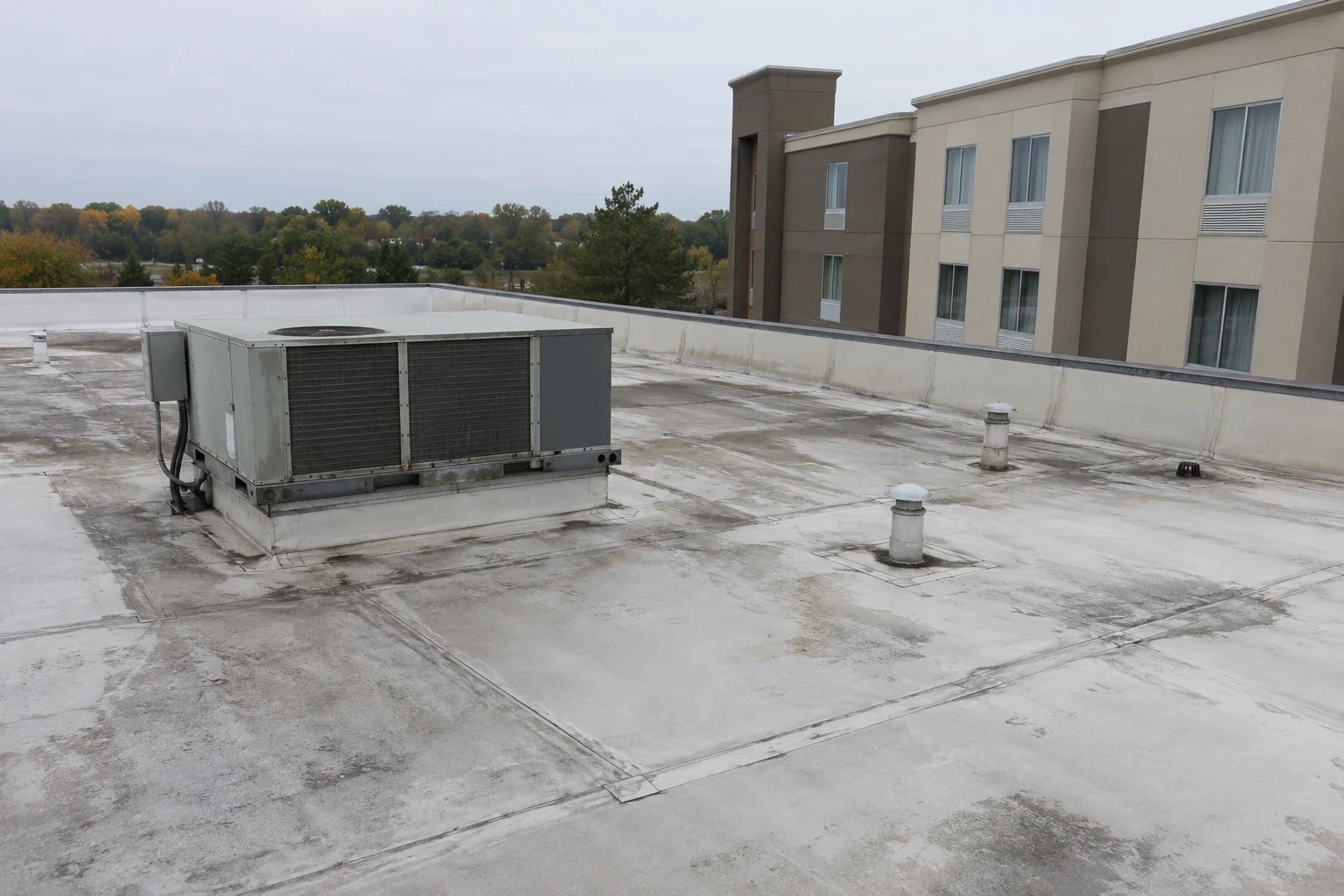
Where present, rooftop units, kitchen exhaust, laundry exhaust, pipes, conduit, or support frames can interrupt the roof surface. We inspect each curb and penetration for loose flashing, open seams, movement, and evidence of recent service. The hotel’s engineering team confirms equipment availability, shutdown authority, and any required route for service contractors. A roofing crew should not move or isolate a unit without that coordination. Equipment curb and support service can address a defined roof interface. If a kitchen or laundry contractor has worked nearby, record the date and compare the detail with prior photographs. That does not assign cause; it provides a timeline for inspection. Each completed repair should be photographed with a label that ties it to the roof plan and the equipment area.
When should management compare repair and replacement?
A local repair may be sufficient for one failed flashing or seam when the adjacent roof remains dry and secure. Leaks across several zones, wet insulation, recurring trouble after previous patches, or broad membrane wear may support a larger comparison. We document each condition and state how much of the roof the recommendation covers. Commercial roof repair can correct a confirmed defect, while replacement planning can phase a larger scope around property operations. An apartment property has separate unit and resident coordination concerns; apartment roofing addresses that use, while office-building roofing considers an office occupancy profile. The hotel estimate should identify protection, access, daily close-in points, and what may change if concealed conditions appear after removal.
What should the hotel management file preserve?
Save the roof map, dated photographs, repair materials, equipment changes, access notes, and the condition of each completed zone. The file should state whether an area was tested, visually inspected, or not reached. Columbia’s commercial plan review follows the 2024 IBC, IEBC, and IECC editions, so a roof assembly change should be checked against the requirements for the specific project. Keep any permit or plan-review information with closeout materials. A later inspection can compare the same curb or seam after weather or equipment service. Preventive roof maintenance can revisit drains and known repair points. If a guest report arises in another building section, staff can match it to the roof plan without assuming the previous repair applied there. Clear records also make it easier to confirm what work remains before another phase is scheduled. Keep the manager’s approval, shift close-in image, and any weather delay with the same project entry. If a temporary repair remains pending a permanent detail, identify who will arrange the return visit and which condition should trigger it. A later facilities contact can use those notes to coordinate guest communication and contractor access without repeating the original investigation.
Keep each roof finding tied to a building wing, floor, and interior report location. Guest-room reports can be time sensitive, while a roof photograph needs a wider reference image to locate the same detail on a later visit. Record the room status or temporary protection agreed with management, then document when it can return to service. If several reports occur after one storm, compare them against shared drains, walls, and equipment curbs before treating each one as a separate roof opening. That record also helps management coordinate housekeeping and engineering updates without promising that a ceiling mark has a single cause.
Commercial Roofing Questions
Can hotel guests stay on site during roof replacement?
Guest routes, events, and service periods are set by hotel management. We plan roof zones, material staging, and daily protection with the designated contact, then record any route or schedule change.
What details help investigate a guestroom leak?
Record the room, time, weather, and any immediate protection. We use that information to locate the roof zone and inspect nearby seams, drains, and curbs without assuming the opening is directly above the room.
Can work be scheduled around a conference or event?
Management provides the event schedule and access limits. The project plan can sequence roof areas and deliveries around those dates, subject to weather and installation requirements.
How should equipment service be coordinated with roof repairs?
The hotel’s engineering contact confirms access and shutdown requirements. We define the curb or penetration scope, coordinate with the equipment trade, and photograph the finished roof detail.