
Apartment Roofing in Columbia, MO
Apartment leak logs become useful when each report has a room, date, and roof-zone reference. We record each unit, date, and visible symptom, then map those reports to the roof sections, drains, edges, and penetrations above. Columbia’s District covers 50 square blocks and includes more than 300 residences along with businesses and civic uses. The District, Downtown Columbia provides local residential context, while North Village Arts District includes renovated and repurposed buildings among offices, colleges, and shops. Those facts do not establish any apartment building’s roof condition. We inspect the property itself and coordinate resident access with its manager before selecting a repair boundary.
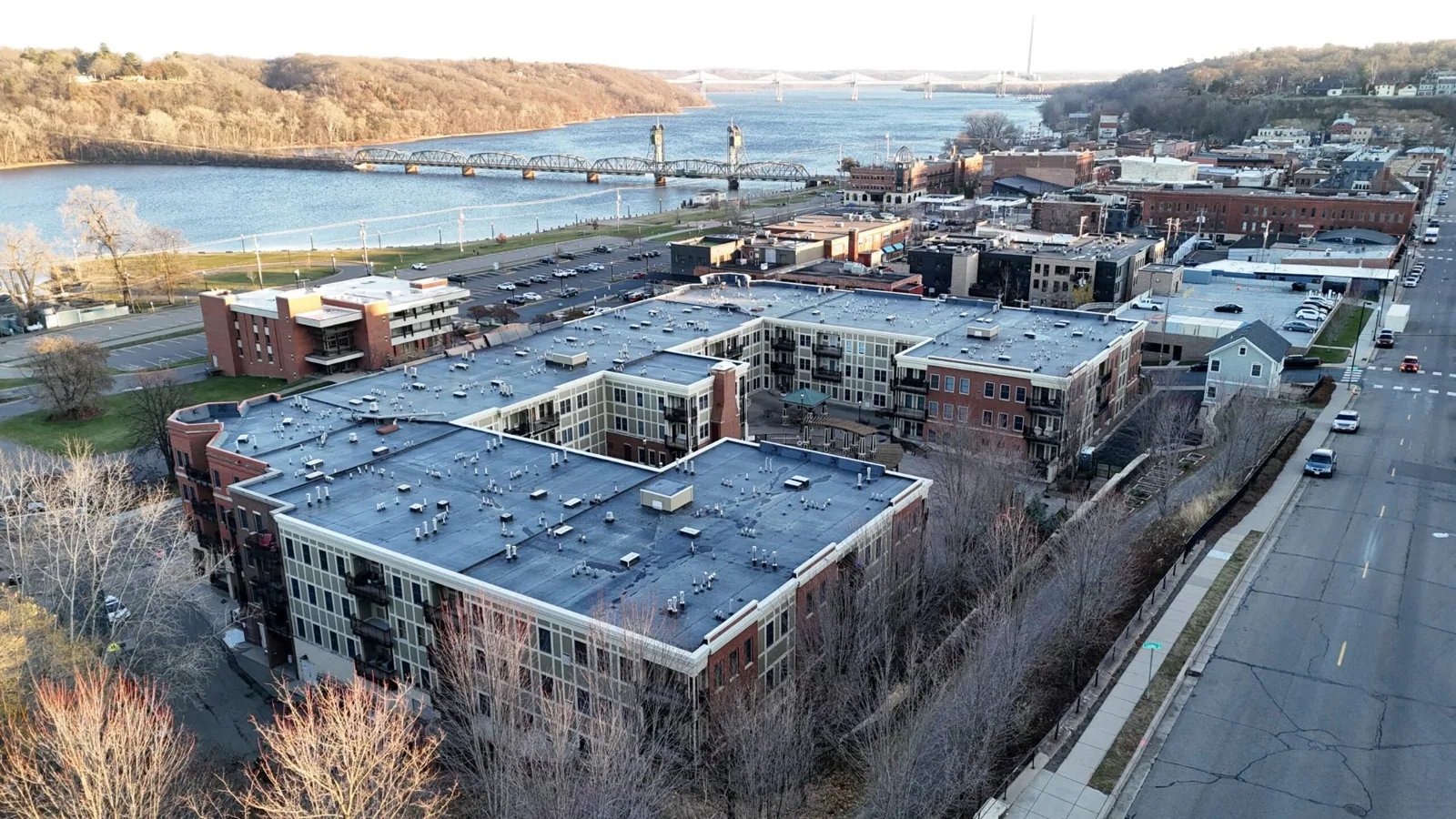
How can roofing work limit resident disruption?
Before work starts, management identifies resident entrances, accessible routes, balconies or patios if present, parking, deliveries, and the areas that must stay open. We confirm roof access and material staging, then show which building section will be active each day. Residents should receive building-specific notices from management, while our work notes identify the roof zone, expected activity, and any temporary restriction. If a weather delay changes the sequence, the next area should be reviewed with the manager before the crew moves. Occupied-building reroof planning can phase work and set daily close-in points. A clear plan helps the property team coordinate move-ins, maintenance visits, or other scheduled work without assuming that every building follows the same routine. Before materials arrive, the manager identifies where a truck can wait and whether residents need a temporary change to parking or access. If the work is above a common room or laundry area, the daily notice should name that area and the expected period of activity. We record the route used by the crew and how the roof will be secured if rain delays the phase. When the next workday starts, the field lead confirms the prior tie-in before another area is opened. This gives management a verifiable daily status and a clear point of contact for an access change.
Related Roofing Work
More commercial roofing work connected to Apartment Roofing in Columbia, MO.
How should separate unit reports be compared?
Each resident report should retain its unit or common-area location and the date water was seen. Two ceiling marks in nearby units may share a roof path, while a report on another floor can have a different cause. We compare those locations with seams, walls, drains, penetrations, and earlier repairs on the roof plan. If a resident cannot provide access during the first visit, that limit belongs in the report. A commercial roof inspection can document the roof observations and areas that need more testing. A controlled opening or moisture test may be considered where its result would change the repair boundary. The file should keep the occupant’s description separate from the confirmed roof finding, which lets management prioritize work without promising a cause before the assembly is checked.
What should be checked at roof edges and drains?
Apartment roofs may have shared drains, scuppers, parapets, roof-to-wall transitions, and penetrations serving several units or common areas. We check whether outlets are clear, whether water remains at a low point, and whether a seam or flashing nearby is open. Columbia’s wet spring and summer downpours can reveal drainage behavior that is not visible in dry weather. A dated observation after rain can show whether the same area stays wet over time. Drain and scupper service can address outlet concerns, but a leak at a wall transition still needs a compatible flashing repair. We note which building and elevation were inspected so a manager does not apply a finding from one roof to another structure in a multi-building property.
When should management move beyond a spot repair?
A single failed flashing or seam may support a local repair when nearby insulation and attachment remain sound. Repeated reports in several units, broad moisture, or recurring failures after earlier patches can justify a larger comparison. We document the observed conditions by roof section and describe which areas remain concealed. Commercial roof repair may suit an isolated, documented failure. If several elevations show deterioration, compare a broader replacement scope and its sequencing. A hotel may have guest and event routes that change how a work zone is set; hotel roofing considers that operating profile. An office property may have different tenant access and rooftop equipment requirements; office-building roofing addresses those considerations. The owner should compare work boundaries, protection, access, and the cost drivers that follow from material removal or concealed damage. A phased scope can identify where each day begins and ends, what temporary detail protects residents below, and how crews reach the next roof section. If the property has older and newer additions, the transition between them should be inspected before the plan assumes the same assembly across both areas. We note any change in deck or membrane type and describe how the tie-in will be handled. That allows the manager to evaluate each phase on its own roof evidence and operating effect.
What should the apartment roof file preserve?
Keep a roof plan, unit or common-area report dates, photographs, repair locations, materials, and approved changes together. Label each building and elevation so service history does not merge separate roofs. Record any resident area that was inaccessible and what follow-up will address it. For a Columbia roof alteration, the applicable 2024 building, existing-building, and energy-code provisions depend on the scope submitted for review; confirm the project requirements before changing the assembly. Preventive maintenance should schedule follow-up observations at drains, repaired seams, and other recorded trouble spots. The file should state whether a work order was completed or only proposed and who received the closeout. If another unit reports water later, management can compare the report location with the repair map before assuming that the same roof detail is involved. For a property with multiple buildings, retain separate folders or identifiers for each roof instead of storing every image under one community name. A dated photo should show the unit or common-area reference and a nearby roof feature that can be found again. If a temporary protection remains while permanent materials are ordered, list the return visit and who will schedule it. At closeout, separate work completed from recommendations that were not approved. These details help the owner review recurring conditions and build a capital schedule from documented roof areas rather than from incomplete service descriptions.
Keep resident reports, inspection findings, and work orders under the same building and roof-zone labels. A property with several buildings needs a separate history for each roof, even when the same maintenance crew responds across the community. Note any repair that overlaps a shared parapet or drain serving multiple units, and record when the interior space was rechecked. Columbia's wet spring and summer downpours can reveal drainage issues in different sections at different times; dated location notes help determine whether a later report is new, recurring, or connected to the earlier repair.
Commercial Roofing Questions
Can residents stay in their apartments during roof replacement?
The property manager sets any access or temporary-move requirements. We coordinate work zones, protection, and daily tie-ins with that contact and identify which entrances or areas are affected.
What details should a resident include in a leak report?
The unit or common-area location, date, and visible condition help start the review. Management can provide the roof team access details, while the inspection connects the report to roof evidence above.
If several units report water, is one repair enough?
We compare each report with the roof plan and inspect the corresponding seams, drains, and transitions. The findings may point to one shared path or more than one defect, so the scope follows the evidence.
How should owners track work across multiple apartment buildings?
Use a distinct building and roof-zone label on reports, photos, repairs, and testing. Keep proposed work separate from completed work and note any area that remains inaccessible or untested.