
Commercial Roofing for Insurance and Restoration Work in Columbia, MO
A storm date may start a claim file, but it does not show what happened to a particular roof. We inspect the building, photograph physical conditions, and separate recent impact or movement from older wear when the evidence permits. Columbia's spring is the wettest season and can bring large hail or tornado-producing storms; later summer storms can bring damaging wind. These patterns describe exposure in the region, not a loss at an individual property. The District downtown includes hundreds of buildings and a mix of businesses and public uses, while the I-70 Business Loop serves commercial and industrial properties. Those local places help locate a market file, but claim documentation must identify the actual address and roof section. Our report records the inspection date, visible condition, access limits, and repair boundary. It also distinguishes emergency stabilization from permanent restoration work, so an adjuster, contractor, and owner can review the same condition record.
What evidence belongs in a roof claim file?
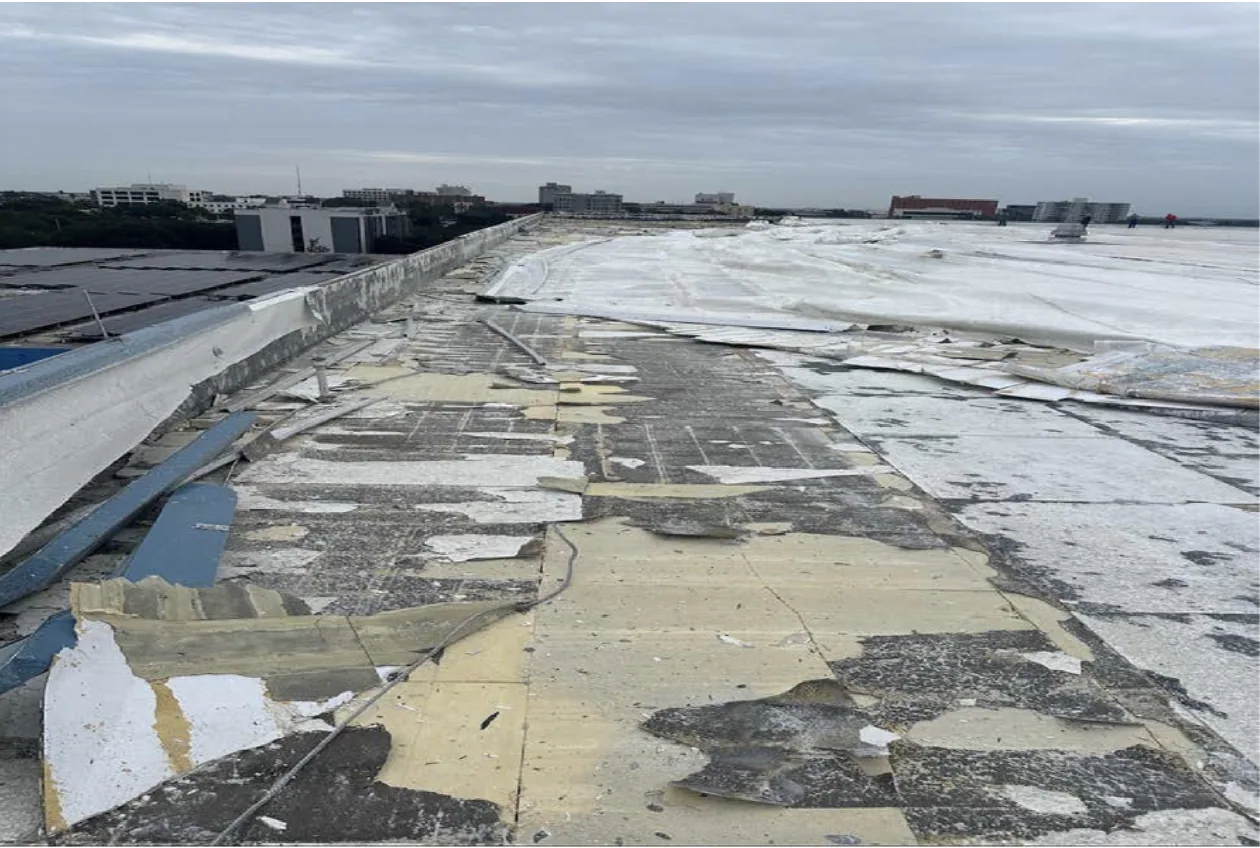
Photographs should identify the roof zone, view direction, date, and detail being evaluated. We note open seams, punctures, displaced metal, damaged flashing, wet insulation where confirmed, and areas that need more testing. A wide image helps place the condition, while a close view records the detail. The report should explain if access was limited or a surface view could not confirm concealed material. Columbia-area weather information can establish a potential event window, but it should not be used to claim damage without building evidence. Roof claim documentation can preserve observations and scope boundaries. Drone roof imagery may help document areas that are difficult to reach safely, when flight and site conditions allow. The date and method should remain visible in the file so a later reviewer knows whether the image came from a ground view, a roof inspection, or remote imagery. If a photograph captures a condition that might predate the reported event, label what is known and what is not. Compare prior maintenance records when they are available, but do not use an old repair note as proof that the current condition is identical. The person preparing a restoration estimate should be able to connect each proposed line of work to a marked location and a supporting image. If a roof area was inaccessible, identify that gap and state whether a second visit could change the scope.
Related Roofing Work
More commercial roofing work connected to Insurance and Restoration Work in Columbia, MO.

How should emergency work be kept separate?
Temporary cover or a short-term repair can reduce continued water entry while the permanent scope is evaluated. The record should show where protection was placed, what condition it addresses, and when it needs to be checked. It should not describe temporary stabilization as a completed restoration. Emergency roof response can protect an active opening; permanent repair planning identifies materials and tie-ins for the lasting work. Columbia winters include recurring freezing and thawing, and spring rainfall can be heavy. That makes a follow-up date useful after temporary work, but the condition at the building still determines what comes next. If the roof cannot be fully inspected during an emergency visit, list the areas not reached and arrange a return review rather than closing the file as a complete survey.
How can a repair estimate align with observed damage?
A scope should identify the damaged area, repair limits, compatible materials, access needs, and any adjacent work necessary to complete the tie-in. If the evidence supports broader replacement, show that option separately and explain the condition basis. The report should not blend pre-existing maintenance with event-related work without identifying the distinction. A roof condition report can keep observations and recommendations organized; storm damage repair should be tied to findings at the property. A Columbia alteration must be evaluated against the code provisions identified for its specific permit and design scope. The I-70 Business Loop is a local commercial corridor, but location alone does not establish a claim condition or code scope. An estimate should identify exclusions, concealed-condition assumptions, and how newly exposed damage would be documented for review.
An event file is stronger when it preserves the first safe observations before temporary work changes the surface. Record the reported date, affected rooms, roof zones reached, photographs, and weather information supplied by the owner. Label visible damage separately from older patches, concealed moisture questions, and areas that could not be accessed.
What should restoration closeout preserve?
Keep the original inspection, any emergency-cover record, approved repair scope, change authorization, material information, and completion photos together. The final images should show the completed boundary and any adjacent area left outside the work. If moisture testing or interior drying remains open, identify that as a separate follow-up item. General-contractor coordination can keep roof interfaces and schedule changes visible, while property management records help pass the file to the next building contact. The District and the Business Loop are useful Columbia location references, but the claim record belongs to the insured building, not the corridor or district. A later inspection can compare the same seams, drains, and transitions with dated photographs. This gives the owner a clear difference between reported loss, observed roof condition, authorized work, and completed repair, without implying that the file determines coverage or settlement. If repair work changes after materials are removed, preserve the original authorization, field photograph, and revised scope together. The file should state who accepted the added work and whether another inspection is due. A later maintenance visit can then distinguish a finished repair from a temporary measure that remains on the roof. Keep the contact and revisit date with that entry. Keep replacement alternatives separate from event repair where the documentation supports both, so the owner can review immediate restoration and longer-term capital work independently.
An estimate should connect each proposed task to a photographed condition and state preparation, compatible materials, tie-ins, and exclusions. If opening the roof reveals a different assembly or broader wet area, document the new evidence and revised quantity before continuing. A clear change record helps the owner and insurer distinguish emergency stabilization, investigation, and permanent construction.
Winter freeze-thaw exposure also belongs in a roof history when an owner is comparing an event-related observation with older conditions. Columbia records 102 days a year at or below freezing and 16.5 inches of seasonal snowfall under the 1991-2020 normals. Use dates and prior photographs to distinguish a new opening from a previously documented seam or flashing issue when the evidence makes that comparison possible. Keep the storm date, inspection date, and repair date separate; they answer different questions in the claim file. If a roof area was covered before a full inspection, document the limit and schedule a follow-up when it can be examined safely. The final package should show both the work completed and any evidence still needed for a broader restoration decision.
Commercial Roofing Questions
Does a hail or wind report prove roof damage?
No. Regional weather identifies possible exposure; the roof inspection documents conditions at the property. We date photographs and distinguish visible findings from areas that require testing.
Can temporary cover be included in the claim record?
Yes, the file should show the location, date, purpose, and return check for temporary protection. Keep it separate from permanent repair so the status is clear to later reviewers.
What if the roof has older wear near a new impact?
We document both conditions and note when the evidence supports a distinction. The report should avoid assigning an age or cause where the inspection cannot establish one.
Can the roofing scope determine insurance coverage?
The scope describes observed roof work and its assumptions. Coverage decisions belong to the insurer and policy review; our record can provide building-specific photographs, measurements, and repair limits for that process.